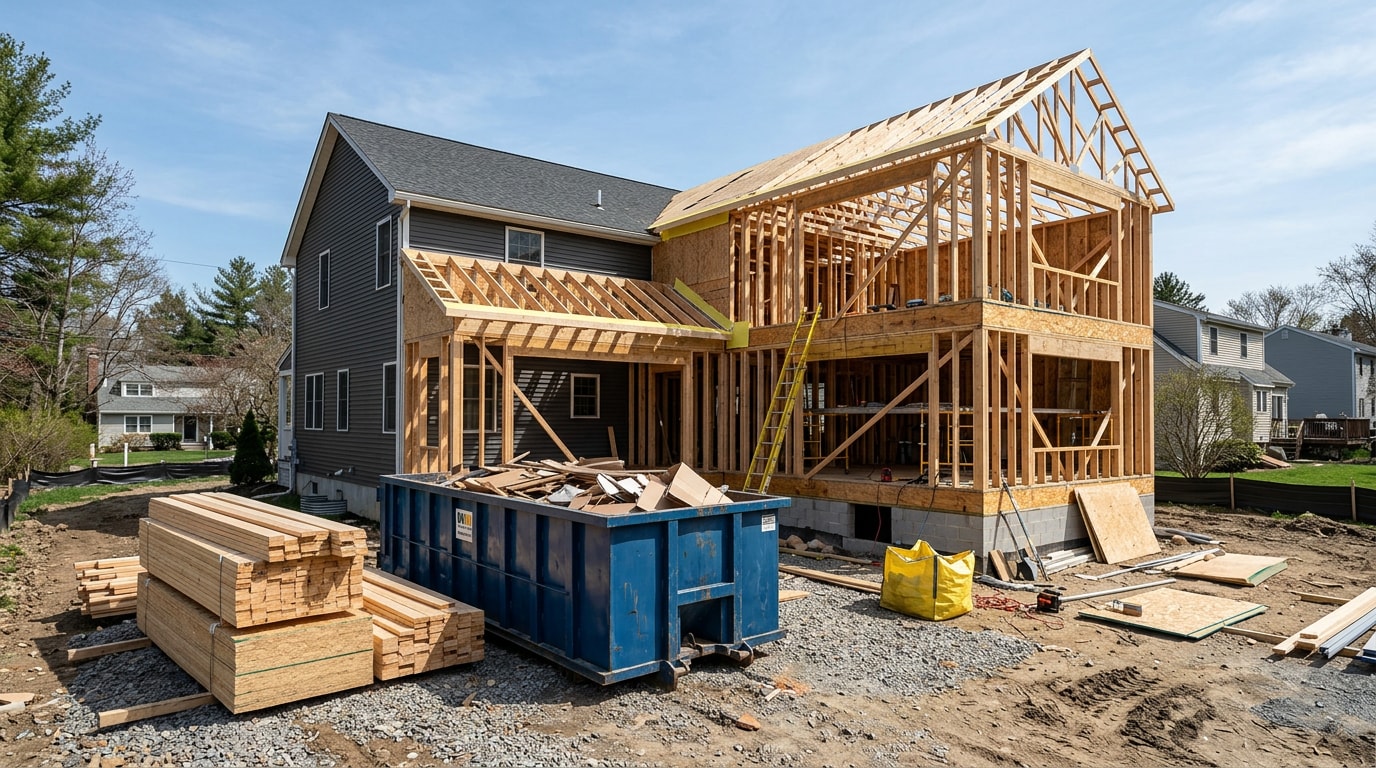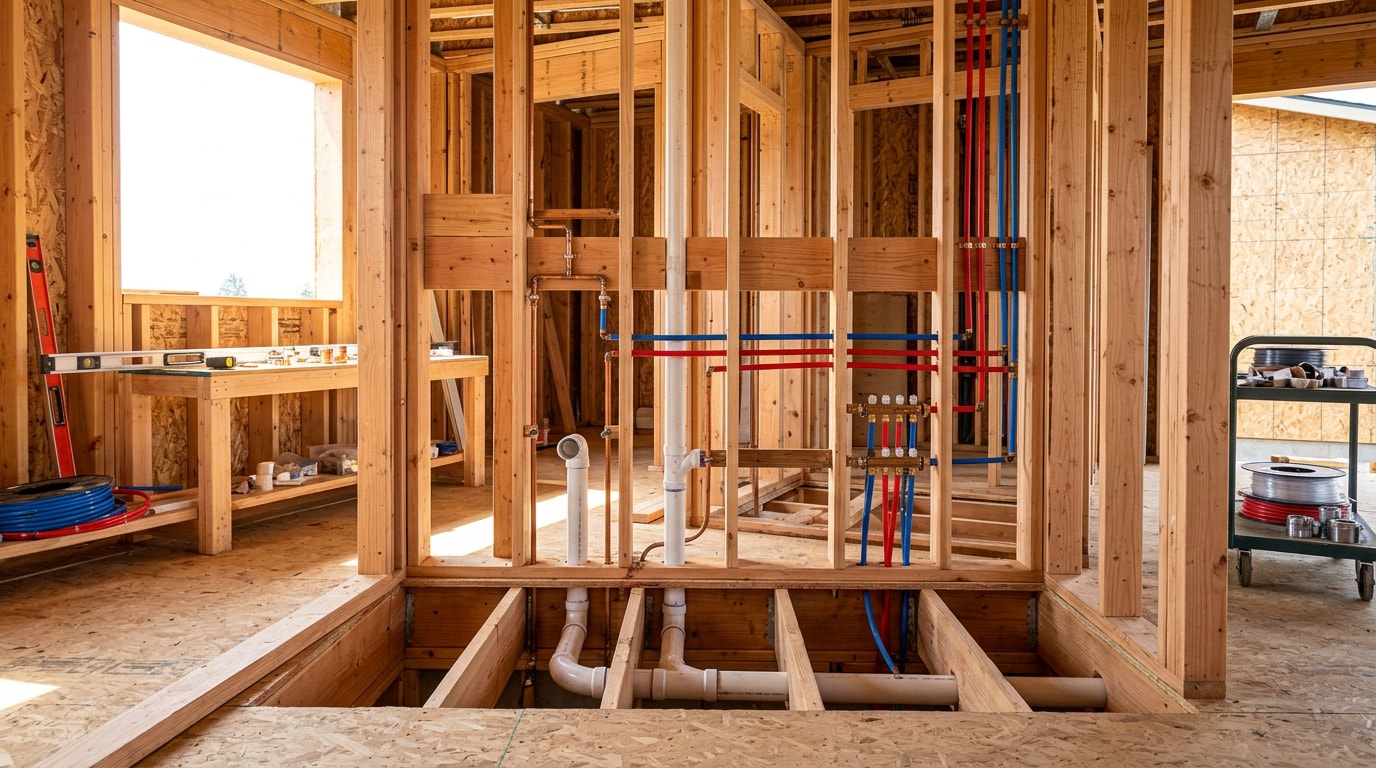
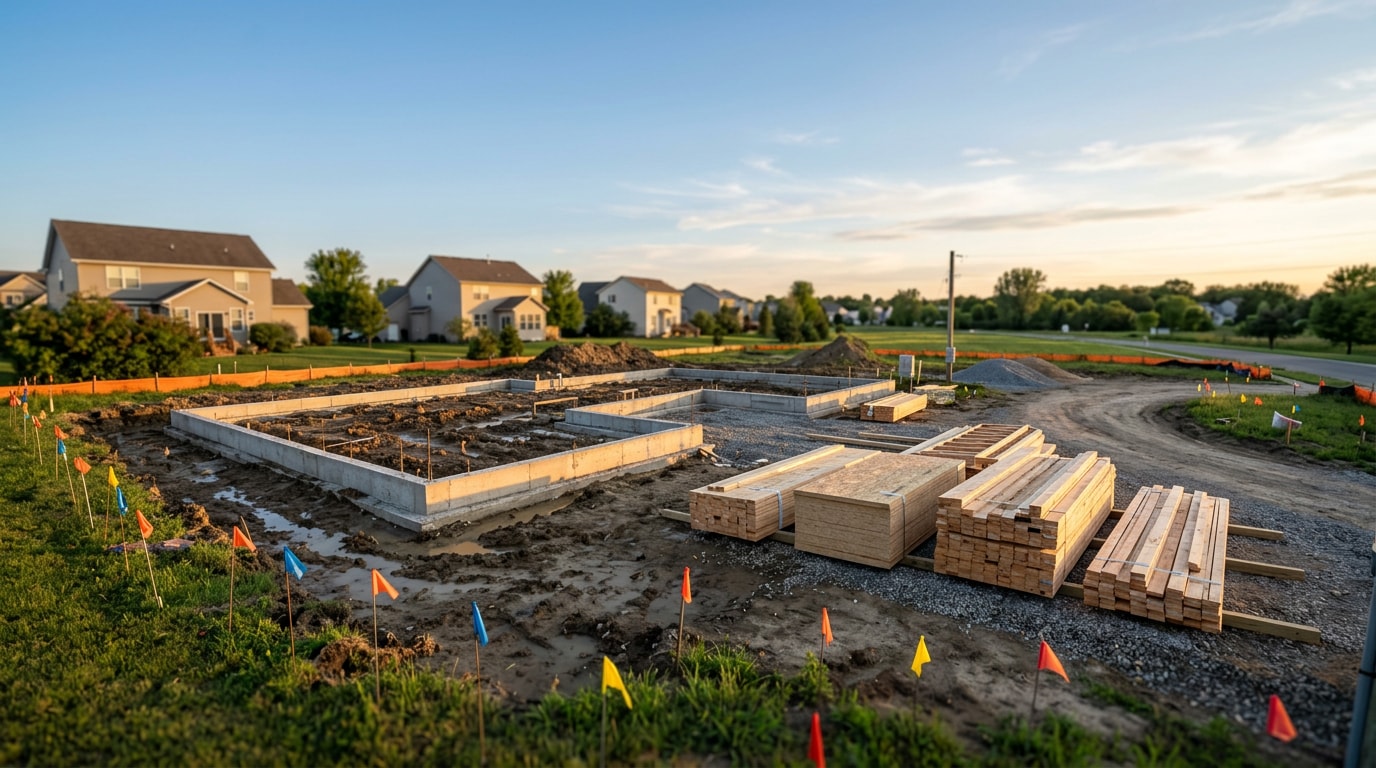
Typing "construction builders near me" into Google takes two seconds. Vetting the name that pops up takes real work, and skipping that work is how homeowners end up with change-order surprises and an unfinished punch list. This guide covers the readiness checks, contract types, and one sitework step most builder guides never mention, so you can shortlist with confidence and request a quote.
Key Takeaways
- Request estimates from at least three local builders before committing to one.
- Verify license and insurance directly with your state or county licensing board, not just the builder's word.
- Ask who handles excavation, utility locating, and drainage before you sign, since many general contractors subcontract this work out.
- Compare contract types line-by-line, not just the bottom-line total.
- 2026 pricing varies widely by region, finish level, and lot condition. Get written numbers early.
How to Find Construction Builders Near Me
Start with a wide net, then narrow it fast.
- Search online directories and map results. Most listings show licensing status, review counts, and photos of recent work, which is enough to build a first-pass shortlist.
- Check local and state builder associations. Membership rosters are a reasonable starting filter, but membership alone isn't proof of quality.
- Cross-reference every name against their portfolio. A builder known for large custom estates may not be the right fit for a modest addition, and vice versa.
- Ask neighbors or recent clients directly. A referral from someone whose project you can walk through beats an online review every time.
- Look at completed local work. Our projects page shows finished sitework and drainage jobs across Northeast and Central Ohio, which is useful context even if you're hiring a separate builder for the structure itself.
Ready to compare builders in your market? Start on the homepage to see service options near you, or contact us if your project needs excavation or drainage work done alongside construction.
Get Your Project Ready Before You Call a Builder
A serious local builder will ask for the same information you should be asking of them. Showing up prepared speeds everything up and makes it easier to spot who's cutting corners.
Start with three practical checks on every candidate: confirm they're licensed and insured in your state, tour at least one completed or in-progress project, and request a written estimate with warranty terms spelled out. Then confirm your own readiness.
Documents to have ready:
- Budget range with a 10-15% contingency built in
- Financing pre-approval letter
- Lot survey or address, including utility and soil notes if available
- Desired move-in timeline
Questions to ask upfront:
- Are you licensed and insured in this state?
- Can I see a current project?
- What's included in your written estimate?
- What's your warranty policy?
The Sitework Step Most "Builder Near Me" Guides Skip
Most hiring guides stop at licensing and contracts. They rarely mention what happens underground before a single stud goes up, and that gap is where a lot of budget surprises start.
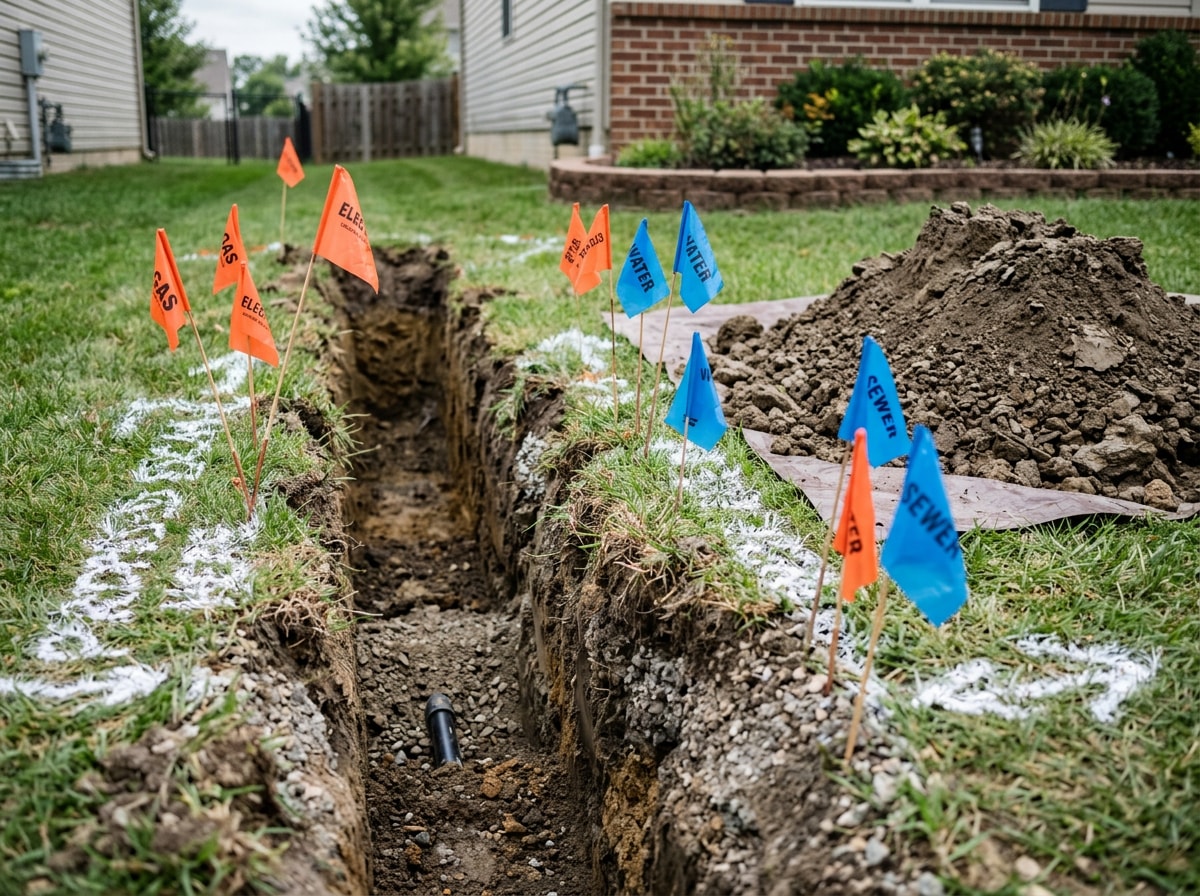
Before excavation, every public utility line on the lot needs to be marked. 811 is the free national before-you-dig service, and anyone who plans to dig should contact 811 or their state's 811 center before digging so buried utilities can be marked with paint or flags. In Ohio, that's handled through the state's one-call center, which processes over 1.6 million excavation notifications annually and directs more than 10 million utility locate requests to over 1,700 members .
Once lines are marked, the builder (or a specialty sitework contractor) still has to handle:
- Excavation for the foundation footprint
- Site preparation and grading
- Trench digging for water, sewer, and drainage lines
- Yard backfilling once lines and footings are in
- Site restoration so the lot is usable again
Some design-build firms handle all of this in-house. Many general contractors subcontract it out, and if nobody asks who's doing it, scheduling gaps show up mid-project. Our crews across Wooster, Akron, and Massillon handle this exact handoff regularly: locating water and sewer lines before a framing crew shows up, then backfilling and restoring the yard once the builder's crew is done. Ask any builder directly who performs excavation, drain work, and site restoration on your job, and get it in writing.
If your project needs sewer or water line work alongside new construction, our drainage service and water testing service teams coordinate directly with builders on timing, including sewer line inspection, water line locating, and excavation services.
Understanding Services Offered by Builders Near You
Not every builder offers the same services. Some run full design-build operations; others only handle construction once plans are finalized. Knowing the difference shapes which services you actually need. For a deeper breakdown of the design-build model specifically, see our design-build contractor hiring guide.
Architectural Design, Engineering, and Feasibility Studies
A feasibility study checks whether your lot can actually support the home you want: soil quality, drainage, setbacks, and zoning all factor in. This step happens before design work locks in, and it can save thousands if a problem surfaces early instead of mid-build.
Structural engineering comes next: stamped drawings that satisfy local building codes and support permitting. Code requirements vary by jurisdiction, so confirm what your local authority requires before assuming a builder's standard process covers it. The International Code Council provides trusted model codes, standards, training, and certification to strengthen communities , and most U.S. jurisdictions adapt its model codes locally.
Custom Builders vs. Production Builders: Choosing Your Build Path
Most projects fall into one of three build paths: fully custom on your own lot, semi-custom on a builder-owned lot, or production (tract) building in a planned community. Each path affects your pricing, contract type, and how much control you have over design decisions.
Pricing Structures and Builder Contracts
Builder contracts generally fall into three categories:
| Contract Type | How It Works | Best For |
|---|---|---|
| Fixed-price | One total cost set upfront | Finalized plans, buyers who want budget certainty |
| Cost-plus | Actual costs plus a builder fee | Projects where scope may shift during construction |
| Milestone / budget-based | Payments tied to completed phases | A middle ground between fixed and cost-plus pricing |
Ask any builder which structure they default to and why it fits your project before comparing quotes. 2026 per-square-foot pricing data from the National Association of Home Builders shows the median price for custom, or contractor-built, homes was $166 per square foot of floor space, up slightly from $162 in 2023 . Treat that as a national midpoint, not a local quote. Site development, roofline complexity, and material choices are the biggest swing factors in either direction.
How to Evaluate and Compare Builders Near You
Once you understand services and pricing, the next step is building a shortlist and learning to screen a builder properly before requesting bids.
Comparing builders works best with a consistent scoring framework rather than gut instinct alone. For each candidate, rate them on a simple 1-5 scale across the same categories:
- Communication responsiveness
- Project manager availability
- How they handle delays or cost adjustments
- Whether billing ties to verified milestones
- Number of completed projects similar in size to yours
Ask every builder the same vetting questions so answers are genuinely comparable side by side. Do they offer a client portal or regular progress updates? How are change orders priced and approved? Can you walk a current job site or tour a recently completed one before signing? When comparing bids, make sure each builder is quoting against the same specifications. Spec mismatches, not dishonest pricing, are usually where buyers get surprised on cost.
Benefits of Hiring a Licensed Local Builder
Skipping proper vetting to save time usually costs more later. A licensed, local builder brings permitting knowledge, trade relationships, and accountability that an unlicensed or out-of-area operation can't match.
A client-centric builder treats communication as part of the deliverable, not an afterthought. That typically looks like scheduled check-ins, clear budget transparency when costs shift, and honest timelines instead of optimistic guesses. This approach tends to mean fewer disputes and smoother handoffs at closing, since both sides stay aligned throughout construction. If a builder seems vague about how they'll communicate during the build, treat that as a warning sign during interviews.
Ready to discuss your project, including the excavation, drainage, or water line work that happens before and during the build? Request a free estimate to start the conversation.
FAQ
How much does it cost to build a custom home per square foot in 2026?
National data from NAHB's analysis of Census Survey of Construction figures put the median at $166 per square foot for custom, contractor-built homes, up slightly from $162 the prior year. Actual cost varies significantly by region, lot condition, site work, and finish level, so treat national figures as a starting point, not a quote.
How long does it typically take to complete a ground-up custom home?
Most ground-up custom homes take roughly 12 to 24 months from start to finish. Design and permitting alone can take two to six months depending on your jurisdiction, with active construction typically running another 8 to 16 months depending on size and complexity.
How do I find a good, reliable local builder?
Start with personal recommendations, then verify license and insurance status independently rather than taking a builder's word for it. From there, review portfolios and speak with past clients directly about their experience. The full evaluation workflow is covered in the "How to Evaluate and Compare Builders Near You" section above.
What questions should I ask a builder before hiring them?
Ask who will serve as your day-to-day project manager, how often you'll receive progress updates, and how change orders get priced and approved mid-project. Also confirm their warranty coverage, who handles excavation and drainage work, and what happens if the project runs behind schedule.
How many homes should a builder have completed before I hire them?
There's no universal number, but a builder should be able to show several completed projects similar in scope and size to yours, plus references you can actually call. A builder with zero verifiable completed projects in your area is a red flag regardless of how polished their pitch is.
Can I visit a current job site or a completed project before signing a contract?
Yes, and you should insist on it. A builder confident in their work will walk you through an active site or a recently finished one. Hesitation here is one of the clearest warning signs during vetting.
Who handles utility locating and site excavation during a new build?
It depends on the builder. Some design-build firms handle excavation, utility locating, and drainage in-house; many general contractors subcontract it to specialty crews. Either way, call 811 (or your state's one-call center) before any digging starts, and confirm in writing who is responsible for that scope on your project.
<br>
Looking for help with the excavation, drainage, or water line work that happens before and during a build? Browse our water damage restoration services, including site preparation, trench digging, and yard backfilling, or see how we support builders in New Philadelphia, Dover, and Mansfield, OH.