Cost plus construction is a pricing model where you pay the contractor for actual labor, materials, and overhead, plus an agreed fee, instead of locking in one number before the project starts. It's the go-to structure for custom builds and remodels where nobody can nail down every detail on day one. Here's how the math works, what belongs in the contract, and when this setup actually serves you better than a fixed bid.
What Is Cost Plus Construction?
A cost-plus contract is a construction agreement where the owner pays the contractor for all actual project costs, including labor, materials, subcontractors, and equipment, plus an agreed fee covering overhead and profit. Unlike a fixed-price deal, the final total isn't locked in before work begins. It reflects real costs as the job progresses.
This differs from a lump sum or fixed-price contract, where the contractor quotes one total price upfront and absorbs the risk of cost overruns.
You may also hear this arrangement called a cost reimbursement contract, a time-and-materials agreement, or open-book pricing. The terms shift by region and trade, but the structure stays the same: costs get tracked and reimbursed, then a fee gets added on top.
How Does a Cost-Plus Contract Work?
Once both parties sign a cost-plus construction contract, the process follows a predictable rhythm, even though the final number isn't fixed from day one.
- Scope discussion. The contractor and homeowner outline project goals, materials, and known constraints.
- Good-faith estimate. The contractor provides a realistic cost range based on current material and labor pricing, not a locked bid.
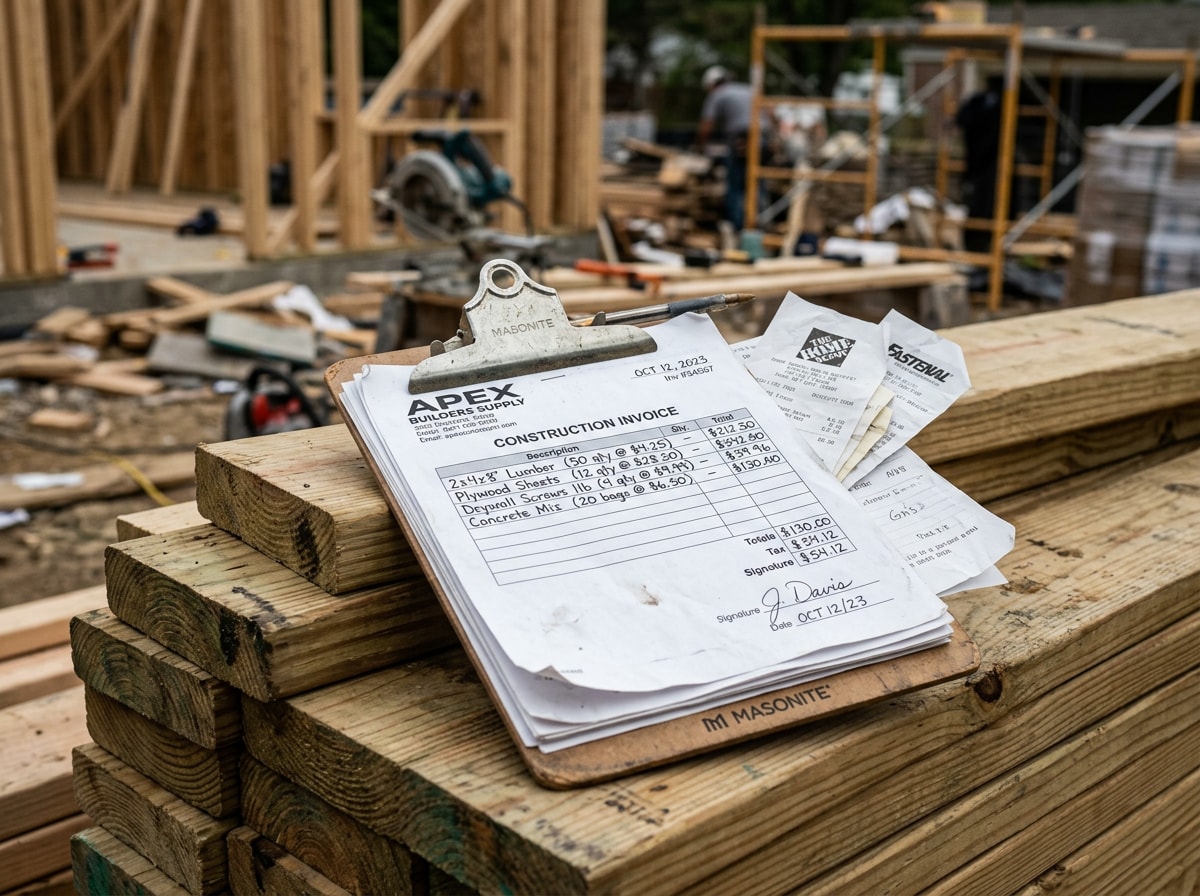
- Open-book tracking. Every invoice, receipt, and labor hour gets documented and made available for the owner to review once construction starts.
- Monthly invoicing. The contractor compiles receipts, subcontractor invoices, and logged labor hours into a billing statement showing actual costs plus the agreed fee.
- Final reconciliation. At project completion, total costs billed get compared against the original estimate.
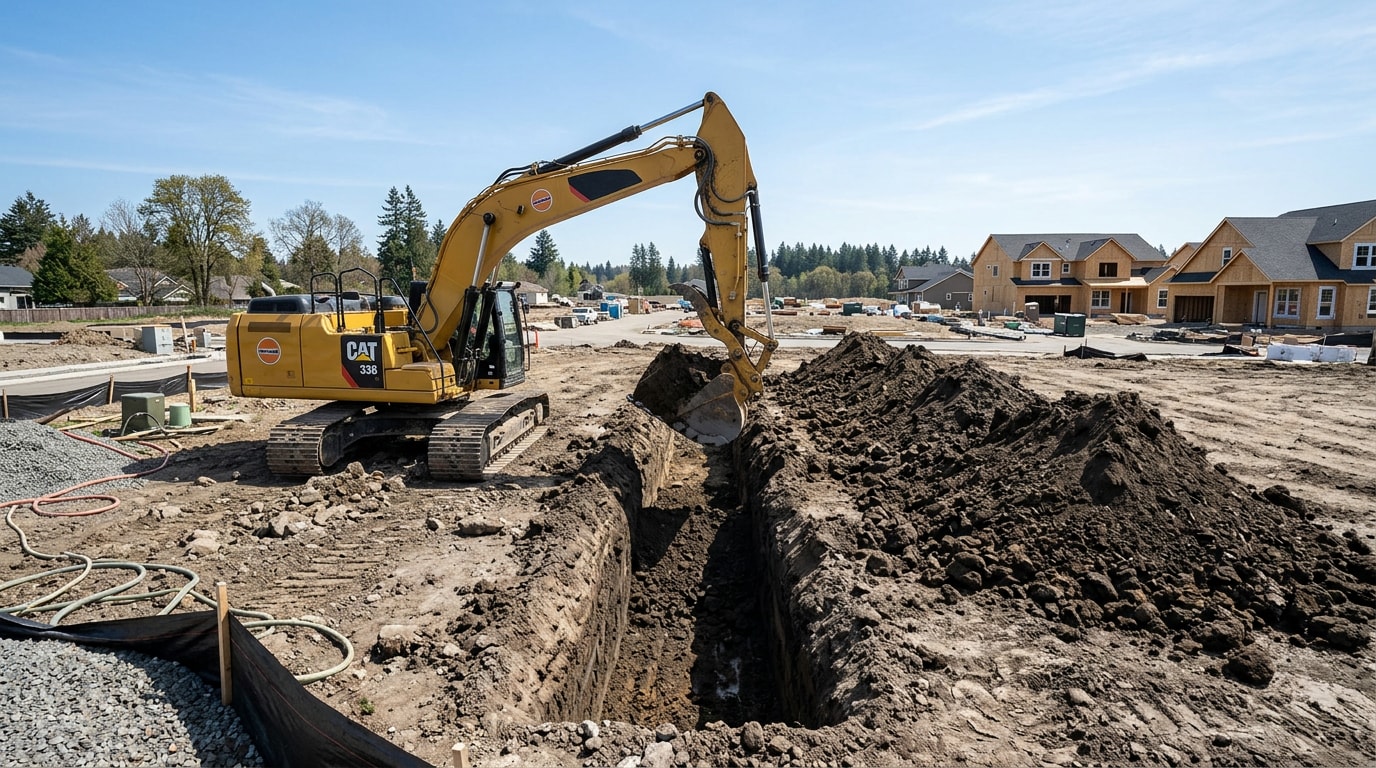
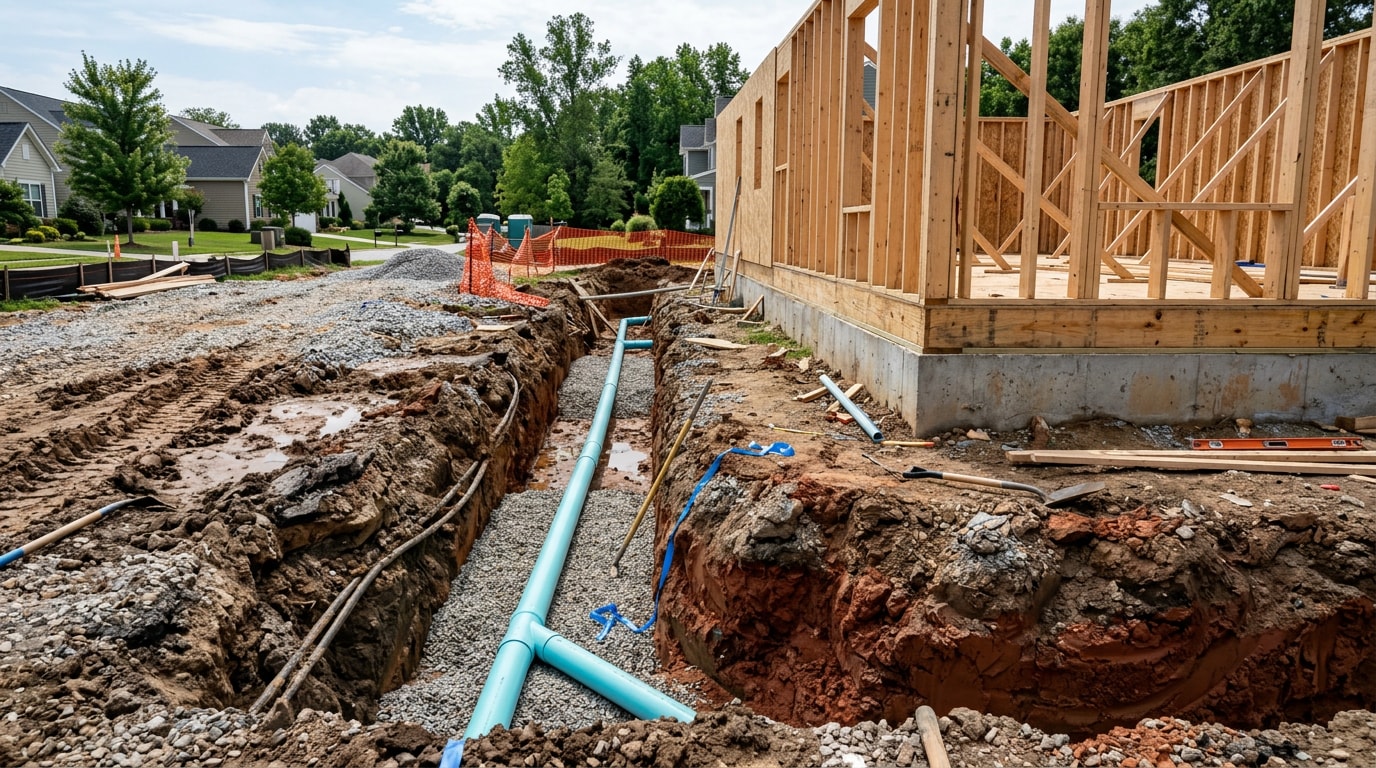
Expect monthly paperwork rather than one lump-sum payment at the end. On the excavation and sitework side, this is where hidden costs tend to surface. We regularly handle the trenching and utility line items inside larger cost-plus jobs around Wooster, Akron, and the surrounding area, and a failing clay pipe or unstable soil found mid-dig almost always becomes its own reimbursable cost rather than something baked into an original estimate. If you're vetting who handles that piece of the job, our guide to hiring an excavator contractor covers what to ask before signing anyone on.
What's Included in a Cost-Plus Contract?
A well-written cost-plus contract spells out exactly what counts as a reimbursable cost and what doesn't. That's what prevents disputes later.
Reimbursable costs typically include:
- Labor, including crew wages and payroll taxes
- Materials purchased for the project
- Subcontractor fees
- Equipment rental or usage charges
- Permit fees
- Approved change orders for scope additions
Beyond the cost categories, a handful of clauses deserve attention before signing: a clearly written scope of work, the cost basis defining which expenses qualify for reimbursement, the change-order process, the invoicing and payment schedule, and who's responsible for correcting defective work under warranty.
The contractor's fee is usually calculated one of two ways: as a percentage of total costs, or as a flat fee agreed upon regardless of how costs fluctuate. That percentage typically lands somewhere between 10% and 20%, depending on project size and regional market conditions.
Homeowners don't need to draft these clauses from scratch. The American Institute of Architects publishes standard A102 and A103 contract forms that define reimbursable costs and fee structures for cost-plus work, and the National Association of Home Builders offers its own residential version built specifically for custom, single-family jobs.
Types of Cost-Plus Contracts
Four variations show up most often in residential and commercial construction, each shifting risk and incentive differently between owner and contractor.
- Cost-plus fixed fee (CPFF). Pays a set dollar amount for overhead and profit, regardless of how total costs move. The fee doesn't grow with spending.
- Cost-plus percentage of cost. Calculates the fee as a percentage of actual costs. Simple to understand, but it can reduce the contractor's incentive to control spending.
- Cost-plus incentive fee. Adds a bonus: if the project finishes under a target cost, the contractor earns a larger share of the savings.
- Cost-plus with a guaranteed maximum price (GMP). Caps the total the owner will pay. If costs exceed the cap, the contractor typically absorbs the difference.
Each structure trades flexibility for cost certainty differently. If you're weighing which fits a project in Ohio, request a free estimate and we'll walk through the options.
Cost-Plus vs. Fixed-Price Contracts
Choosing between a cost-plus and a fixed-price contract often comes down to how well-defined your project scope is before construction starts.
In a fixed-price contract, the contractor quotes one total price upfront and takes on the risk if actual costs run higher than expected. To protect their margin, contractors often build a contingency buffer into fixed-price bids, which is part of why those quotes can run higher than a comparable cost-plus estimate.
| Factor | Cost-Plus Contract | Fixed-Price Contract |
|---|---|---|
| Risk allocation | Owner carries more risk of cost overruns | Contractor carries risk, often priced into the bid |
| Budget certainty | Lower, final cost depends on actual spending | Higher, total price is locked in upfront |
| Flexibility | High, easier to adjust scope mid-project | Low, changes typically require a formal change order |
| Typical use case | Custom builds, remodels with unclear scope | Projects with a complete, fixed scope |
| Who absorbs overruns | Owner, unless a GMP cap is in place | Contractor |
Construction costs made up 64.4% of the average new home's sale price in 2024, with builder profit margins averaging 11.0%, according to the National Association of Home Builders' most recent Cost of Construction Survey. Those shares shift year to year with material pricing, which is exactly the kind of movement a cost-plus structure is built to absorb without renegotiating the whole deal.
Scope certainty is the real deciding factor. If your plans, materials, and finishes are fully specified, a fixed-price contract gives you budget predictability. If your project involves unknowns, an older home with hidden conditions, or a design that's still evolving, cost-plus usually favors the reimbursement model instead.
When to Use a Cost-Plus Contract
Cost plus construction tends to work best when flexibility matters more than locking in a number on day one.
Good fits include:
- Custom home builds, where design decisions continue after groundwork begins
- Remodels with unclear scope, especially in older homes where contractors can't see behind every wall until demolition starts
- Projects with unusual site conditions, including excavation and site preparation work where soil conditions aren't known until crews break ground
- Tight timelines driven by material availability rather than planning
A fixed-price contract is usually the better match if your scope is fully defined, your budget is fixed and non-negotiable, or you want one guaranteed number before committing.
If unknown site conditions are part of what's driving the decision, our excavation services page breaks down how we scope and price that portion of a project before equipment ever hits the ground.
Cost-Plus Contract Example
Numbers make the mechanics easier to picture. Say a remodeling project has direct costs of $80,000 in materials and $40,000 in labor, for $120,000 in actual costs.
If the contractor's fee is set at 15%, the fee comes to $18,000, bringing the total to $138,000. If the same contract used a flat fee of $20,000 instead, the total would land at $140,000, slightly different since a flat fee doesn't scale with spending the way a percentage does.
This is a simplified illustration. Real projects layer in permits, equipment rental, and subcontractor costs. But the basic calculation, actual costs plus an agreed contractor fee, stays the same no matter how large or small the job is.
Advantages of a Cost-Plus Contract
Flexibility tops the list. Because the contract isn't built around one fixed number, owners can adjust finishes, address unforeseen conditions, or add scope without renegotiating the entire agreement. A formal change order handles the adjustment instead.
Transparency is another major advantage. Open-book accounting means the owner sees exactly what's being spent on labor, materials, and subcontractors, which tends to build trust over the life of a project.
Quality of work often benefits too. Since the contractor's fee isn't squeezed by a fixed margin, there's less pressure to cut corners on materials or labor to protect profit.
Disadvantages of a Cost-Plus Contract
The biggest downside is a lack of final-cost certainty. Since the total depends on actual spending, the final number can run higher than the initial estimate, which makes budgeting harder for owners working with a fixed budget.
Disputes can also arise over what counts as a reimbursable cost versus what should have been included in the contractor's fee. A vague contract makes these disagreements more likely, which is why clearly defined clauses matter so much upfront.
Under a pure percentage-of-cost fee structure, there's arguably less incentive for the contractor to control spending, since a higher total also means a higher fee. This is one of the more commonly cited disadvantages of the model.
A guaranteed maximum price is the most common fix for these concerns. It caps the owner's exposure to cost overruns while preserving most of the flexibility a cost-plus agreement offers. For homeowners who want to understand their rights around documenting and approving cost overruns, NASCLA's consumer resource library outlines what to check before signing, including how to verify a contractor's license and what questions to ask before work starts.
Still weighing which structure fits your project? Get a free estimate and we'll talk through the scope before you sign anything, or start at our homepage to see the full range of services we handle across our Ohio service area.
FAQ
What Is a Cost-Plus Contract, in Simple Terms?
You pay for exactly what the project costs, materials, labor, and subcontractors, plus an agreed fee for the contractor's overhead and profit. There's no fixed price set in advance. The final bill reflects real costs as the job unfolds.
How Is a Cost-Plus Contract Different From a Fixed-Price Contract?
The core difference is who carries the risk. A fixed-price contract locks in one total price upfront, with the contractor absorbing any cost overruns. A cost-plus contract reimburses actual costs plus a fee, so the owner carries more risk but gains visibility into real project spending.
What Is a Guaranteed Maximum Price (GMP) Contract, and How Does It Relate to Cost-Plus?
A GMP contract is a cost-plus agreement with a built-in cost ceiling. The contractor bills actual costs plus a fee, just like standard cost-plus, but the owner's total exposure is capped. If costs exceed that ceiling, the contractor typically covers the difference.
What Percentage Do Contractors Typically Charge Under a Cost-Plus Contract?
Most cost-plus fees fall between 10% and 20% of total project costs, depending on project size, complexity, and local market conditions. Some contractors use a flat dollar fee instead, which stays the same regardless of how costs fluctuate.
How Can Homeowners Control Costs on a Cost-Plus Job?
Get a detailed cost basis in writing before signing, review every invoice as it comes in rather than waiting until the end, and ask for a guaranteed maximum price if open-ended spending makes you uneasy. A clear change-order process also prevents scope creep from quietly inflating the bill.
Which Projects Are a Bad Fit for a Cost-Plus Contract?
Projects with a fully defined scope, materials list, and fixed budget are usually a poor match, since a fixed-price contract offers more budget predictability in that scenario. Owners who need a guaranteed total before construction starts tend to be better served by a lump sum agreement instead.