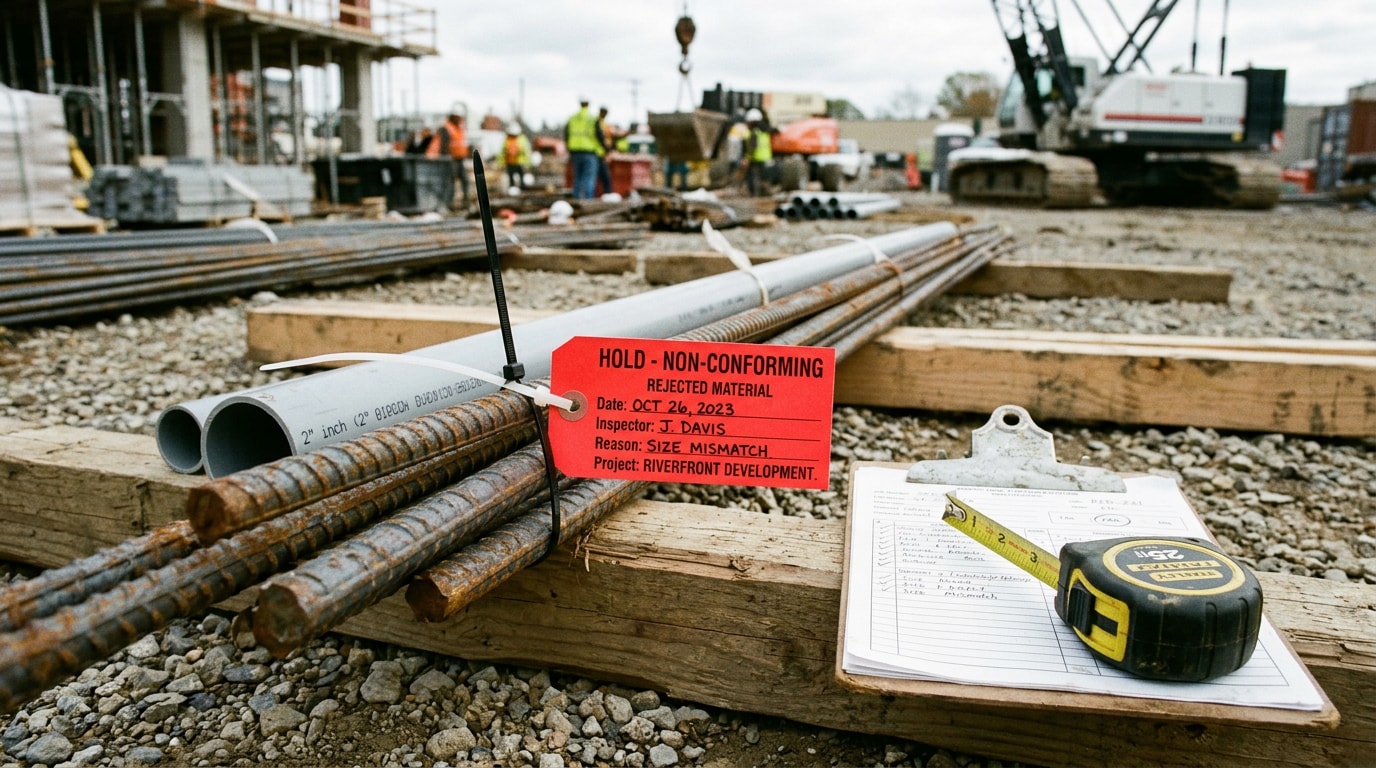
In NCR construction terminology, NCR stands for Non-Conformance Report, the document quality teams raise when work, materials, or testing don't match what the project requires. This guide covers the definition, when to raise one, the full lifecycle from identification to close-out, and how it plays out on real underground utility work. If you've ever heard someone say "raise an NCR" and wanted a straight answer, this is it.
What Does NCR Mean in Construction?
A Non-Conformance Report (NCR) in construction is a formal QA/QC document issued when work, materials, testing, or documentation fails to meet contract specifications, approved drawings, or applicable standards. The requirement it fails against can come from a drawing, a spec section, a contract clause, a code, or an approved test plan.
You'll also see it written as a "Nonconformity Report." It's also commonly mistyped as "NRC." Whatever the label, the goal is the same: flag the gap between what was specified and what actually happened, then force a documented fix.
At its core, a nonconformity is the failure of a product, service, process, or system characteristic to meet a specified requirement , according to the American Society for Quality. On most commercial and infrastructure contracts, raising and closing NCRs isn't optional paperwork. It's a documented obligation tied to ISO 9001 quality management systems, and it's the record an owner or inspector pulls first when something goes wrong.
When to Raise an NCR
Raise an NCR when work or a process fails to meet a clear, approved requirement, especially when the issue is significant, repeated, affects compliance, or carries a cost or schedule impact that needs a documented fix.
Not everything needs a formal NCR. A smudge of paint or an untidy cable run can usually get fixed on the spot with no paperwork. The line gets crossed once the deviation puts compliance, safety, or contract terms at risk.
Timing matters as much as judgment does. Waiting until the end of a phase means evidence goes missing and the fix gets more expensive. Raise the report the moment the deviation is confirmed, not after three more pours have covered it up.
The NCR Process: Step-by-Step Lifecycle
A construction NCR generally follows the same lifecycle no matter who issues it or how big the project is.
- Identify the non-conformance. Someone spots work, material, or documentation that doesn't match the requirement.
- Record the facts: location, reference drawing or standard, date, and supporting photos.
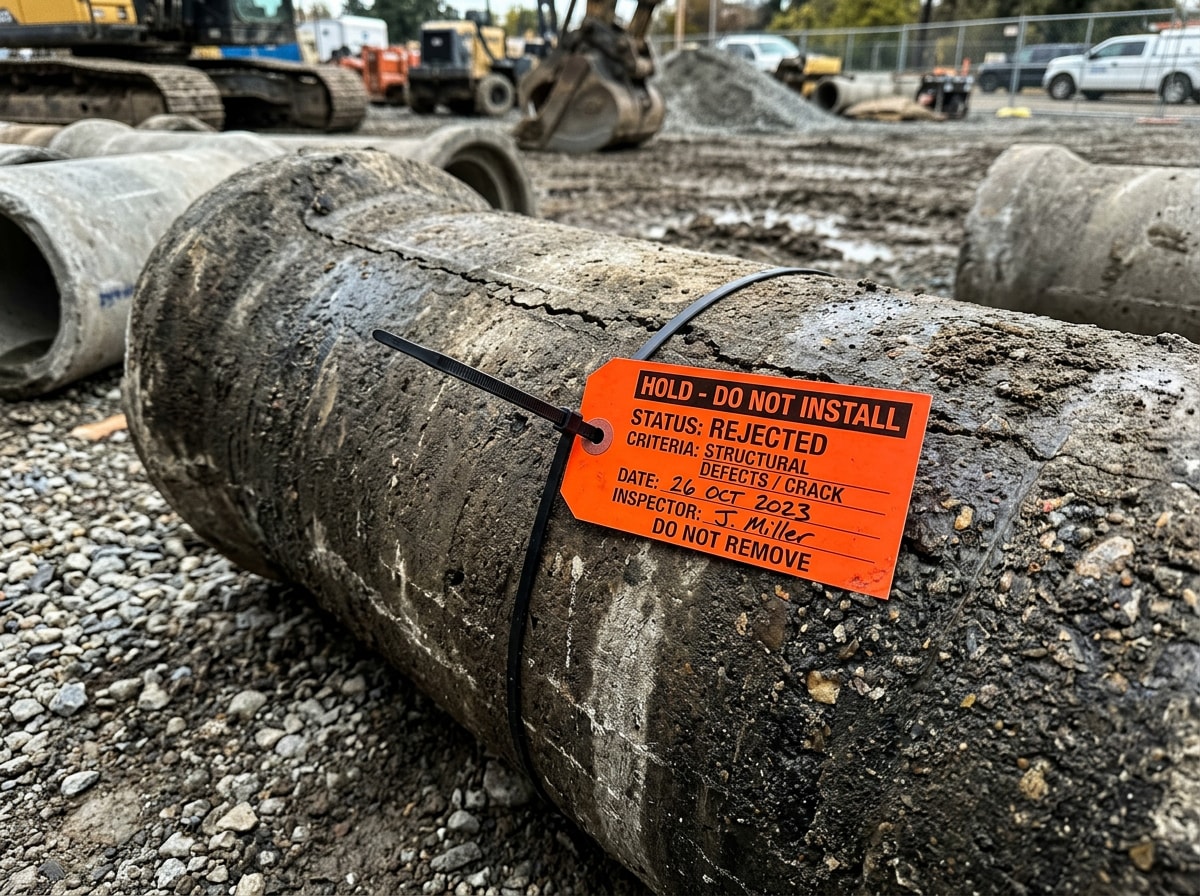
- Contain the issue before it spreads or gets buried under the next stage of work.
- Investigate and correct the root cause, not just the visible symptom.
- Verify that the correction actually meets the requirement.
- Close the NCR once evidence is approved and logged in the register.
Containment gets confused with the actual fix more often than any other step. Containment can mean stopping the affected activity, quarantining material, and preventing concealment until a decision is made. It's not the permanent solution. Its only job is to stop the problem from growing while the team investigates.
Who Issues an NCR
Typically, site inspectors, quality managers, or project managers raise NCRs when they identify non-conforming work. On larger jobs, independent auditors sometimes raise them too, as part of a scheduled audit rather than daily site inspection.
The person who issues the NCR doesn't have to be the one who resolves it. Regardless of who raises it, the contractor is typically required to respond, implement corrective action, and provide closure evidence. One party flags the issue, another fixes it, a third verifies it. That separation is part of what makes the record credible during an audit or handover.
NCR vs Other QA/QC Terms
NCR, CAR, punch lists, defects, and RFIs get used loosely on site, and the mix-ups cause real confusion. Here's how they actually differ.
An NCR documents a confirmed deviation and triggers action. A CAR (Corrective Action Report) defines how the issue gets fixed; many projects fold both into a single form rather than running separate documents.
A punch list, or snag list, is a list of incomplete or defective items identified at or near practical completion, typically during handover inspections, and it's generally less formal than an NCR and focused on finishing items rather than systemic quality failures.
An NCR can generate items that later show up on a punch list, but a punch list item doesn't automatically become an NCR.
An RFI is different again. If the requirement is genuinely unclear before work starts, the right move is to raise an RFI and get clarification, since an NCR is for a known requirement that has already been missed.
| Term | Purpose | Typical Timing | Usually Raised By |
|---|---|---|---|
| NCR | Records a confirmed deviation from a requirement | During or after work | Quality manager, site engineer, client rep |
| CAR | Defines the fix for a confirmed issue | Following an NCR | Quality manager, contractor |
| Punch List | Tracks incomplete or finishing items | Near practical completion | Site supervisor, client |
| Defect | Describes a flaw in completed work | Any project stage | Inspector, client, contractor |
| RFI | Clarifies an unclear requirement | Before work begins | Contractor, site engineer |
Common NCR Examples in Construction
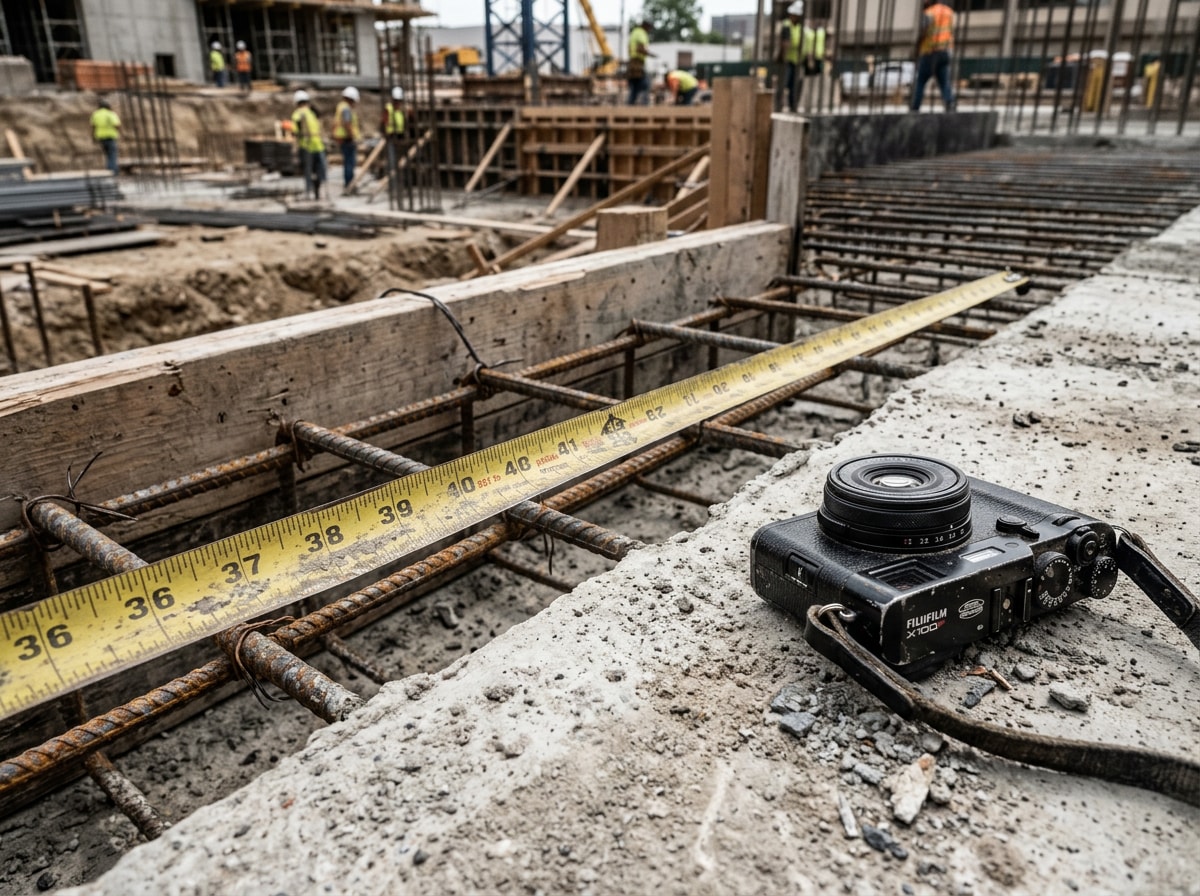
Real triggers make this concrete faster than definitions do. An NCR gets raised when reinforcement is installed outside the approved tolerance, an unapproved material shows up on site, a concrete test fails, or an inspection gets skipped before work is covered up.
How you write it matters as much as when you raise it. Vague wording like "work is not acceptable" tells the next reader nothing. A usable NCR states the exact location, the measured value against the spec, the date, and the photo reference, so anyone picking up the file later can act without a site visit or a phone call.
NCR Form & Template: What to Include
A usable NCR form needs a consistent set of fields every time: NCR number, description of the issue, location, reference standard or drawing, severity, root cause, corrective action taken, verification method, and sign-off.
Projects that reuse the same template close reports faster, mostly because nobody has to guess what information belongs at each stage. If your team is building one from scratch, the field list above is a solid starting point. Our drainage service crews use the same structure for pipe and sewer work, which we cover in more detail below.
Types of NCRs: Major vs Minor
Non-conformances are generally sorted into major or minor, based on how much they affect the project. Major non-conformances are serious issues that can affect structural safety, regulations, or building use, and they require urgent action and often formal sign-off. A non-compliant fire-rated assembly or a missing structural element are classic examples.
Minor non-conformances, by contrast, are usually cosmetic or low-risk deviations that still need a documented fix but don't stop progress. Classifying severity correctly at the point of issue helps teams decide what gets escalated immediately and what moves through the normal queue.
How to Close an NCR in Construction
Closing an NCR properly is where the process either builds trust or falls apart. An NCR that gets marked "closed" without real verification isn't actually resolved, it's just hidden.
The Closure Process and Timelines
Closure timelines vary a lot by contract and severity, but most quality plans structure it in stages: contain the issue quickly, work the corrective action over the following days, then close out once the fix is verified and documented.
| Stage | What Happens | Usual Approver |
|---|---|---|
| Containment | Stop the activity, quarantine material or work | Site engineer or supervisor |
| Corrective action | Root cause identified, fix implemented | Quality manager |
| Verification | Fix checked against the original requirement | Quality manager or client rep |
| Final close-out | Evidence approved, register updated | Quality manager, PM, or client |
Beyond timing, the team has to verify the result, retain the evidence, complete the corrective action, get the right sign-off, and update the register. The distinction between an immediate correction and a corrective action that removes the root cause is exactly what separates a report that stays closed from one that reopens three weeks later on the same grid line.
Root Cause Analysis: The 5 Whys Method
The 5 Whys method is a simple way to dig into what actually caused a non-conformance. The team asks "why" repeatedly until it reaches a cause that can be meaningfully addressed. It doesn't have to stop at exactly five questions.
The goal is to get past the first convenient explanation. If a concrete pour fails a strength test, "poor mixing" might be the surface answer, but asking why again and again might turn up a scheduling problem or a supplier issue underneath it.
NCR Management on Trenchless and Underground Utility Work
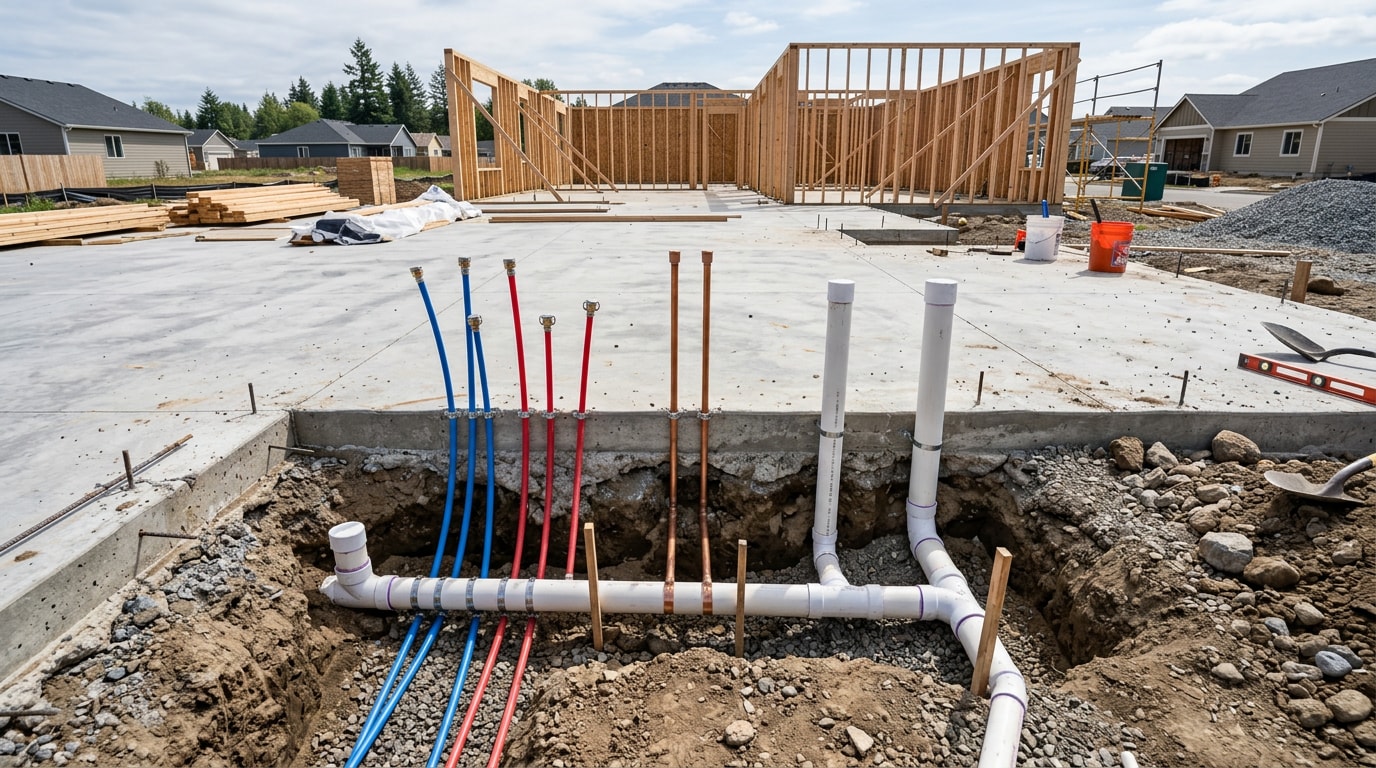
Most NCR guides are written for buildings above grade. Underground utility work runs by the same rules, but the triggers look different, and the stakes are higher because you often can't see the problem once it's backfilled.
On our sewer replacement and CIPP lining projects across Wooster and Akron, we raise an NCR any time a compaction test, a liner cure reading, or a pressure test on a new water service line comes back outside spec, and we raise it before backfill goes back in the trench. Catching it at that point costs an afternoon. Catching it after the yard is restored costs a re-excavation, a new trench digging mobilization, and an unhappy homeowner.
Common underground NCR triggers include:
- A sewer line inspection camera run showing a joint that doesn't meet the approved alignment.
- A CIPP epoxy liner cure test that falls short of the spec before the line goes back into service.
- Backfill compaction density readings that miss the density spec during yard backfilling.
- Water service line pressure test failures caught during water line inspection, before the site is closed out.
Excavation work also has a safety layer that above-grade NCRs don't. OSHA's excavation standard, 29 CFR 1926 Subpart P, covers scope, application, and definitions along with specific excavation requirements and requirements for protective systems. A non-conformance tied to shoring, sloping, or trench protection isn't just a quality problem; it's a safety stop-work trigger first, documentation second. Teams doing excavation services or trenchless pipe installation should treat any protective-system deviation as an automatic containment event, not a paperwork item to close out later.
If you're vetting a contractor for a project with real QA/QC exposure, whether that's a home addition or an underground utility tie-in, ask to see how they document deviations before you sign. Our Contractor Home Addition Guide walks through the same vetting questions for above-grade work. You can also browse our completed projects to see how documentation looks in practice, or get a free estimate if you're planning drainage, sewer, or water line work in Wooster, Akron, Massillon, Ashland, Mansfield, Dover, or New Philadelphia, OH.
Why NCR Management Matters
Poor NCR tracking has a real cost. When reports get logged late, tracked loosely, or forgotten entirely, that gap doesn't disappear, it shows up later as rework, a blown handover date, and a frustrated project manager trying to hit a deadline.
The scale of that cost is bigger than most people assume, and the commonly quoted figures undersell it. A widely cited industry estimate puts direct field rework at roughly 5% of total project cost, with a 90th-percentile figure of 12.4% when change orders and quality issues combine. But when a researcher analyzed actual contractor rework costs instead of estimates, the numbers told a different story. Actual precompletion rework costs averaged 0.38% of contract value, rising to 0.76% once postcompletion corrections were included, and these findings show that rework costs, though smaller than some estimates, can still significantly erode profit margins for major contractors. Either way, the direction is the same: undocumented deviations cost more the longer they sit.
Well-managed NCRs work the other direction. They support continuous improvement, help avoid repeat costs, and raise delivery standards across every phase of the project. Treating NCR management as a discipline, not paperwork, pays off well before the project reaches its final inspection.
FAQ
What does NCR stand for in construction?
NCR stands for Non-Conformance Report. In construction, it refers specifically to a formal quality document, distinct from how "NCR" gets used as an abbreviation in other industries.
What is the difference between an NCR and a defect?
A defect is a problem with the work itself. An NCR is the formal record and control process used once that problem represents a failure to meet a documented requirement.
What is the difference between an NCR and an RFI?
If a requirement is genuinely unclear before work starts, raise an RFI and get clarification first. An NCR applies once a known, clear requirement has already been missed.
Who is responsible for closing an NCR?
Final approval usually comes from the quality manager, project manager, designer, consultant, or client, depending on how the project's quality plan assigns authority.
Is an NCR the same as a Corrective Action Report (CAR)?
Not quite. An NCR documents a confirmed deviation and triggers action. A CAR defines specifically how that issue gets fixed, and many projects combine both into one form.
Who can issue an NCR on a construction site?
Anyone with quality authority on the project can typically raise one, including site inspectors, quality managers, engineers, client representatives, or independent auditors. The person who raises it isn't required to be the one who resolves it.
Does "NCR Construction" also refer to a company?
Yes, separate from the acronym. "NCR Construction, LTD" was a full service construction company providing design/build, construction management, and general contracting based in Westlake, Ohio. It's an unrelated use of the same three letters as a business name, not the quality-control document this guide covers.
About This Guide
This guide was reviewed by the field quality team at The Trenchless, who document non-conformances on sewer, water line, and trenchless excavation projects throughout Northeast Ohio. If you're comparing contractors for a drainage, sewer, or water line project and want to see how quality documentation actually gets handled on a job site, contact us for a free estimate and a straight answer.