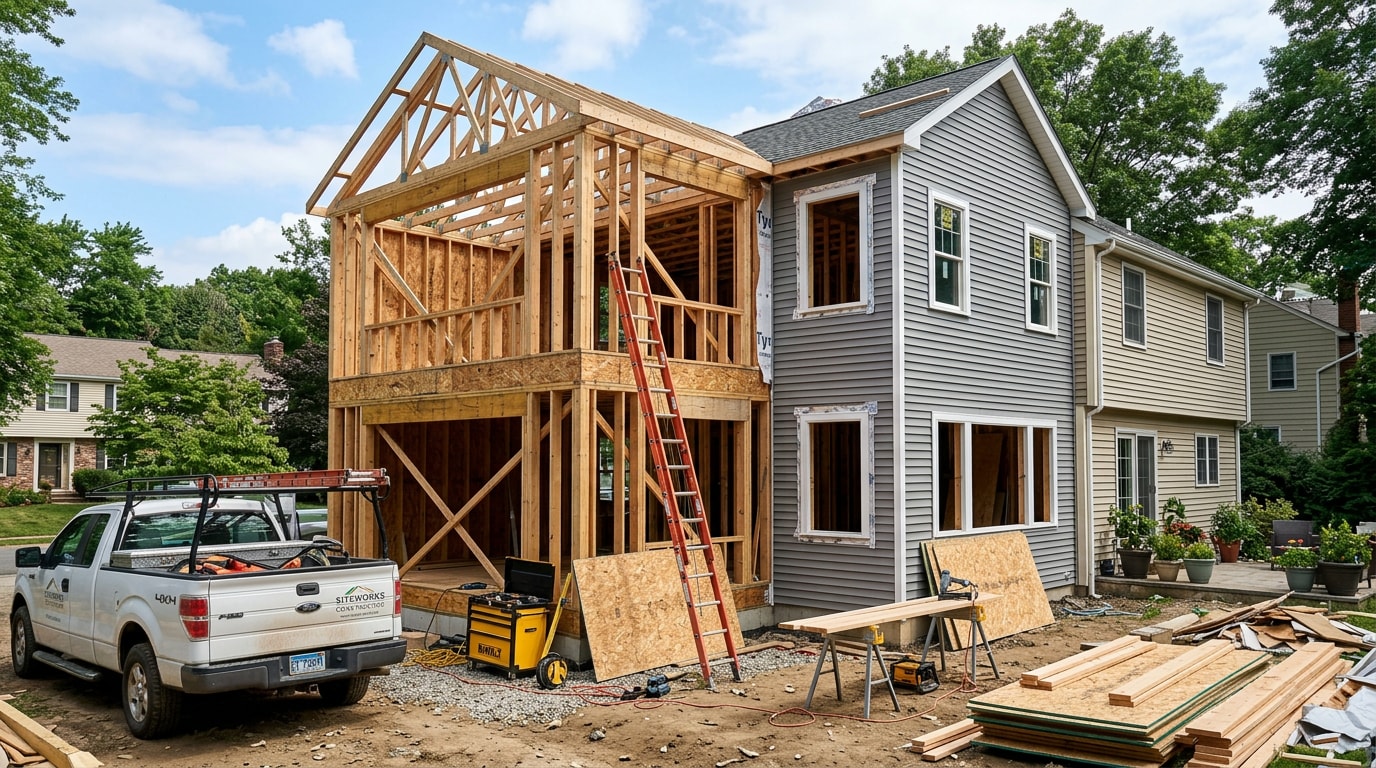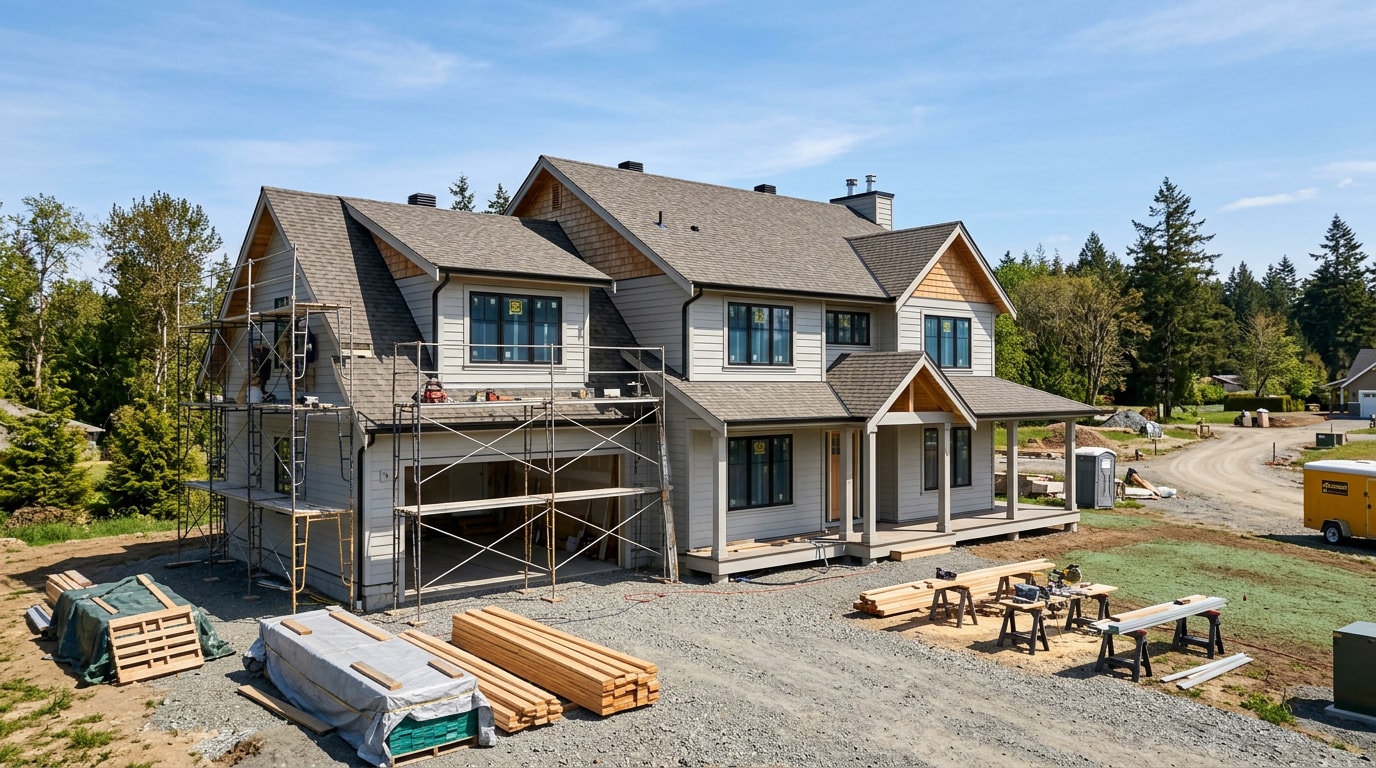
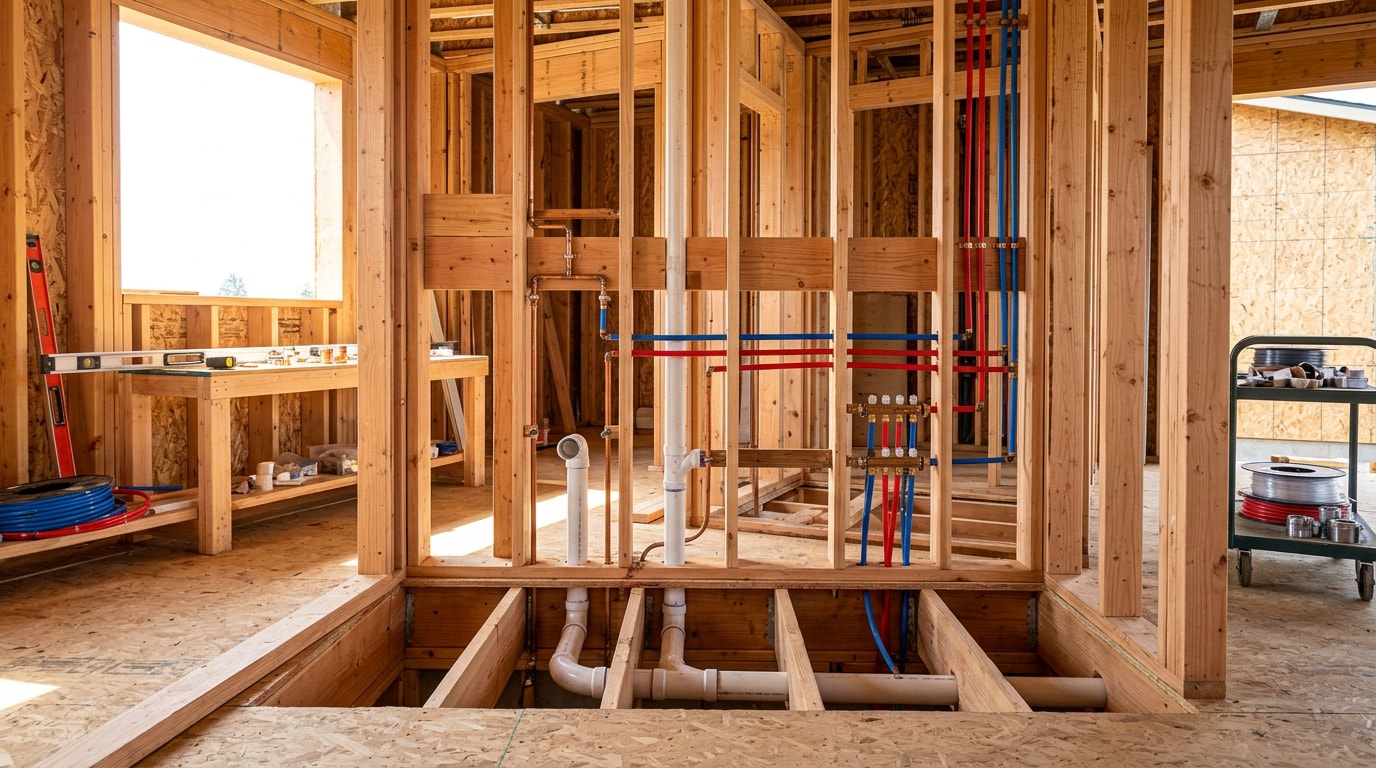
New construction plumbing companies do far more than cap off a few pipes before the drywall goes up. The right crew reads blueprints, coordinates with framers and electricians, and keeps rough-in and final inspections on schedule. Here's what the work actually includes, how to vet a company before you sign, and what it should cost in 2026.
What New Construction Plumbing Companies Handle
New construction plumbing spans underground utility connections, rough-in plumbing behind the walls, and the final fixture installs that make a building livable. Scope shifts a lot based on what's being built and who's building it, so it helps to see each piece broken out before you start calling contractors.
Residential, Commercial & Multi-Family Scope
A single-family home needs standard rough-in work sized to one household's fixture count. Commercial new construction plumbing has to account for heavier code loads, larger supply lines, and systems built for constant daily traffic.
Multi-family plumbing adds coordination on top of that. Shared walls mean lining up vent stacks and drain lines between units, and timing has to match framing, electrical, and HVAC crews working in the same space. A company that only handles residential new construction plumbing may not have the crew size or code familiarity a commercial or multi-family project demands, so ask directly about their project history in each category. Our contractor services page covers the sewer, water, and drain work that typically supports a build like this.
Ground-Up, Water Heater & Septic System Work
Ground-up construction plumbing starts before a slab is poured, with underground supply and waste lines set to the site plan. Framing triggers rough-in plumbing for walls and floors, and water heater placement gets planned early so venting and gas or electrical hookups don't conflict with other trades later.
On properties without municipal sewer access, septic system plumbing has to be coordinated with the drain field layout from day one. Get the underground work wrong and it's a far bigger, pricier fix once concrete or landscaping is in place. Many of these runs can go in with trenchless pipe installation instead of a full open trench, which is worth asking about if the site has mature landscaping or tight access.
How to Choose a New Construction Plumbing Company
Hiring decisions made early in a build are hard to undo once work is underway. This is the part of the process worth slowing down for.
Licensing, Insurance & Experience
New-build work calls for a different skill set than a repair call. It involves reading blueprints, scheduling around other trades, and passing rough-in and final inspections.
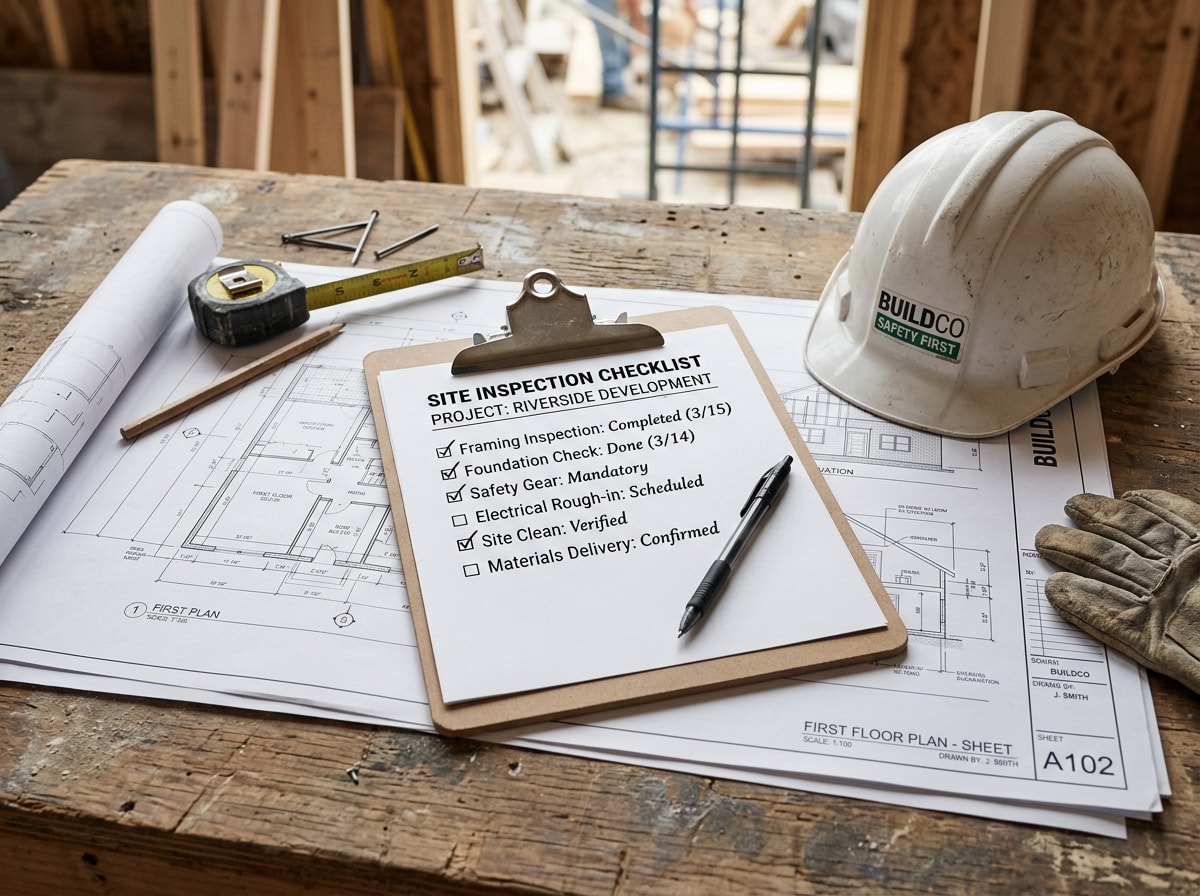
Before signing anything, ask for proof of an active license, a current certificate of insurance, and bonding information. A legitimate contractor hands these over without hesitation. In Ohio, the Ohio Construction Industry Licensing Board operates within the Division of Industrial Compliance and is responsible for licensing qualified contractors in the electrical, heating, ventilating and air conditioning (HVAC), plumbing, hydronics, and refrigeration trades , and its public lookup tool confirms whether a license is active and clear of unresolved complaints. Pair that check with a direct question about recent new construction experience: how many ground-up projects similar in size to yours has this crew finished in the last two years?
Checking References & Reviews
Ask for references from recent new construction projects specifically, not just repair or remodel clients. When you call, ask whether the crew hit deadlines, passed inspections on the first try, and communicated clearly with the builder or homeowner throughout.
Reviews on independent platforms can round out the picture, but weigh them against direct references. A handful of detailed, verifiable references from comparable projects tells you more than a long list of star ratings. It also helps to look at finished work directly; browsing a company's completed projects shows you the quality of work you're actually buying before you sign anything.
The Vetting Question Most Buyers Skip: Who Handles the Dirt Work
Plumbers usually get evaluated on pipe and fixture quality, but underground new construction work lives or dies on the excavation that happens before any pipe goes in. Ask whether the company self-performs excavation and site preparation, or subcontracts it out.
When plumbing and dirt work are handled by separate crews with no direct line of communication, scheduling gaps are one of the most common causes of delayed rough-in inspections on new builds. A company that controls both pieces in-house tends to hit inspection dates more consistently.
Red Flags & Questions Before You Sign
Watch for:
- Bottom-line-only bids with no itemized scope of work
- Contractors who seem unfamiliar with local permit requirements
- Anyone unwilling to put payment terms in writing
Before signing, ask:
- What's the payment schedule, including deposit amount and draw timing tied to milestones?
- Who's responsible for scheduling and passing inspections?
- What does the warranty cover, and for how long?
- How are change orders priced if the scope shifts mid-project?
These aren't about distrust. A professional contractor expects them and answers directly. If you're planning a build in our service area and want a second set of eyes on a bid, you can schedule a free inspection before signing anything.
Code Compliance, Materials & Water Efficiency
Plumbing choices made during the build carry weight for decades. Getting the design and materials right the first time is usually the difference between a system that needs occasional maintenance and one with recurring headaches.
Code Compliance & Water Distribution
Code compliance exists to prevent failed inspections, water damage, and safety hazards down the road. The International Plumbing Code, the model code behind most local plumbing requirements, establishes minimum requirements for plumbing systems using prescriptive and performance-related provisions , and is in use or adopted in 36 states, the District of Columbia, Guam, and Puerto Rico . It's worth confirming your contractor stays current with whichever edition your local building department has adopted.
Proper pipe sizing also affects everyday water pressure. Undersized lines or poorly planned routing can leave upper floors with weak flow or slow drainage, problems that are expensive to fix once walls are closed up.
Material Selection: PEX, Copper & PVC
Material selection usually comes down to three options, each with tradeoffs:
| Material | Best For | Tradeoff |
|---|---|---|
| PEX | Supply lines, budget builds | Flexible and affordable but shouldn't be exposed to direct sunlight long-term |
| Copper | Supply lines, long-term durability | Higher cost and longer install time, decades-long track record |
| PVC | Drain and waste lines | Standard, cost-effective, not rated for hot supply lines |
A knowledgeable new construction plumbing company recommends a mix based on climate, budget, and local code rather than defaulting to one material everywhere. If an existing line on the property needs rehab instead of full replacement, ask whether pipe lining (CIPP) is an option before defaulting to a full dig-up.
Water-Efficient Fixtures
Water-efficient fixtures reduce both utility bills and strain on septic or municipal systems, and building them in is cheaper than retrofitting later. Look for fixtures carrying the EPA WaterSense label, since WaterSense labeled products meet EPA's specifications for water efficiency and performance, and are backed by independent, third-party certification .
Fixture and appliance selection should be finalized early enough that rough-in placement matches the actual products going in, not a generic placeholder.
What to Expect for New Construction Plumbing Costs
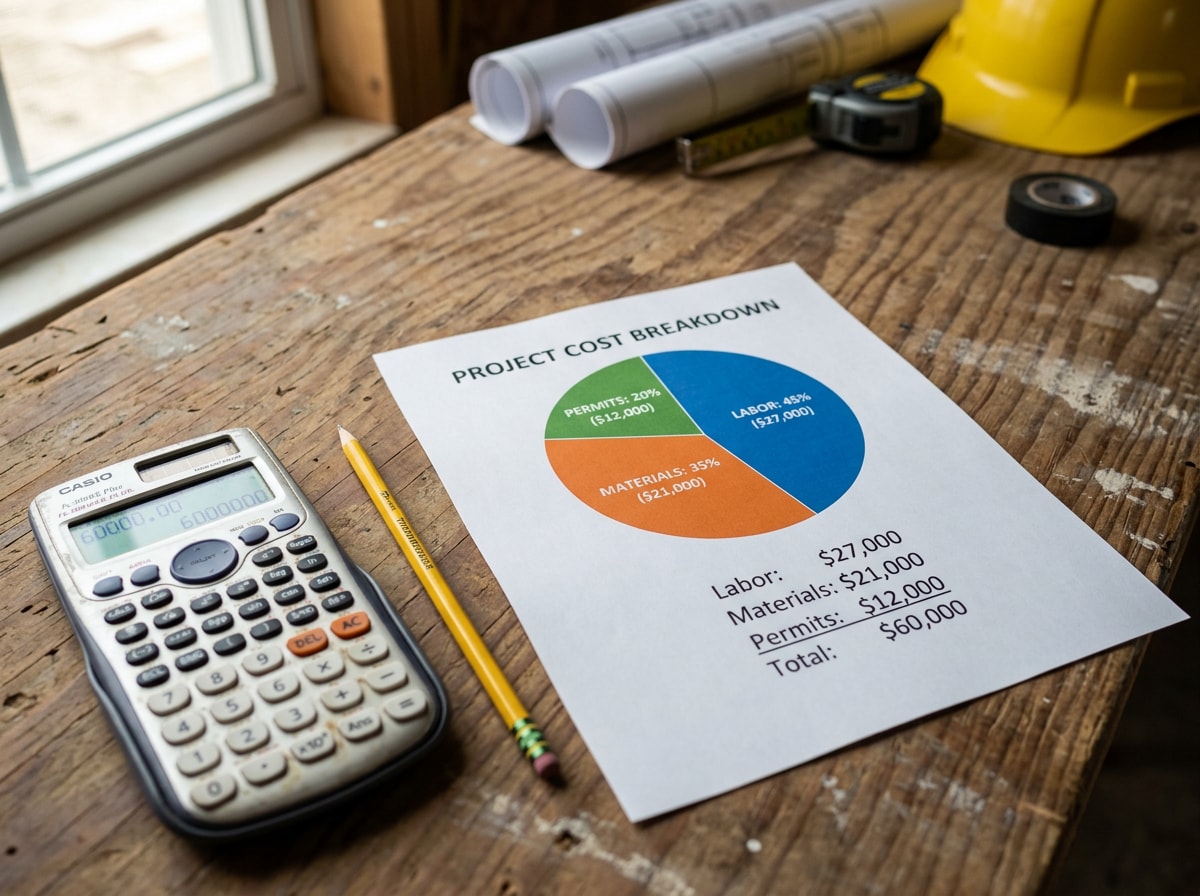
New construction plumbing cost typically splits into three buckets: labor, materials, and permits. Labor usually makes up the largest share, since rough-in and finish work both require skilled hours on-site across multiple phases of the build.
A detailed bid should break these out rather than handing you one lump figure:
| Cost Category | Typical Range (2,000 sq. ft. home) | Notes |
|---|---|---|
| Labor | $8,000 – $12,000 | Rough-in and finish work, multiple site visits |
| Materials | $4,000 – $7,000 | Pipe, fittings, and fixtures |
| Permits & Inspections | $500 – $1,500 | Varies by jurisdiction |
| Total | $12,500 – $20,500 | Shifts with home size, fixture count, and material grade |
Bids that aren't itemized this way make it hard to compare contractors fairly or spot where corners might be cut. For a deeper breakdown of contractor pricing and vetting steps, see our new construction plumbing contractors guide.
We work new construction and trenchless projects across Wooster, Akron, and the surrounding Ohio communities, and the scheduling and vetting issues above come up on nearly every job site we touch. Visit our homepage to see the full range of services we coordinate on a build.
FAQ
What does new construction plumbing include?
It includes water supply lines, drainage and waste lines, fixtures, water heaters, gas connections, and any other systems required by the project's approved plans. Exact scope depends on whether the project is residential, commercial, or multi-family.
What is ground-up construction plumbing?
It's the plumbing infrastructure installed for an entirely new structure, as opposed to additions or remodels on an existing building. It starts with underground utility connections and continues through rough-in and finish work as the structure goes up.
What is rough-in plumbing?
Rough-in plumbing is the supply and drain piping installed inside walls and floors before drywall, flooring, and fixtures go in. It has to pass inspection before the walls close, since the pipes become inaccessible after that point.
How much does plumbing cost for a new construction home?
Plumbing for a new construction home commonly runs between $12,000 and $20,000 total, though it can fall outside that range depending on home size, number of bathrooms, fixture quality, and whether the property connects to municipal sewer or needs a septic system. Getting an itemized bid is the best way to see where your budget is going.
At what point in the build should a plumbing contractor be hired?
Ideally during the design and blueprint stage, before foundation work starts. This lets them flag layout issues early, plan for code compliance, and coordinate rough-in work with other trades, avoiding costly changes from hiring too late.
Do you need a permit for new construction plumbing?
Yes. Nearly every jurisdiction requires a plumbing permit and inspection for new construction, and work done without one can hold up your certificate of occupancy. A legitimate contractor pulls permits as a standard part of the job and will not push the cost or responsibility onto you quietly.