Hiring professional builders is one of the largest financial decisions most homeowners ever make, yet many people start interviewing contractors without knowing who actually does what. Builder, general contractor, and construction manager sound interchangeable, but each comes with different fee structures, responsibilities, and contracts. This guide walks through exactly how to research, interview, and vet professional builders before a single dollar changes hands.
What Does a Professional Builder Do?
A professional builder manages the construction or renovation of a home: coordinating labor, materials, permits, and subcontractors from start to finish. The exact scope varies depending on whether you're hiring an independent builder, a general contractor, or a dedicated construction manager for a larger project.
An independent builder typically handles smaller-scale or owner-coordinated projects directly, often with less overhead than a large firm. A general contractor oversees the entire build and subcontracts trades like electrical and plumbing. For bigger or more complex builds, a dedicated construction manager is brought in purely to coordinate schedules and budgets, usually for a flat fee or hourly rate rather than a percentage.
Architects, draftsmen, and structural engineers fall into a related but separate category. They design and certify the plans a builder then executes. A custom home contractor blends several of these roles, managing design input alongside construction. A small bathroom remodel might only need an independent builder, while a full custom home almost always calls for a general contractor or construction manager working alongside a licensed architect.
Builders and GCs alike are expected to work within code requirements set by model-code bodies. The I-Codes are the most widely used and adopted set of model codes in the world, and all fifty U.S. states and many other countries have adopted them. That's true whether you're building in a major metro or a smaller Ohio township, and it's one of the first things worth confirming with any builder you interview.
Before You Search: Define Your Budget and Project Scope
Two decisions shape everything that follows: how much you can actually spend, and what you're building.
Get pre-approved for construction financing first. A pre-approval tells you your real construction budget, not just a wish-list number, and it signals to builders that you're a serious, bankable client. Skipping this step is one of the most common reasons custom home projects stall mid-negotiation.
Decide on production vs. custom early. A production builder works from a set catalog of floor plans and tends to move faster because of repeatable processes. A fully custom home takes longer due to design iteration and custom permitting. Land and site conditions, like soil type or lot slope, also factor into which builder type makes sense, especially if the project involves excavation, utility relocation, or a sloped lot that needs grading before anyone pours a foundation.
If your project touches existing sewer or water lines, such as a home addition that requires moving a water service line, ask whether your builder coordinates directly with a licensed drainage contractor or expects you to hire one separately. Work like trenchless pipe installation or sewer line replacement often has to happen before the foundation goes in, and a builder who hasn't planned for it can blow your timeline before framing even starts.
How to Find and Vet Potential Builders
Once your budget and project scope are set, it's time to build a shortlist.
Where to start:
- Check your local home builders association directory, which filters out a lot of unverified options automatically.
- Ask your real estate agent for recommendations. Agents often work with the same contractors repeatedly and know who delivers on schedule.
- Ask friends and family who've recently built or renovated.
- Search locally and cross-check results against a builder's actual service area and project history.
Early warning signs to watch for:
- A missing or outdated website
- No reviews anywhere online
- Reluctance to share past project photos
- Vague or evasive answers to basic scheduling questions
An unprofessional builder at this stage rarely improves once a contract is signed. These early red flags are worth taking seriously rather than excusing.
Credentials, Licensing, and Reputation Checks
A licensed and insured builder should produce proof of both on request. Anything less is a reason to keep looking. Build a short checklist before you call references or sign anything:
- License number, verified through official contractor license verification channels
- Proof of current liability and workers' comp insurance
- BBB rating and any unresolved complaints
- Membership in a recognized trade or builders association, such as the National Association of Home Builders
- Years in business under the current company name
A detail most guides skip: not every state licenses general contractors the same way. In Ohio, for example, there is no single state-level license that covers general contractors or home builders. The Ohio Department of Commerce's Division of Industrial Compliance, through the Ohio Construction Industry Licensing Board, licenses commercial contractors in only five trades: electrical, HVAC, plumbing, hydronics, and refrigeration. That means if you're hiring a builder in Wooster, Akron, Massillon, or anywhere else in Ohio, "licensed" verification for the general contractor side of the job often happens at the municipal level, not the state level. Specialty trades working under that builder, like your electrician or plumber, are the ones you can actually look up through the state board. Ask your builder directly which of their subcontractors carry state trade licenses and which permits your local building department requires.
Checking a builder's reputation this way takes about an hour, but it catches most serious problems before they ever reach a contract.
Interview Builders: Questions That Reveal How They Operate
Plan to interview at least two or three builders before deciding. Comparing answers side by side reveals a lot that a single conversation won't.
Ask every builder:
- What's the expected project timeline, and what could extend it?
- How are change orders priced and documented?
- Can you provide at least three recent client references?
- Who manages the project day to day, you or a project manager?
- How often will I get updates, and by what method?
These questions aren't about catching anyone out. They're about seeing how clearly a contractor communicates under normal questioning. If responses are slow or vague now, that pattern rarely improves mid-project.
For new construction, also ask about energy performance: insulation R-value, HVAC efficiency ratings, and whether the builder can construct to ENERGY STAR or similar standards. The goal of the ENERGY STAR for New Homes program is to help homebuyers easily identify homes that are significantly more energy efficient than standard construction in the marketplace. A builder experienced with energy-efficient construction should answer these questions without hesitation, since they come up constantly in current code and buyer expectations. The ENERGY STAR new homes program is a useful baseline reference if you want to compare a builder's claims against an actual standard.
Visit Past Projects and Call References
Don't just request references. Actually call them, and ask pointed questions about budget accuracy, timeline, and how issues were handled. Tour a model home or a recently completed project where possible, and look closely at finish quality, not just the overall layout.
In our own work coordinating excavation and utility tie-ins alongside general contractors across Wayne and Stark counties, we've seen project timelines slip the fastest when a builder skips a written change-order process on exactly this kind of site work. A builder's portfolio tells you what they're capable of. References tell you what it's actually like to work with them.
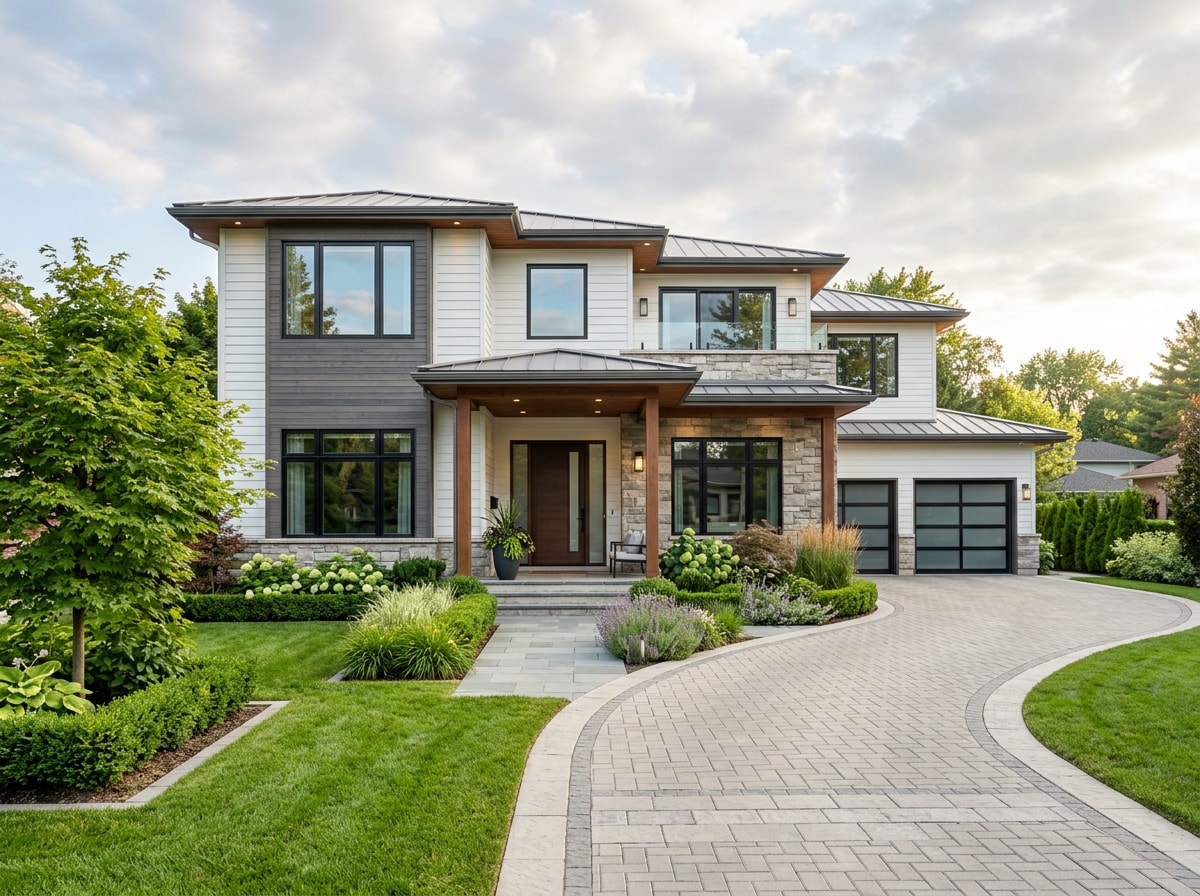
Seeing finished work in person, alongside browsing a builder's project gallery, gives you a much more realistic sense of quality than photos alone.
Making Your Final Decision: Costs, Contracts, and Payment
How Much Do You Pay a Builder?
A general contractor usually charges a fee of 10 to 20% of the total project cost, on top of the subcontracts, materials, and labor bought for the job. Construction managers and independent builders may charge flat fees or hourly rates instead. Treat any single figure as a starting point rather than a fixed number, since it shifts with material costs, labor costs, and regional demand.
| Builder Type | Typical Fee Structure | Best For |
|---|---|---|
| Independent Builder | Flat fee or hourly rate | Smaller, owner-coordinated projects |
| General Contractor | 10%–20% of total project cost | Full-scope builds managing multiple subcontracted trades |
| Construction Manager | Flat fee or hourly rate | Large, complex builds needing dedicated budget and schedule oversight |
Before You Sign: Key Contract Items to Check
- A detailed written estimate, not a verbal ballpark
- A payment schedule tied to construction milestones, not arbitrary dates
- A clear change-order process with pricing attached
- Warranty terms spelled out in writing
- A realistic project timeline, including likely delay points
If anything feels vague, ask for clarification or a revision before you sign. If you're ready to move forward, you can request a free estimate directly and get specifics in writing before committing.
For a closer look at how to separate builder types and avoid the most common hiring mistakes, our guide on how to choose a builder walks through red flags and smart questions in more depth. And if your project is an addition or remodel that touches plumbing layouts, our home plumbing diagram guide is a useful companion piece for understanding what your builder and plumber actually need to coordinate.
Start at the homepage to see our full range of drainage, water line, and site work services that often run alongside a builder's schedule on larger projects.
FAQ
What is the difference between a builder and a contractor?
A builder often designs and constructs homes directly, sometimes owning the business building them. A general contractor typically manages subcontractors and schedules for a project someone else designed.
How do I know if a builder is trustworthy or reputable?
Check licensing, insurance, BBB rating, and call actual references. A reputable contractor will readily provide all of this without hesitation or delay.
How much does it cost to hire a general contractor or builder?
General contractor fees typically run 10% to 20% of total project cost. Independent builders and construction managers may charge flat or hourly rates instead.
Do I need a builder or a contractor for my project?
Small renovations often only need an independent builder or contractor. Full custom home builds usually require a general contractor or construction manager to coordinate the larger scope.
What are red flags when hiring a builder?
No license or insurance documentation on request, no verifiable references, an outdated or missing website, and vague answers about timeline or change-order pricing are all signs to walk away.
How long does it take to build a custom home?
Most custom homes take 7 to 12 months from permit to move-in, though design iteration, permitting delays, and site conditions like excavation or utility relocation can extend that timeline significantly.
About the Author
This guide was reviewed by the field team at The Trenchless, who coordinate excavation, drainage, and utility work alongside general contractors and builders on residential projects throughout Wooster, Akron, Massillon, Ashland, Mansfield, Dover, and New Philadelphia, Ohio. Questions about a project that involves site work, sewer lines, or water lines? Contact us directly.