Contractor vs builder confusion trips up almost everyone planning a renovation or a new home, because the two titles get used interchangeably even when the roles aren't the same. A contractor typically executes a defined scope of work, often one trade, while a builder manages the entire construction process from planning through final inspection. Knowing which one actually fits your project before you sign anything is what keeps your budget and timeline intact.
Contractor vs Builder: The Short Answer
Here's the fastest way to tell them apart:
- Contractor — licensed to perform or oversee a specific trade or scope (plumbing, roofing, flooring, a single remodel). Hands-on, focused, usually a shorter commitment.
- Builder — manages the full project lifecycle: design coordination, permitting, scheduling, and every trade involved, from groundbreaking to the final walkthrough.
- Overlap — on smaller jobs, one company often fills both roles, which is exactly why the terms get blurred in everyday conversation.
The rest of this guide breaks down scope, cost, permitting, and the one piece almost nobody mentions: who actually handles the sewer and water lines once the builder or contractor is on-site.
What Does a Contractor Do?
A contractor is typically a licensed professional who specializes in one trade or a handful of related trades, rather than managing every phase of a large project. Think electrical work, plumbing, roofing, or flooring — hands-on execution within a specific scope is the core of the job.
On bigger jobs, contractors also wear a project-manager hat:
- A general contractor hires and coordinates subcontractors, sets schedules, and oversees quality control, even without swinging a hammer personally.
- A specialty contractor sticks to one trade and only coordinates a second trade when the job calls for it.
Contractors are the right call for smaller, focused projects — a new vanity, a repaint, replacing flooring. They're generally not the ones orchestrating multi-trade, permit-heavy builds from the ground up. For trade-specific plumbing, sewer, or drain work, our contractor services cover everything from line repair to full replacement.
What Does a Builder Do?
A home builder, sometimes called a general contractor depending on the region, manages the entire construction or remodeling process from start to finish. Builder responsibilities span initial planning and permitting all the way through final inspections, not just one piece of the job.
A custom home builder typically goes further upstream, handling pre-construction planning like budgeting, scheduling, and design-sensitive decisions before a single wall goes up. That end-to-end coordination is what separates a builder from a single-trade specialist.
Builders fit best on custom homes, whole-house renovations, and major additions that require juggling multiple trades and phases at once. If you're vetting one for a project like that, How to Choose a Builder in 2026 covers the red flags worth screening for before you sign.
Key Differences Between a Builder and a Contractor
The core contrast comes down to scope and accountability. A general contractor manages construction execution — getting the work done correctly and on schedule. A builder typically delivers a broader process that includes planning, budgeting, scheduling, and design coordination from day one.
| Factor | Contractor | Builder |
|---|---|---|
| Scope of work | Single trade or related tasks | Full project, start to finish |
| Day-to-day involvement | Hands-on or light subcontractor oversight | Continuous project management |
| Permits and inspections | Pulls permits for own trade | Manages all permits and inspections |
| Trade coordination | Minimal, as needed | Coordinates full trade roster |
| Underground utilities (sewer/water) | Usually subcontracted to a licensed specialist | Usually subcontracted to a licensed specialist |
| Typical project size | Small to mid-size | Large, multi-phase builds |
| Accountability | Accountable for one scope | Accountable for the entire outcome |
Take permitting as an example. On a bathroom remodel, a contractor pulls one permit for plumbing or electrical work. On a custom home, a builder pulls and tracks permits across framing, electrical, plumbing, HVAC, and final occupancy, coordinating inspections between every trade along the way.
Who Actually Installs the Sewer and Water Lines?
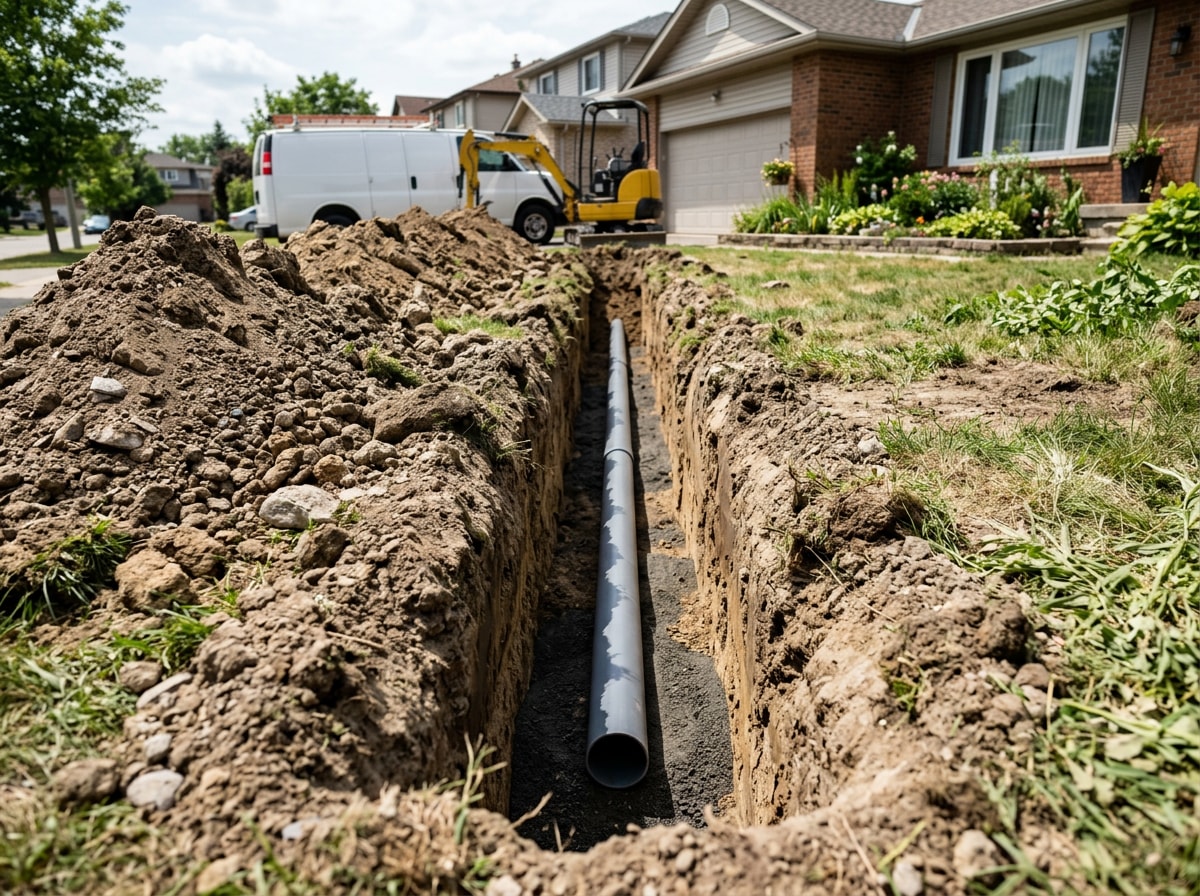
This is the part most "contractor vs builder" guides skip, and it's worth knowing before you sign a contract: neither a general contractor nor a home builder typically installs or repairs the underground sewer and water lines themselves. Both routinely subcontract that work to a licensed underground utility specialist, because it falls under OSHA's excavation and trenching rules rather than standard framing or finish-trade work.
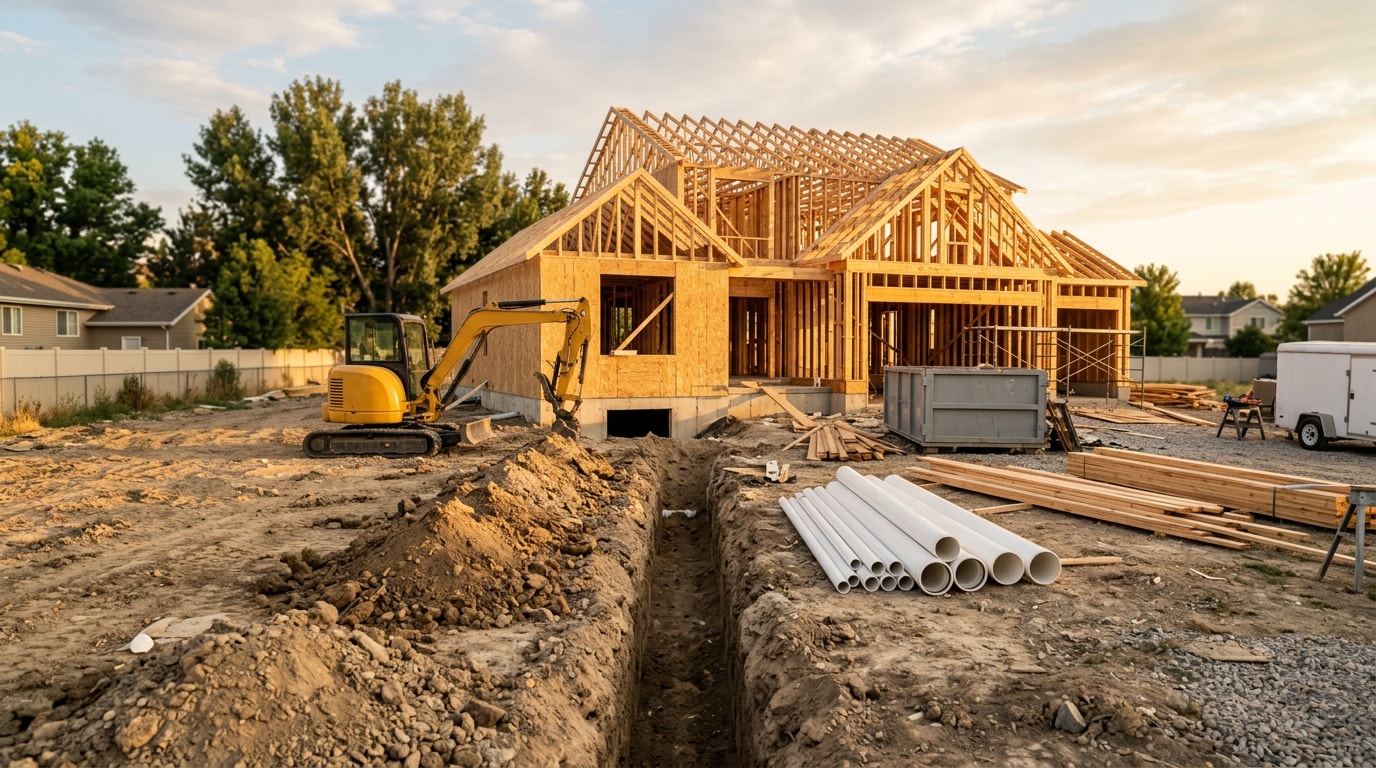
In our own work connecting new water and sewer service lines for homes and additions across Ohio, the pattern is consistent: the builder manages the schedule and the permit for the structure, but the trench, pipe, and backfill get handed to a specialist crew the day the lateral or service line needs to go in or be tied in.
That handoff matters because excavation carries its own safety standard. OSHA requires protective systems for trenches The OSHA standard for excavations, including trenches, is 29 CFR 1926 Subpart P, and OSHA requires that all excavations 5 feet deep or greater make use of one of several protective system options , which is one reason reputable builders don't handle this scope in-house. The National Association of Home Builders maintains its own compliance resources on this exact issue, noting that the toolkit helps home builders comply with OSHA's Excavation and Trenching Standard, designed to protect workers from hazards such as soil cave-ins, falling into trenches, and hazardous atmospheres .
Before a builder breaks ground on an addition or new home, it's worth confirming who is responsible for:
- Locating and inspecting the existing sewer and water lines
- Trenching, excavation, and backfill around the new connection
- Installing or replacing the water or sewer service line
- Camera inspection and final tie-in before the foundation or slab goes in
If your project involves any of that, our sewer line installation, water service line installation, trenchless pipe installation, and excavation services are built specifically for the piece builders and general contractors hand off.
Cost Differences: Is a Builder More Expensive Than a Contractor?
Builder cost and contractor cost don't always track the same way, and two quotes for the same project can look wildly different on paper. The short answer: it depends on what's actually included in that number.
A builder's initial quote often looks higher than a contractor's, and that's usually by design rather than padding. Builder pricing typically bundles planning, scheduling, and trade-management services into the upfront cost, not just labor and materials. That bundled fee, sometimes framed as markup, reflects the value of project management — someone tracking every subcontractor, permit, and deadline so you don't have to.
A contractor's quote, by contrast, usually reflects one trade's labor and materials, with the homeowner (or the builder) handling coordination of everything else. Neither structure is automatically cheaper. Always ask for an itemized breakdown before comparing two quotes head-to-head, and confirm whether excavation, permitting, or underground utility work is included or billed separately.
How to Choose Between a Builder and a Contractor
The project itself usually answers the question:
- Small, single-trade job (new vanity, flooring, a repaint, a drain repair) → hire a contractor.
- Structural changes or multiple trades running at once → lean toward a general contractor or builder.
- New custom home or whole-house renovation → a builder, so one accountable party manages the full process.
- Underground utility work tied to any of the above (sewer line, water line, excavation) → confirm who's handling it and verify they're licensed for trenching, not just general construction.
Ready to figure out which route fits your project? Schedule a free inspection and we'll walk through the scope with you before you commit to either one.
Should I Hire a Builder or Contractor for a Home Remodel?
A single-trade contractor works fine for a straightforward remodel — a kitchen refresh, a new deck, updated flooring. Once the project grows to include structural changes, multiple trades, or several permits running at once, a builder or general contractor becomes the more practical choice.
A whole-house renovation almost always falls into that second category. Juggling framing, electrical, plumbing, and finish work without a single point of coordination tends to create delays and miscommunication. You can see examples of how we've structured larger drainage and underground utility scopes alongside builders and contractors in our completed projects, or start from our homepage to browse services by category.
FAQ
What Is the Main Difference Between a Builder and a Contractor?
A builder typically manages the full construction process, including planning and permitting, while a contractor focuses on executing a defined scope of work, often one trade. The simplest way to remember it: builders deliver the whole process, contractors deliver a piece of it.
Is a Builder the Same as a General Contractor?
Not exactly, though the terms overlap in everyday use. On smaller jobs, one person or company sometimes handles both roles. The Ohio Construction Industry Licensing Board operates within the Division of Industrial Compliance and is responsible for licensing qualified contractors in the electrical, heating, ventilating and air conditioning, plumbing, hydronics, and refrigeration trades , while general contractor registration is typically handled at the city or county level rather than the state. Licensing requirements vary significantly, so check your local building department for how the title is defined where you live.
Can a Contractor Build a House?
Yes, as long as the contractor holds the appropriate general contractor license and coordinates the necessary trades, permits, and inspections. Without that broader licensing and coordination role, a specialty contractor typically isn't set up to manage new home construction from the ground up.
Is a Builder More Expensive Than a Contractor?
Not necessarily. A builder's quote often looks higher because it bundles planning, permitting, and trade coordination into one number, while a contractor's quote usually covers one trade's labor and materials only. Compare itemized quotes, not just the bottom line.
Who Handles Permits, a Builder or a Contractor?
A builder typically manages all permits and inspections across every trade involved in the project. A contractor usually pulls a permit for their own trade only, leaving the homeowner or general contractor responsible for coordinating the rest.
Do Builders and Contractors Ever Work on the Same Project?
Yes, frequently. A builder overseeing a new home or major renovation will hire specialty contractors, including underground utility, electrical, HVAC, and plumbing specialists, to execute specific scopes while the builder manages the overall schedule and permits.
What's the Difference Between a Custom Home Builder and a Production Builder?
A production builder works from a set catalog of plans with limited customization, often building multiple homes in a subdivision at once. A custom home builder, by comparison, tailors the design, materials, and layout specifically to the homeowner's preferences.