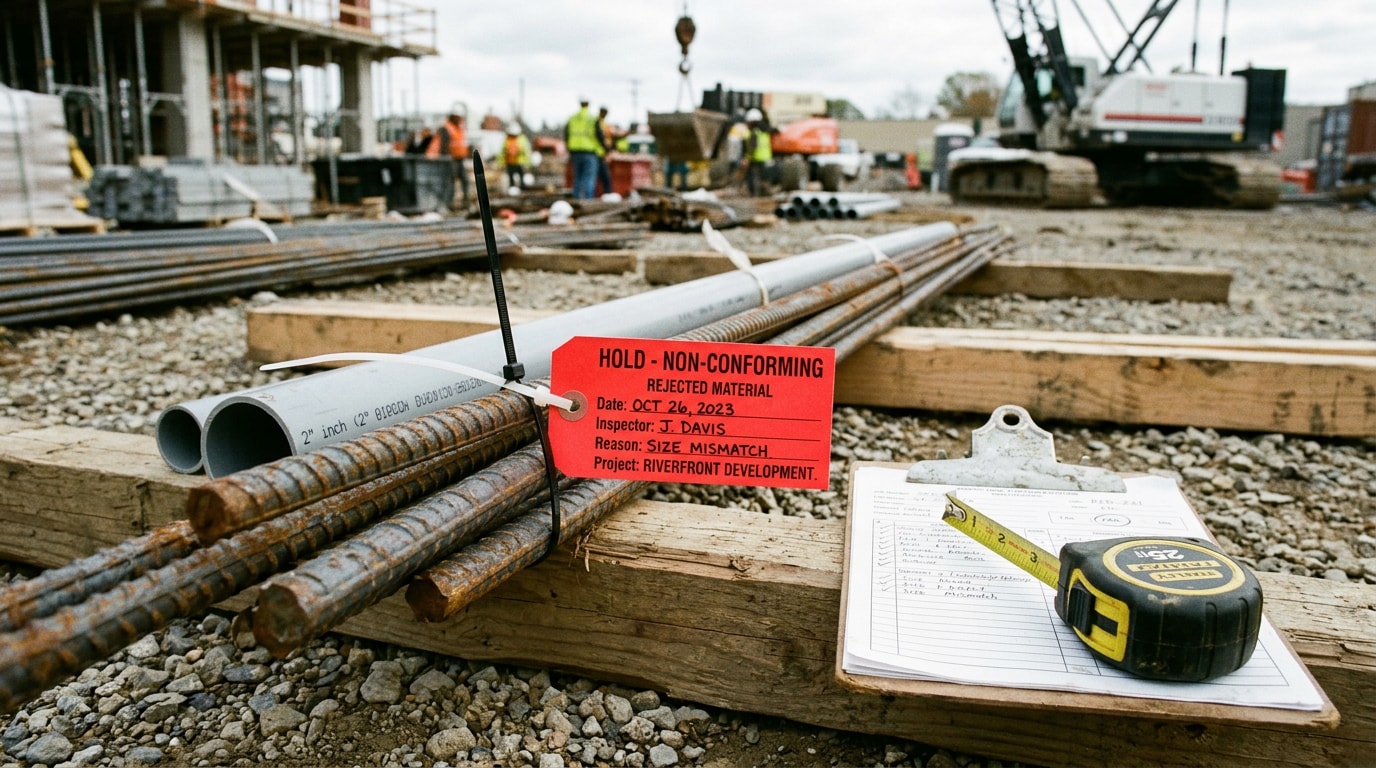
Choosing a builder is the decision that determines whether your new home comes in on budget or turns into a years-long headache. The right builder protects your money, your timeline, and your peace of mind; the wrong one turns every change order into an ambush. This guide breaks down the builder types you'll meet, the red flags that should send you running, and the questions to ask before you sign anything, including the site and utility work most buyers forget about entirely.
Understand the Different Types of Home Builders
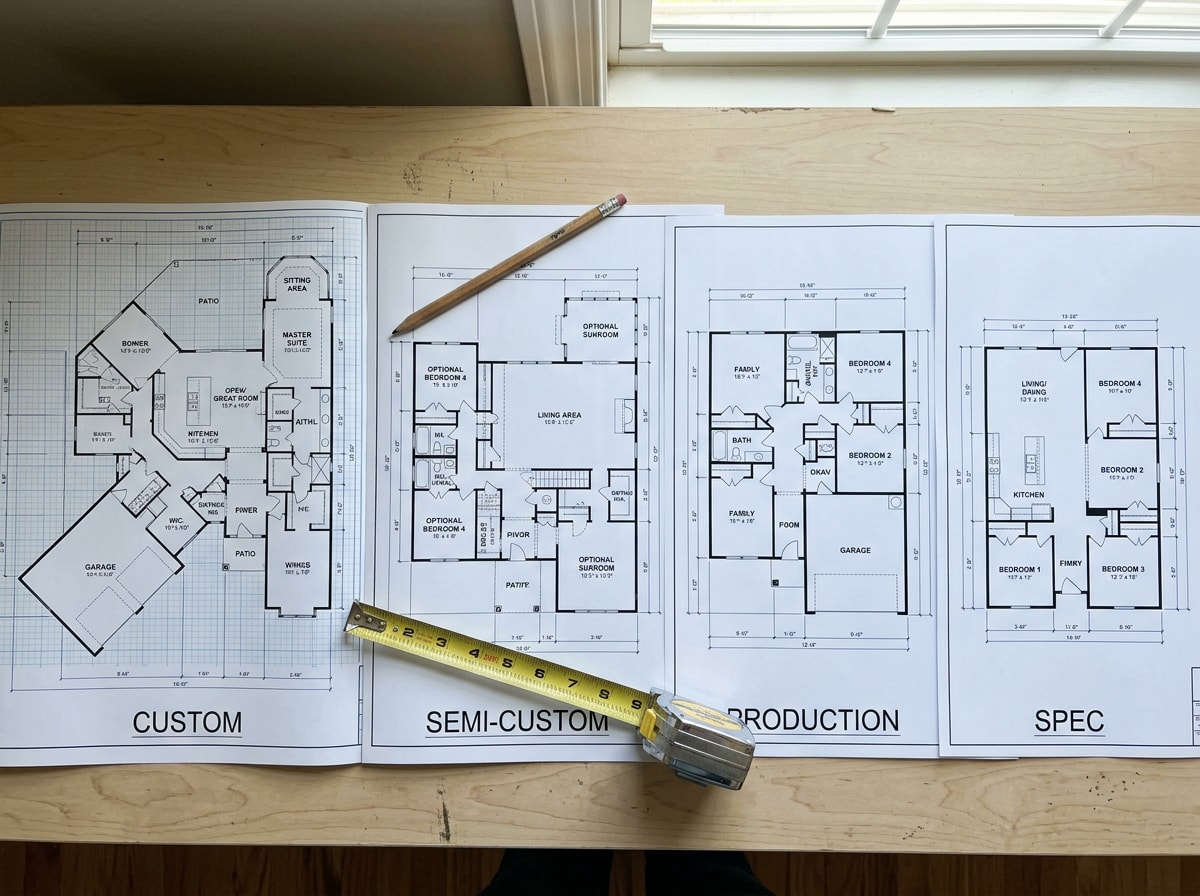
Not every builder operates the same way, and knowing the four main categories before you start interviewing anyone will save you a lot of confusion later. Builder types generally break down by how much customization they offer and how predictable their process is.
Custom vs. Semi-Custom Builders
A custom home builder constructs a house entirely from scratch based on the buyer's specifications, offering the highest level of creative control but requiring more time and typically a larger budget than other builder types. Semi-custom builders sit a step down from that.
Semi-custom builders start from existing floor plans that can be modified within defined parameters. That approach offers a balance between personalization and process efficiency, which tends to make costs more predictable than a fully custom build.
Floor plan customization with a semi-custom builder might mean shifting a wall, swapping finishes, or adding a bedroom to an established layout. You won't get unlimited creative control, but you also won't wait as long or pay as much as you would with a ground-up custom design.
Production and Spec Builders
Production builders and spec builders both trade some personalization for speed and cost efficiency, but they work differently. A production home builder constructs multiple homes based on well-established layouts, ordering materials in bulk to keep costs predictable and timelines efficient.
With a production builder, you can typically choose from a set menu of models and finishes, but customization is limited compared to custom builders. The upside is a straightforward, predictable process with fewer surprises along the way.
Spec homebuilders take a different approach entirely: they construct homes on speculation, meaning they build without a specific buyer in mind and sell once the home is finished or nearing completion. If a spec home is marketed as energy-efficient, confirm that against an actual certification rather than sales language. To earn ENERGY STAR certification, a new home or apartment must meet strict energy efficiency requirements established by the EPA's ENERGY STAR Residential New Construction program , and that verification is done by an independent third party, not the builder itself.
Here's how the four builder types stack up when placed side by side:
| Builder Type | Typical Budget | Timeline | Customization Level | Best-Fit Buyer |
|---|---|---|---|---|
| Custom | Highest | Longest | Full creative control | Buyers with a specific vision and flexible budget |
| Semi-Custom | Mid-to-high | Moderate | Modify existing plans | Buyers who want some personalization without full-custom cost |
| Production | Predictable, mid-range | Efficient | Limited, model-based | Buyers who value speed and price certainty |
| Spec | Varies, often mid-range | Fastest (already built or near-complete) | None, bought as-is | Buyers who want to move in quickly |
For a deeper breakdown of constructor types, licensing, and cost ranges, see our Home Constructors Guide, which walks through how these categories translate into real bids.
Set Your Budget and Get Pre-Approved
Before looking for a builder, get clear on your financial situation. Building a home is a major investment, and getting pre-approved for a construction loan gives you a firm budget while signaling to builders that you're a serious buyer.
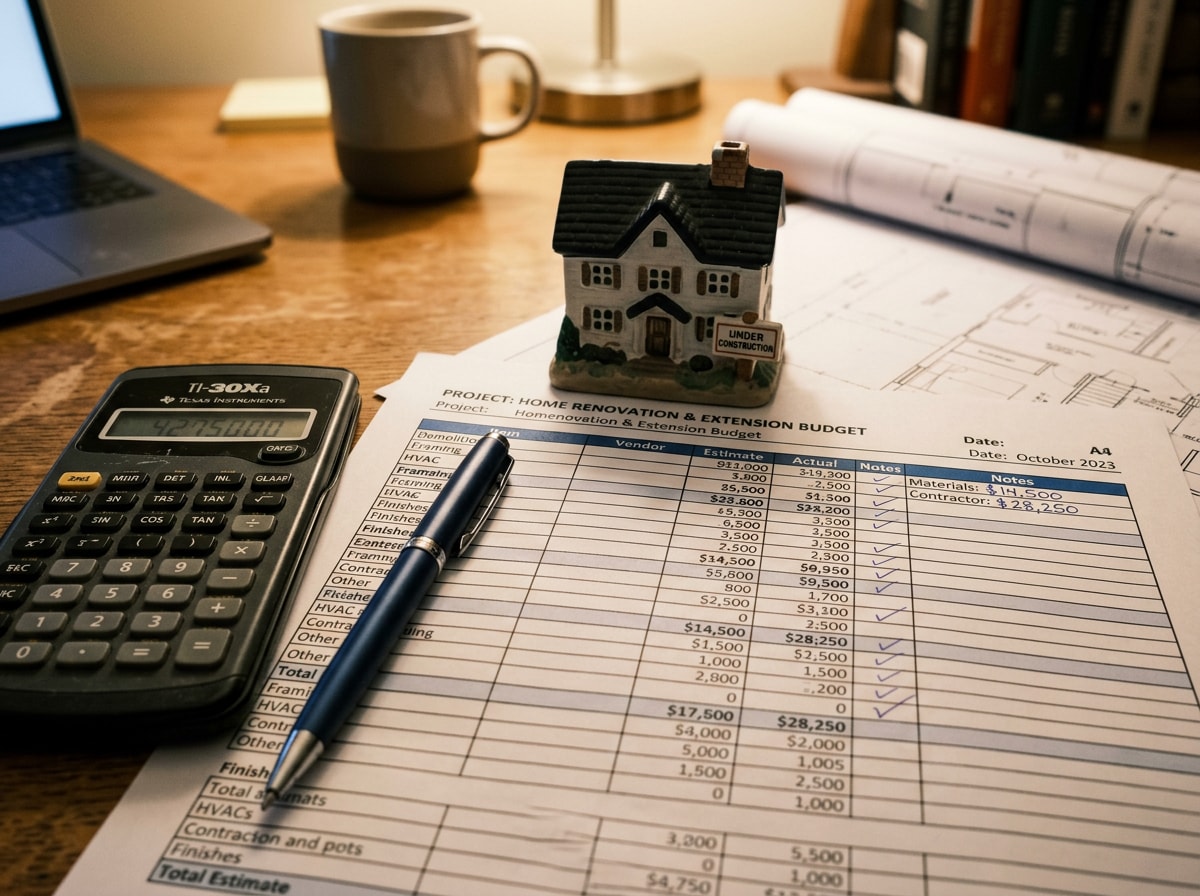
Your home building budget needs to stretch further than most first-time buyers expect. Land preparation costs, infrastructure and utility connections, permit fees, and design fees are budget factors people frequently overlook until they're already under contract.
Construction financing also works differently than a traditional mortgage. A construction loan is usually a short-term loan that provides funds to cover the cost of building or rehabilitating a home. It typically requires a larger down payment, and the loan structure usually converts to a standard mortgage once the home is complete. Connecting with a lender early, before you fall in love with a builder or a floor plan, helps you avoid budgeting around a number that was never realistic.
Coordinate Your Builder With Site Prep, Utility, and Drainage Work
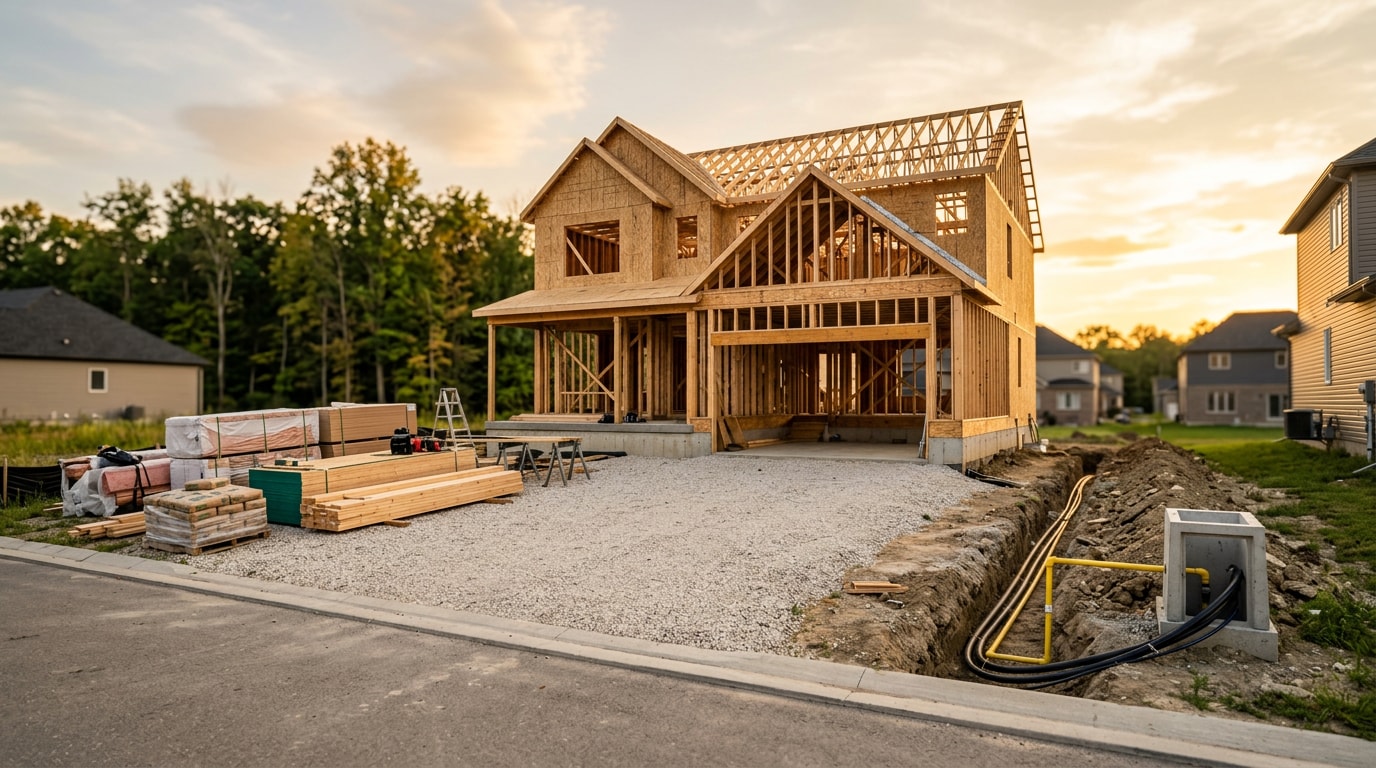
This is the part most builder guides skip, and it's where budgets actually blow up. Most builders subcontract excavation, trenching, water and sewer line work, backfilling, and final grading rather than doing it in-house. If that scope isn't itemized in your bid by name, it's an allowance, and allowances get renegotiated once the crew hits rock, a collapsed clay line, or a utility that wasn't where the plans said it would be.
Ask your builder these questions before you sign:
- Who handles excavation, site preparation, and trench digging, and is that cost itemized or an estimate?
- Has the water service line location been verified before the foundation is poured?
- Will the sewer line be inspected before backfilling, or only if something goes wrong later?
- Who's responsible for yard backfilling and site restoration once utility work is finished?
We see this gap firsthand on new-construction sites across Ohio: a builder's contract lists "utilities" as one line, and homeowners have no idea whether that covers a full water service line installation, a sewer line inspection, or just a rough tie-in. Getting excavation services, trench digging, site preparation, yard backfilling, and site restoration priced separately, in writing, protects you the same way a written builder estimate does.
If you're building in Wooster, Akron, Massillon, Ashland, Mansfield, Dover, or New Philadelphia, Ohio, our crews at The Trenchless work alongside builders on this exact scope daily. Get a free estimate before your builder finalizes the site work line item, and you'll know whether their number is realistic.
Build Your Shortlist of Potential Builders
Once your budget is set, it's time to find candidates worth vetting. A handful of reliable sources will get you a workable shortlist faster than a general online search will.
Contact Your Local Home Builders' Association
The best place to start is by contacting your local home builders' association, which can typically provide a list of builders active in your area. Membership alone isn't a quality guarantee, but it does signal that a builder has committed to certain professional standards, which is a reasonable filter when you're narrowing a long list down to a manageable few.
Ask Friends, Family and Real Estate Agents
Personal referrals still carry weight. A real estate agent referral can be especially useful since agents often know which local builders deliver on schedule and which ones generate complaints.
It's also worth checking the real estate section of your local newspaper or its online equivalent. It's a low-effort way to learn which builders are active in your area, what kinds of homes they build, and roughly what they cost.
Visit Model Homes and Completed Projects
Home shows and open houses are good opportunities to walk through homes built by local builders before you commit to anyone. Pay attention to construction materials, cabinetry, carpeting, trimwork and paint, and don't hesitate to ask on-site staff questions about craftsmanship.
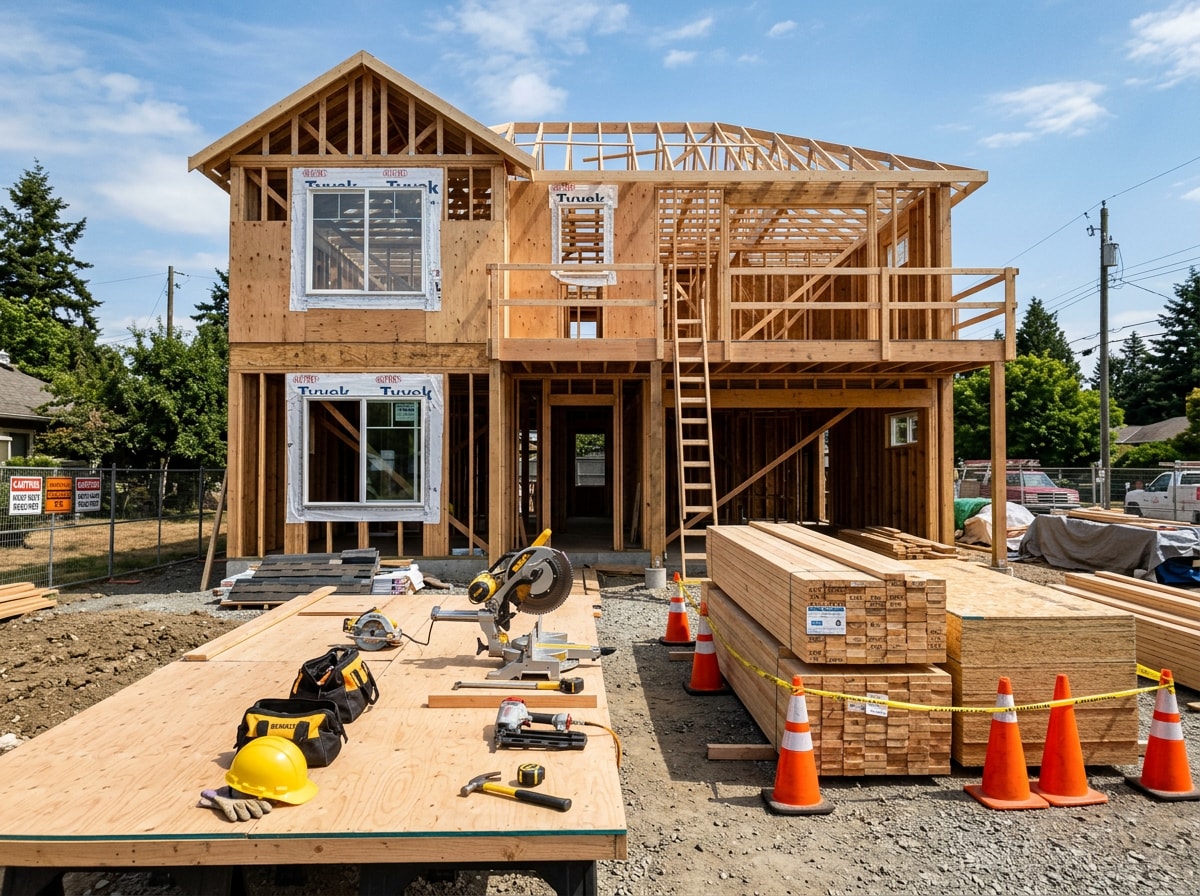
A job site visit tells you even more than a finished model home does. A clean, orderly site with proper safety protocols, protected materials, visible daily progress, and a professional crew is a good sign; a messy job site often points to messy work practices elsewhere. If you'd like to see finished examples of site and utility work before scheduling any visits, browse our project gallery first.
Watch for Red Flags
Some warning signs show up before you ever sign a contract, and they're worth taking seriously. Any builder with a genuine track record of satisfied clients should produce references without hesitation. If a builder struggles to name past clients, or offers only vague, coached-sounding references, treat that as a significant problem.
Pricing behavior tells you a lot too. A verbal quote is not a quote. A written estimate should include a description of the work to be done, materials, completion date, and the price. Any estimate that isn't written and clearly scoped leaves you exposed to cost surprises later.
A handful of additional builder red flags are worth flagging separately:
- No professional online presence. A missing or thin portfolio, unclear service list, or hard-to-find contact information can signal an unstable or less-than-professional operation.
- High-pressure sales tactics.
Scammers pressure you for an immediate decision , and a quality builder gives buyers time and space to decide.
- Cash-only or full-upfront payment demands.
Scammers ask you to pay for everything up front or only accept cash. A reasonable deposit tied to a written contract is normal; a demand for full payment before work starts is not.
- Unwillingness to provide references. This is a major red flag on its own, and it's reason enough to move on to the next candidate.
The FTC's guide to avoiding home improvement scams covers several of these patterns in more detail and is worth a read before you sign anything.
Check References, Credentials and Professional Affiliations
A builder's history matters as much as their portfolio. Most builders will readily share how long they've been in business, and longevity suggests financial stability, the kind that's necessary to finish your project and remain available to service warranty claims years later.
It's also worth asking about a builder's involvement with professional organizations, such as the local builders' association. These groups keep members informed about improved equipment, techniques, and business practices, so active participation is a mild but genuine signal of professionalism.
When you do check references, push past surface-level questions. Ask how the builder handled problems, not just whether the finished home looks good. Those answers reveal whether communication, timelines, and commitments were actually honored when something didn't go according to plan, which, on any construction project, eventually happens.
Builder credentials worth confirming include active licensing in your state, proof of insurance, and any relevant certifications tied to the type of home you're building. None of these guarantee quality on their own, but skipping the check removes an easy layer of protection.
Ask the Right Questions Before You Sign
Once you're down to a final candidate or two, the interview stage is where a shortlist becomes a decision. A few categories of questions matter more than the rest.
Questions About Warranty Coverage
Ask what type of home warranty is offered and exactly what it covers, a builder's warranty often reflects their confidence in their own work. Request a sample copy so you can see what's covered and for how long, rather than relying on a verbal summary.
Most new-home structural warranties follow what the industry calls the "1-2-10" structure. Coverage includes 10 full years of structural defect coverage for load-bearing components, 2 full years of systems surety coverage against defects in wiring, piping, and ductwork, and 1 full year of surety coverage against defects in workmanship and materials. That's a useful benchmark: if a builder's warranty falls well short of that on any tier, ask why.
Warranty claims aren't rare, either. Although each claim varies, the average cost of a structural defect claim is $42,500 , which is exactly why a written, third-party-backed warranty is worth more than a builder's verbal assurance. For a detailed look at what's typically covered under each coverage tier, review 2-10 Home Buyers Warranty's builder warranty FAQ.
Questions About Change Orders and Contracts
Ask about the formal process for handling change orders you initiate. Changes during construction are a common source of budget overruns, and a reputable builder should have a written process detailing exactly how each change affects cost and schedule.
Ask if you can review the standard contract before committing, a builder confident in their process should hand one over without pushback. Documentation worth reviewing includes:
- Detailed written estimates
- Sample contracts
- Warranty paperwork
- Building specifications and insurance certificates
- Change order procedures
- The payment schedule and construction timeline
Having a construction-savvy lawyer review the contract before signing can save thousands of dollars later if a dispute ever comes up. When you're comparing final numbers side by side, including the site, utility, and drainage scope covered above, request a free estimate so you know what a fair number actually looks like before you negotiate with your builder.
FAQ
How do I find a reputable builder in my area?
Start with your local home builders' association for a vetted list, then cross-check with real estate agent referrals, local newspaper listings, and recommendations from friends or family. Combining a few sources gives a more reliable picture than relying on any single one.
What questions should I ask a builder before hiring?
Ask what the warranty covers and for how long, how change orders are priced and documented, whether you can review the standard contract before signing, and who specifically handles site excavation, utility connections, and drainage work. Their willingness to answer clearly, in writing, tells you almost as much as the answers themselves.
What are red flags when choosing a builder?
Watch for vague or hard-to-verify references, quotes given only verbally instead of in writing, high-pressure sales tactics, and requests to pay in cash or in full before work starts. Any one of these alone is worth pausing on; more than one is a reason to move to the next candidate.
What's the difference between a custom builder and a production builder?
A custom builder designs a home entirely around the buyer's specifications, offering full creative control at a higher cost and longer timeline. A production builder works from established layouts and bulk-ordered materials, trading some customization for a faster, more predictable process.
What's the difference between a builder and a general contractor?
A local general contractor oversees the entire project from start to finish, while a builder focuses on the actual construction of the house. On many residential jobs the two roles overlap, but a builder is more hands-on with the physical work, while a general contractor manages permits, subcontractors, and schedule.
How much deposit should a builder ask for before starting work?
There's no single universal number, and it varies by state and project size. What matters more than the percentage is the structure: a reasonable deposit tied to a written contract and progress payments is normal, while a request to pay for everything up front or accept cash only is a signal to slow down and ask more questions.
Do builders need to be licensed and insured?
In most states, yes, and you should confirm both before signing anything. Ask to see a current license number and a certificate of insurance directly from the carrier, not just a photocopy the builder provides, and verify the license is active with your state's licensing board.
About the Author
This guide was written by the field team at The Trenchless, an Ohio-based drainage, water line, and trenchless contractor that works alongside home builders and general contractors on excavation, utility connections, and site restoration for new-construction projects across Wooster, Akron, Massillon, Ashland, Mansfield, Dover, and New Philadelphia. Questions about coordinating site or utility work with your builder? Contact us for a free estimate.