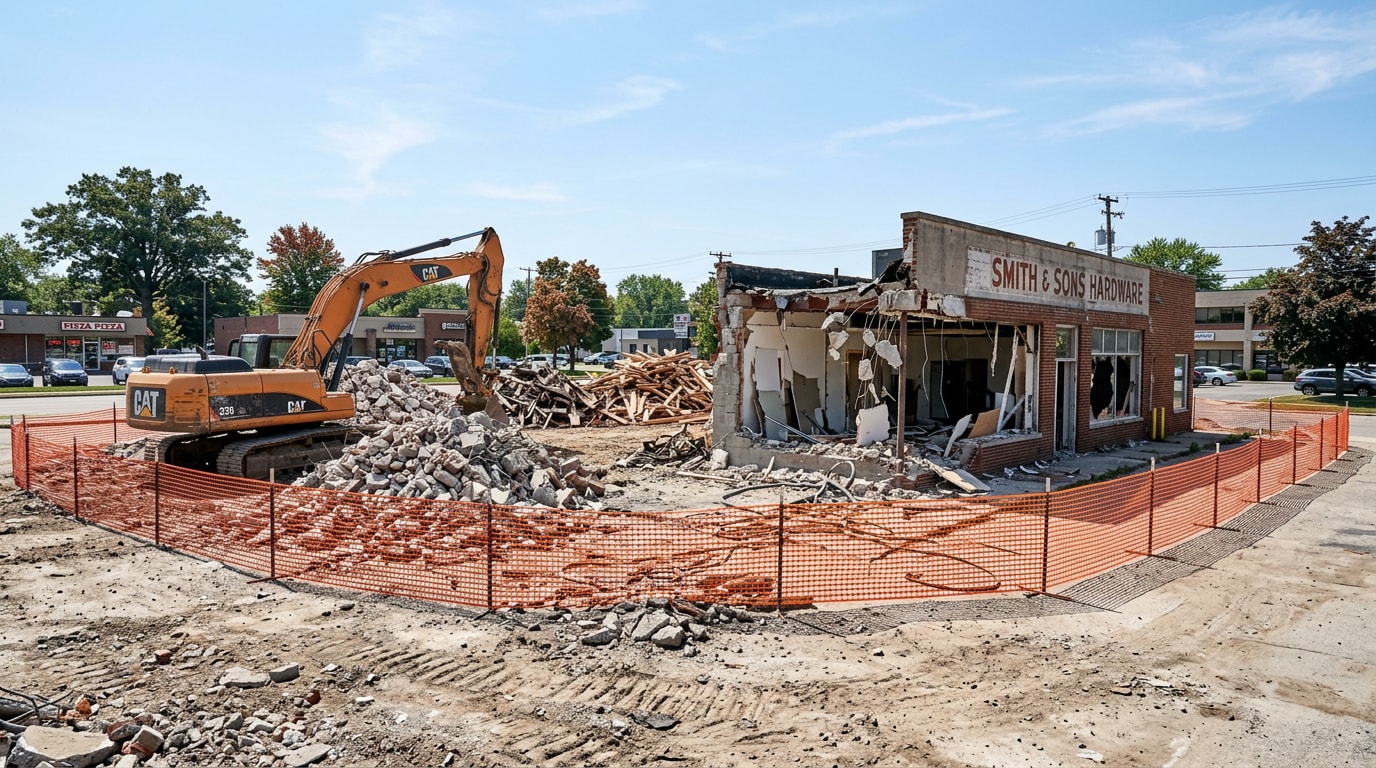
Licensed demolition contractors carry the credentials, insurance, and permit knowledge that keep a teardown from becoming your legal and financial problem. Even a small structure involves utility shutoffs, hazardous-material checks, and code-driven procedures that an unlicensed crew can easily miss. This guide breaks down what a demolition license actually covers, the real benefits of hiring a licensed crew, and the exact questions to ask before you sign a contract.
What Is a Demolition License?
A demolition license is the legal credential a contractor must hold before performing structural or partial demolition work in a given state or city. It proves the contractor passed required exams, carries proper insurance, and meets local bonding rules set by the regulating authority.
Requirements differ from one municipality to the next. Some areas test demolition knowledge through a dedicated demolition license; others fold it into broader contractor license requirements. A national summary of contractor licensing requirements across all 50 states identifies more than 180 state agencies that regulate the construction industry , which gives a sense of how fragmented these rules really are.
Before signing anything, ask for the license number and confirm it directly with the issuing agency rather than taking a verbal assurance. A demolition permit is a separate, per-project requirement, so even a licensed contractor still needs sign-off from the local building department before work starts.
What Does a Licensed Demolition Contractor Do?
A licensed demolition contractor manages far more than physical teardown. The job includes a full site inspection, permit acquisition, demolition planning that satisfies local building codes, and coordinating the crew and equipment needed to bring a structure down safely.
That upfront planning separates licensing from mere experience. A contractor can have decades of fieldwork without ever pursuing a demolition license. Licensing adds a layer of accountability that experience alone doesn't guarantee, since a government body has already reviewed their qualifications, insurance, and track record.
Project scope affects every step of this process. Once a structure is down, the site still needs grading, trenching, or utility work before anything new gets built. That's where site preparation services and excavation work pick up where demolition leaves off.
Key Benefits of Hiring Licensed Demolition Contractors
Licensing isn't only a paperwork requirement. It functions as a built-in quality and safety check that protects the property owner's investment from start to finish. The benefits generally split into two areas: how work happens on site, and how it affects the surrounding community and environment.
Safety, Compliance, and Financial Protection
Licensed crews typically operate under formal safety programs, training workers on fall protection, structural collapse hazards, and equipment specific to demolition. That training lowers accident rates and the liability that follows them.
Compliance works the same way. A contractor who is licensed and insured has already met the bonding and insurance minimums a municipality requires. That helps you avoid fines tied to code violations or improper permitting.
If something goes wrong on site, the contractor's coverage becomes your financial protection instead of leaving the bill with you. The same coverage helps prevent costly rework when an inspector flags something that has to be redone to meet code.
Environmental and Waste Management Benefits
Licensed contractors are also expected to manage debris responsibly instead of hauling everything to the nearest landfill. Selective demolition, sorting metal, wood, and concrete before full teardown, makes recycling and reuse far more effective.
The scale matters more than most owners realize. EPA's national fact sheet on construction and demolition debris found that aggregate was the main end-of-life destination for C&D debris, accounting for 52 percent of the total amount generated.
Landfill was the next largest destination, at 24 percent of the total amount of C&D debris. Selective, well-planned demolition pushes more material toward the reuse column and away from the landfill column.
Hazardous material disposal is the other piece. Licensed demolition contractors are trained to identify and manage asbestos and other regulated materials under federal rules, rather than disturbing them and creating exposure risk for workers or neighbors.
Why You Should Avoid Unlicensed Demolition Services
Hiring an unlicensed crew can look like a way to save money upfront, but the risk shifts entirely onto the property owner. If a project without proper permits gets flagged, the municipality can issue a stop-work order, fines, or require rework at the owner's expense.
Insurance is the bigger issue. An unlicensed demolition contractor typically can't offer verifiable liability coverage, so if a worker is hurt or a neighboring structure is damaged, the property owner may bear the financial responsibility.
Preparatory operations under OSHA's demolition standard account for up to three-fourths of the citations issued on a demolition worksite.
The requirement for a written engineering survey before work begins makes up more than half of those citations on its own. Unlicensed operations routinely skip that survey altogether, since no regulator is checking their paperwork before the first wall comes down.
This isn't specific to one city. Building regulations and legal compliance requirements exist in nearly every jurisdiction that permits demolition work, which is exactly why licensed demolition contractors remain the safer default.
What to Look for When Choosing a Licensed Demolition Contractor
Knowing why licensing matters is only half the equation. Verifying it before signing is the other half.
Before you hire, confirm:
- The license is active, checked through the issuing agency's public database, not a verbal assurance.
- Proof of general liability insurance and any required bonding, requested in writing.
- Experience with your specific project type: residential, commercial, interior, or structural teardown, since skill sets differ by scope.
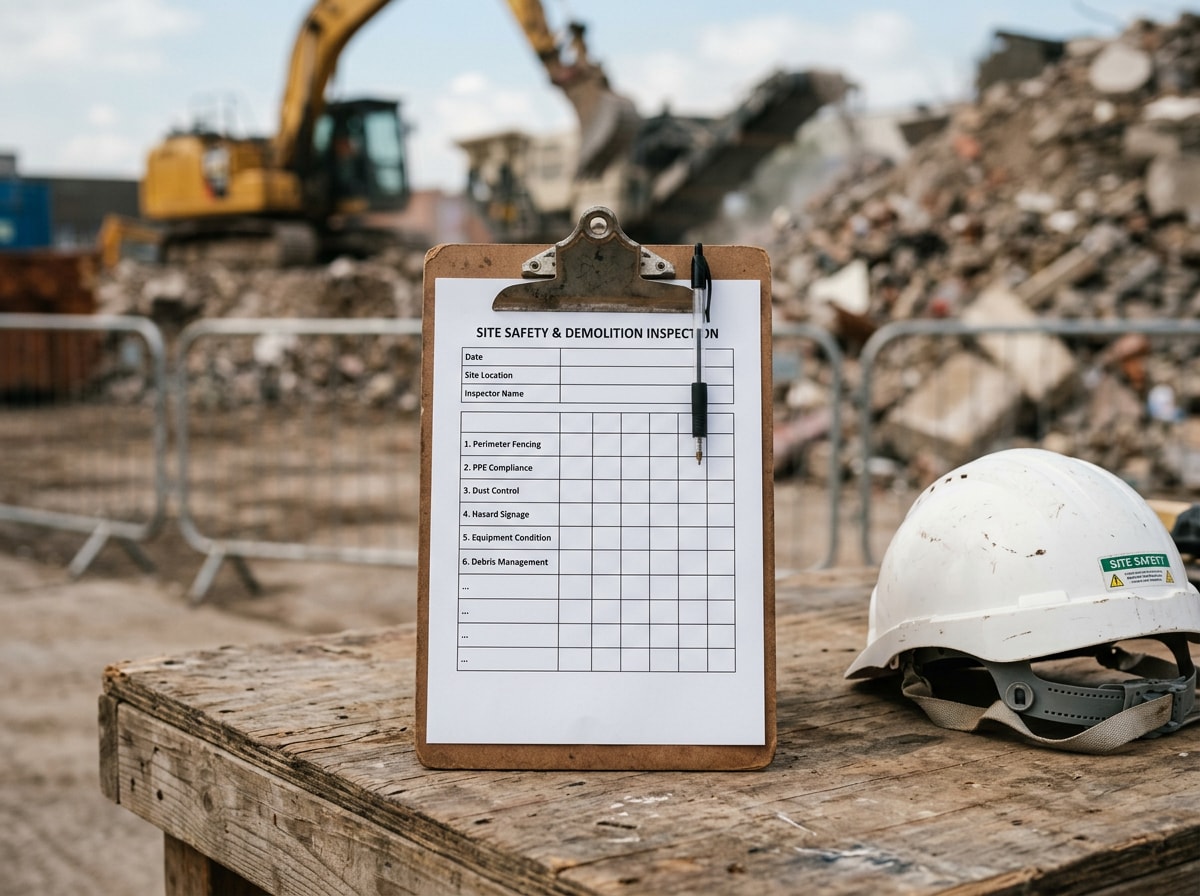
- A documented safety plan, including how the crew handles utility shutoffs and hazardous materials.
- References or completed project examples you can actually review.
How to Compare Contractor Bids
Comparing bids by bottom-line price alone is one of the most common mistakes property owners make. Two estimates for the same job can carry a wide gap simply because one contractor left hauling, permit fees, or hazardous disposal out of the written estimate.
| Line Item | Why It Matters |
|---|---|
| Permit fees | Often billed separately; a missing line item is a red flag |
| Debris hauling and disposal | Weight-based fees vary widely by material and distance to the facility |
| Hazardous material testing/removal | Required before structural work if older materials are present |
| Utility disconnection | Must be coordinated with the utility company, not just the crew |
| Site grading or backfill | Frequently excluded from "demolition only" quotes |
Read each itemized estimate line by line against this table. The lowest number isn't automatically the best value if it leaves gaps that surface later as change orders.
If your project also involves excavation, trenching, or utility work after the structure comes down, our excavator contractor hiring guide walks through the same vetting questions for heavy-equipment work. When you're ready to talk through your project, schedule a free inspection and we'll help you plan the sitework that follows demolition, from trenching to site restoration.
Demolition is rarely the final step on a property. Once the structure and debris are cleared, most projects move straight into grading, drainage work, or new utility installation. Browse our full range of excavation, drainage, and site-prep services to plan what comes next.
FAQ
Do Demolition Contractors Require a License?
In most states and municipalities, yes, structural demolition legally requires licensed demolition contractors. Requirements vary by location, with some areas requiring a dedicated demolition license and others folding it into a general contractor license, so confirming local rules is still worth the extra step.
What Are the Potential Consequences of Hiring an Unlicensed Demolition Contractor?
Hiring an unlicensed demolition contractor can expose owners to fines, stop-work orders, and personal liability if someone is injured or property is damaged. Insurance claims may also be denied, leaving repair or rebuild costs entirely out of pocket.
How Much Does It Cost to Hire a Licensed Demolition Contractor?
Demolition contractor cost varies widely based on project size, structure type, materials present, and local disposal fees. Licensed contractor pricing typically reflects insurance, permitting, and proper waste disposal, which can mean a higher quote upfront but fewer costly surprises later.
Do I Need a Permit for Demolition?
Most demolition projects require a local permit before work begins, regardless of structure size. A licensed demolition contractor typically handles permit acquisition on your behalf, but it's worth confirming directly with your local building or code enforcement department what applies to your specific property.
What's the Difference Between Demolition and Deconstruction?
Demolition typically means mechanically tearing a structure down, often with excavators or wrecking equipment, with materials sorted for disposal or recycling afterward. Deconstruction is a slower, manual process that takes a building apart piece by piece to maximize material reuse. Licensed contractors can usually offer either approach depending on budget, timeline, and local salvage requirements.
How Do I Verify a Contractor's Demolition License?
Ask for the license number directly and check it against the issuing state or municipal agency's public lookup tool rather than relying on a certificate the contractor hands you. Confirm the license is active, matches the contractor's business name, and covers the type of demolition you need before signing anything.