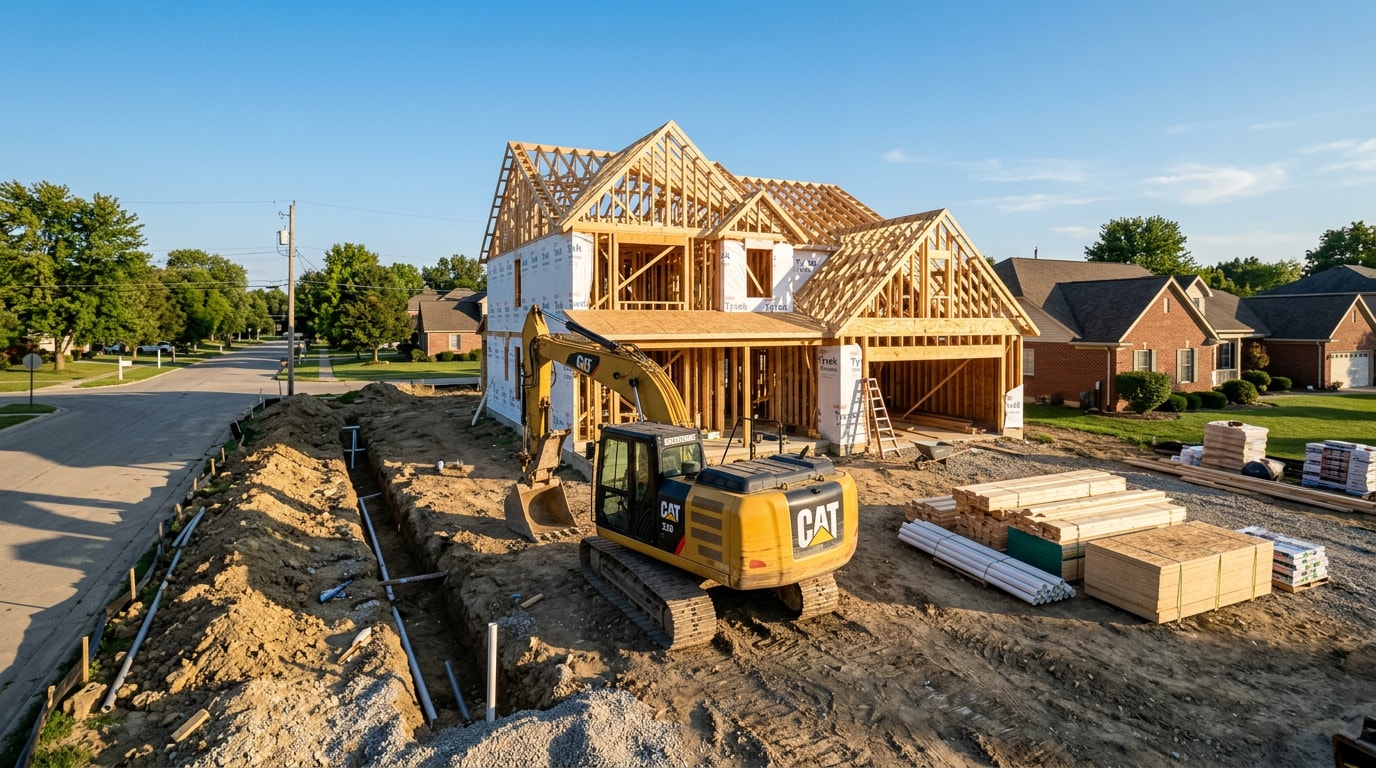
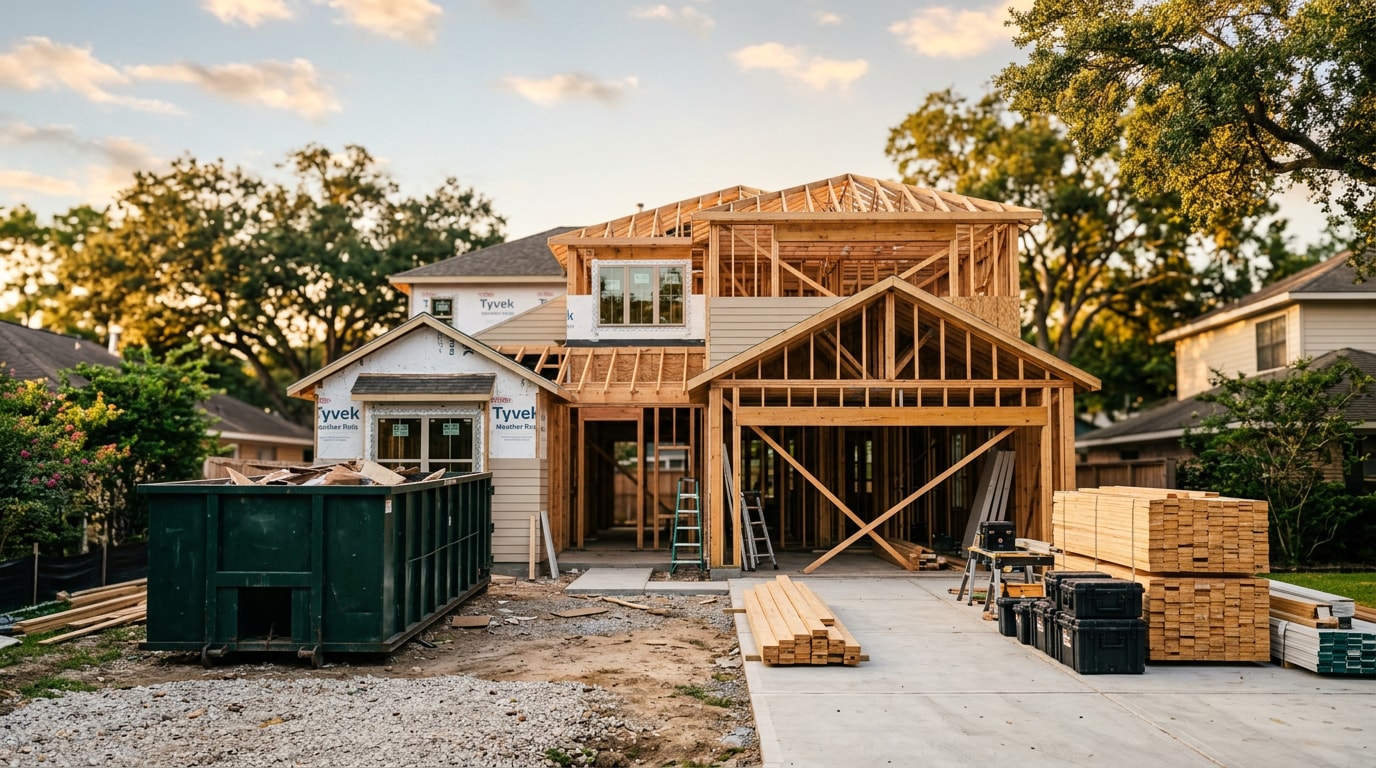
General contractors in Houston number in the hundreds, and most of them look identical on paper: licensed, insured, five-star reviews. The real differences show up in the contract details, the subcontractor relationships, and how a company handles the inevitable surprise mid-project. This guide breaks down exactly what to check, in what order, before you sign anything.
Define Your Project Scope Before Hiring Houston General Contractors
Before you contact anyone, get clear on three things: what you're building or renovating, your realistic budget range, and your target start or completion date. A vague scope invites vague bids, which makes comparing contractors nearly impossible later.
It also helps to decide whether you actually need a general contractor or just a single trade. A bathroom retile might only need a tile specialist, while a whole-house addition needs someone coordinating multiple trades. If you're unsure which category your project falls into, start by browsing what's offered on the homepage before you reach out to anyone.
Verify Licensing, Insurance & Bonding
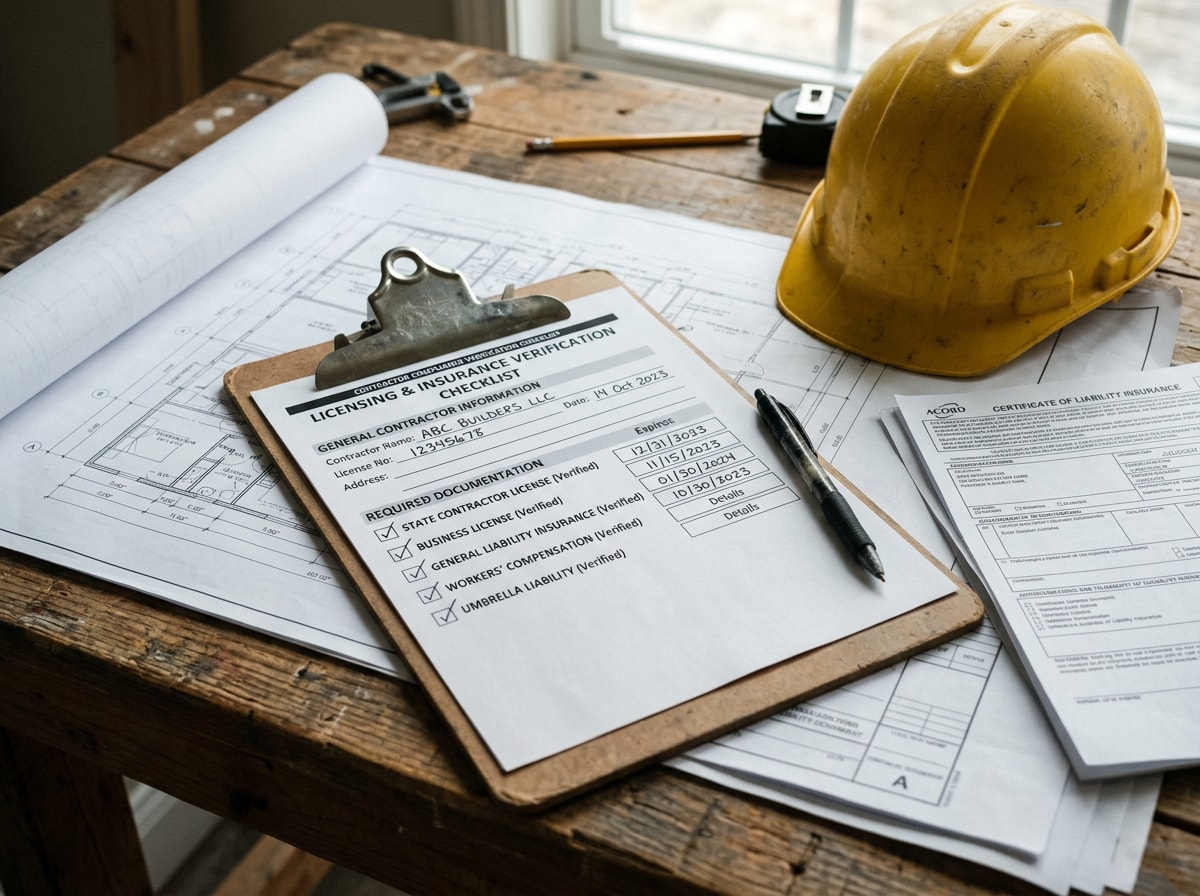
Texas has no statewide general contractor license, which makes this verification step the single most important filter when evaluating any licensed and insured Houston general contractor. Skipping it is the most common, and costliest, mistake owners make.
| Check Level | What to Verify | Where |
|---|---|---|
| State | TDLR licensing for specialty trades (electrical, plumbing, HVAC) | TDLR license lookup |
| City | Business registration, permit history | Houston Permitting Center |
| Insurance | General liability, workers' compensation, commercial auto | Certificate of insurance, carrier confirmation |
| Bonding | Project or license bond, if applicable | Bonding company verification |
How to Verify a Contractor's License in Texas
Since Texas doesn't issue a single statewide "general contractor" license, verification depends on the trade. TDLR is the primary state agency responsible for licensing and regulating a broad range of occupations, businesses, facilities and equipment in Texas , and plumbers, electricians, and HVAC technicians all need individual licenses through TDLR even when they're working under a general contractor's umbrella.
Confirming a license takes about five minutes: look up the company or technician's name and license number, check that the status is active, and review any disciplinary history before signing anything. A legitimate contractor won't hesitate to share license numbers for review. For the current rules on which trades require state licensing, check the Texas Department of Licensing and Regulation directly rather than relying on a contractor's self-reported credentials.
Required Insurance Types
A properly insured Houston general contractor carries three core policies: general liability insurance, workers' compensation insurance, and commercial auto coverage. Together, these protect you if someone is injured or property is damaged during the project.
Don't accept a photocopy of a certificate of insurance at face value. Call the carrier listed on the document to confirm the policy is active and covers your project dates. Ask to be named as an additional insured for the duration of the work, which gives you direct protection instead of relying solely on the contractor's own coverage. In our own project coordination work, an expired or back-dated insurance certificate is the single most common paperwork gap we catch before a crew ever shows up on site.
Houston Permits: What a General Contractor Should Handle
Permitting is where a lot of home renovation budgets quietly get overrun, and it's an area most "how to hire" articles skip entirely. The Houston Permitting Center combines the majority of the City of Houston's permitting and licensing into one convenient location , and homeowners can answer a few questions about their project and the center's online Project Planner tool will identify which permits are actually required .
A legitimate general contractor pulls permits in their own company name, not yours. If a contractor asks you to pull the permit personally, that's often a sign they aren't registered correctly, or they're trying to dodge accountability if an inspection fails. Processing times vary by project type, so build that timeline into your schedule expectations before work starts.
Check References, Reviews & Past Project History
Star ratings tell you how a contractor performs on average, but they don't tell you how they'll perform on your specific project. Pairing online reputation with verifiable, local project history gives a fuller picture.
Read reviews for patterns rather than isolated complaints. Request references from jobs completed in the last 12 months. For larger projects, ask to see a portfolio of comparable work completed in the Greater Houston market. A contractor active in your part of town should have a documented track record, not just a handful of screenshots.
Where to Check Reviews
The most reliable places to check Houston general contractor reviews are Google Business Profile, the Better Business Bureau, Yelp, and Houzz, since each platform verifies reviewers differently and surfaces different complaint patterns. Checking more than one source reduces the chance of a skewed picture from a single site.
Pay close attention to a contractor's BBB rating and, more importantly, how they respond to complaints. A pattern of defensive or absent responses is more telling than a single bad review. On Yelp and Houzz, prioritize recent reviews that mention a project size and scope similar to yours, since older reviews may not reflect the company's current crew or management.
Get Multiple Written Estimates
Request at least three itemized, written estimates before making a decision. A detailed estimate should break down labor and materials separately, include a project timeline, outline the payment schedule, specify material allowances, and state warranty terms clearly.
Comparing bids on the bottom-line number alone is a mistake in Houston's competitive market. One estimate might exclude permit fees or use lower-grade materials to look cheaper upfront. Line up each written estimate side by side and compare scope, not just price, before you decide who to hire. When you're ready to put your own project out to bid, you can get a free estimate and use it as your comparison baseline.
Key Questions to Ask Before Hiring
A short list of pointed questions tends to separate dependable contractors from risky ones fast. Ask each candidate directly:
- Who will be my single point of contact throughout the project?
- Do you self-perform the work, or is it fully handled by subcontractors?
- What's your process for handling change orders, and how are they priced?
- What's explicitly included and excluded in this estimate?
- Can I speak with two or three clients you've worked with in the past two years?
Vague or evasive answers to any of these are worth noting. A contractor confident in their work will usually welcome these questions rather than deflect them. If you want a longer checklist that applies across trades and project types, our guide on how to choose a builder in 2026 covers the broader vetting process in more depth. When you're ready to move forward, requesting a quote is a good next step for getting formal numbers in writing.
Design-Bid-Build vs Design-Build: The Choice Behind the Choice
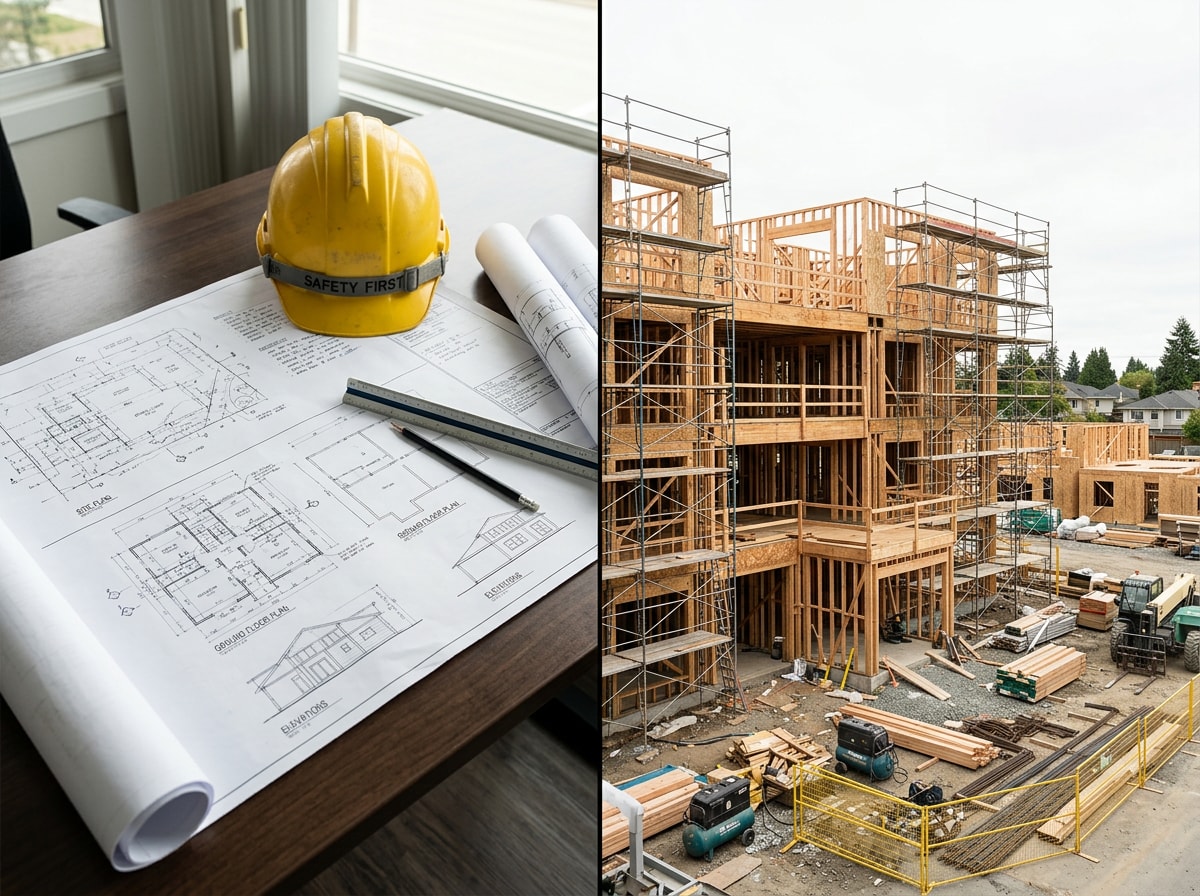
For larger or commercial projects, the delivery method you choose shapes pricing timing, risk, and who's accountable if something goes wrong, a decision that happens before you even finalize a contractor shortlist.
Design-Bid-Build
In a design-bid-build process, you hire an architect to complete the design first, then separately bid the finished design out to contractors. This creates two separate contracts, one with the architect and one with the contractor, and a clear division of responsibility.
The tradeoff is timing. Because pricing only happens after the design is finalized, cost surprises tend to surface late, sometimes after you're already committed to the design direction.
Design-Build
Design-build is an integrated approach that delivers design and construction services under one contract with a single point of responsibility , which the Design-Build Institute of America has spent decades standardizing across the industry. Pricing and design happen in parallel instead of sequentially, and both functions sit with the same company.
This turnkey approach tends to compress timelines and reduce finger-pointing between architect and builder. It can also make early budget estimates more reliable, since the design team already knows what's buildable within your range.
For projects that touch underground utilities, there's one more coordination point worth asking about up front: who handles sitework like excavation, drainage tie-ins, or water line relocations. These trades are often subcontracted separately, and a general contractor who already has a working relationship with a drainage specialist or a crew that handles water damage restoration and site excavation can keep that part of the schedule from becoming the bottleneck it often is.
What Your Contract Should Spell Out
A solid construction contract should document a detailed scope of work with explicit exclusions, a milestone-based payment schedule tied to completed work rather than calendar dates, a documented change-order process, a schedule with a substantial-completion date, and clear warranty and close-out terms.
Payment terms deserve particular attention. Paying based on verified milestones, not a flat percentage schedule disconnected from actual progress, protects you if the project stalls. Texas law also requires owners to retain roughly 10 percent of the contract price for 30 days after work is finished , a safeguard built specifically to protect you if a mechanic's lien claim surfaces after final payment. The contract should also specify how lien waivers are handled at each payment stage, since unpaid subcontractors can still file liens against your property even after you've paid the general contractor in full. For the full text of these rules, Texas Property Code Chapter 53 lays out lien and retainage requirements in detail.
Red Flags & Common Mistakes to Avoid When Hiring
Certain warning signs show up again and again in problem projects. Watch for any contractor who:
- Requests full payment upfront, rather than a reasonable deposit
- Won't provide a written contract before starting work
- Pressures you to start immediately, often with "today only" pricing
- Can't produce proof of insurance or a list of references
- Submits a bid significantly below every other estimate you received
- Has no physical business address or verifiable local presence
- Avoids answering who will actually be on-site doing the work
On the buyer side, the most common mistake is choosing based on price alone, without checking references or confirming insurance. Skipping reference calls because a contractor "seems nice" is a close second. Both are easy to avoid once you've built a short checklist and stick to it for every candidate.
Who Wrote This Guide
This guide was put together by the trade-licensing research team at The Trenchless, a drainage, water line, and underground utility contractor. We spend a lot of our own time pulling permits, verifying subcontractor insurance, and reading lien law for jobs we run, and we applied that same scrutiny here. Have a project of your own, in or out of our direct service area? Contact us and we'll point you toward the right resources. You can also see examples of completed work on our projects page.
FAQ
Do Contractors Need a License in Houston, Texas?
Texas doesn't issue a single statewide general contractor license, but the City of Houston requires contractor registration for certain permit types, and specialty trades like plumbing, electrical, and HVAC must hold individual state licenses through TDLR regardless of who the general contractor is.
How Much Should I Pay a Contractor Upfront in Houston?
A deposit of 10-15% of the total project cost is typical, with the remainder paid through milestone-based payments as work is completed. Be cautious of any contractor asking for more than 30% upfront; that's generally considered a red flag.
What's the Average Cost to Hire a General Contractor in Houston?
General contractors typically charge a fee of 10-20% of the total project cost, layered on top of labor and materials. On a $50,000 renovation, that translates to roughly $5,000-$10,000 in contractor fees, though it varies by project complexity.
What Licenses Does a Commercial General Contractor Need in Houston?
Requirements vary by jurisdiction and project scope, but a reputable commercial general contractor should always carry proper trade licensing, be bondable for projects of your size, and hold insurance coverage scaled to the project's value. Ask to see current documentation rather than assuming it's in order.
What's the Difference Between a General Contractor and a Subcontractor?
A general contractor holds the main contract with you and is responsible for the overall project, timeline, and budget. Subcontractors are specialists, like electricians, plumbers, or HVAC techs, hired by the general contractor to perform specific scopes of work. You typically pay the general contractor, who then pays the subcontractors.
How Do I File a Complaint Against a Contractor in Texas?
Since Texas has no state licensing board for general contractors, start with the Better Business Bureau and your local consumer protection office. If the complaint involves a licensed trade like electrical, plumbing, or HVAC work, you can file directly with TDLR. For contract disputes, small claims court is often the fastest path for amounts under the court's limit.