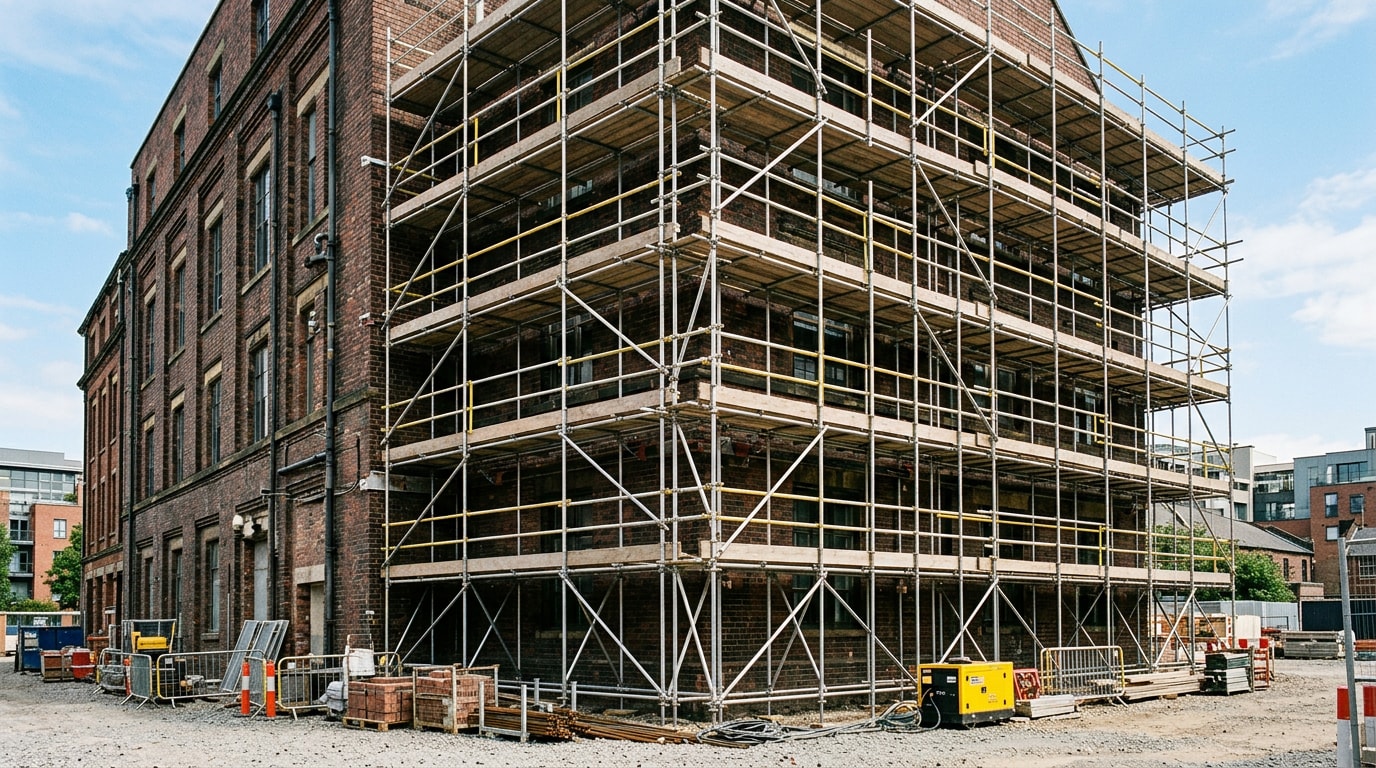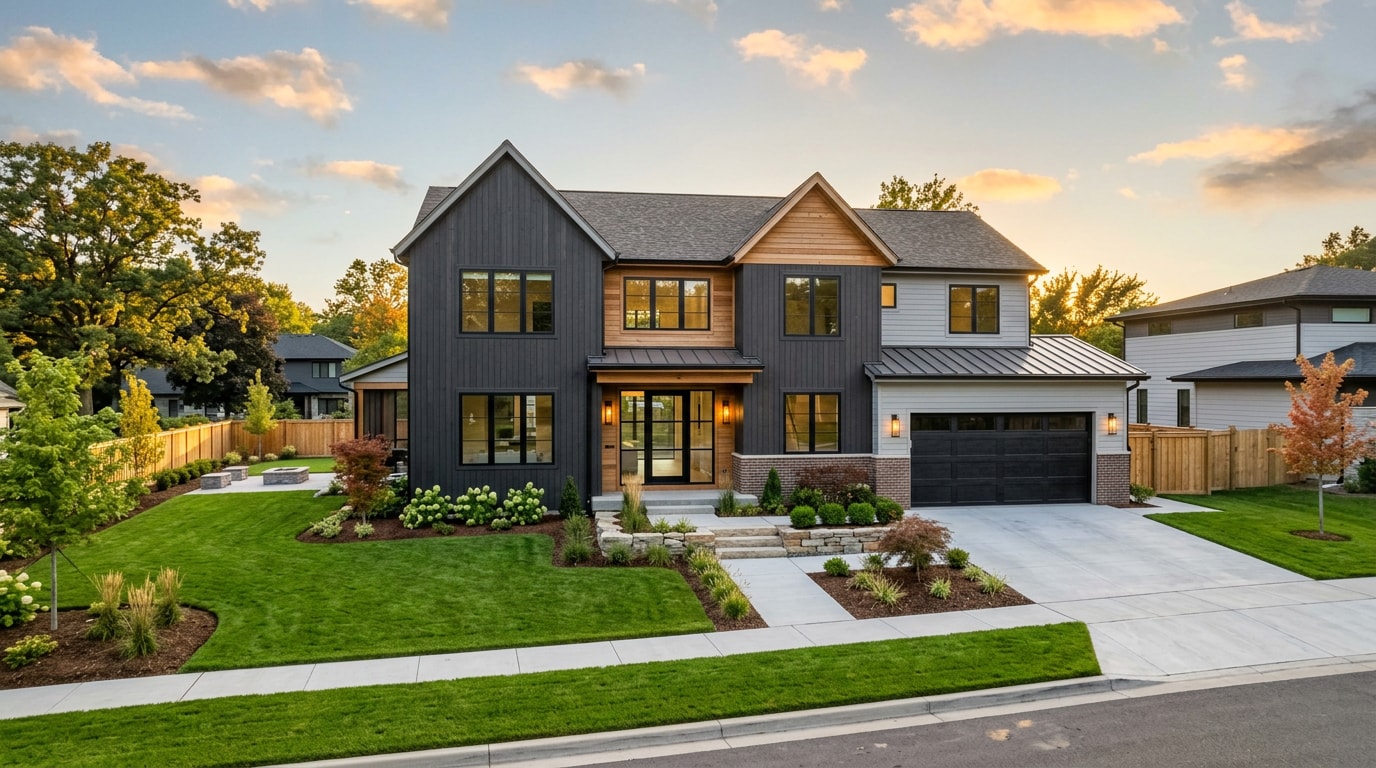
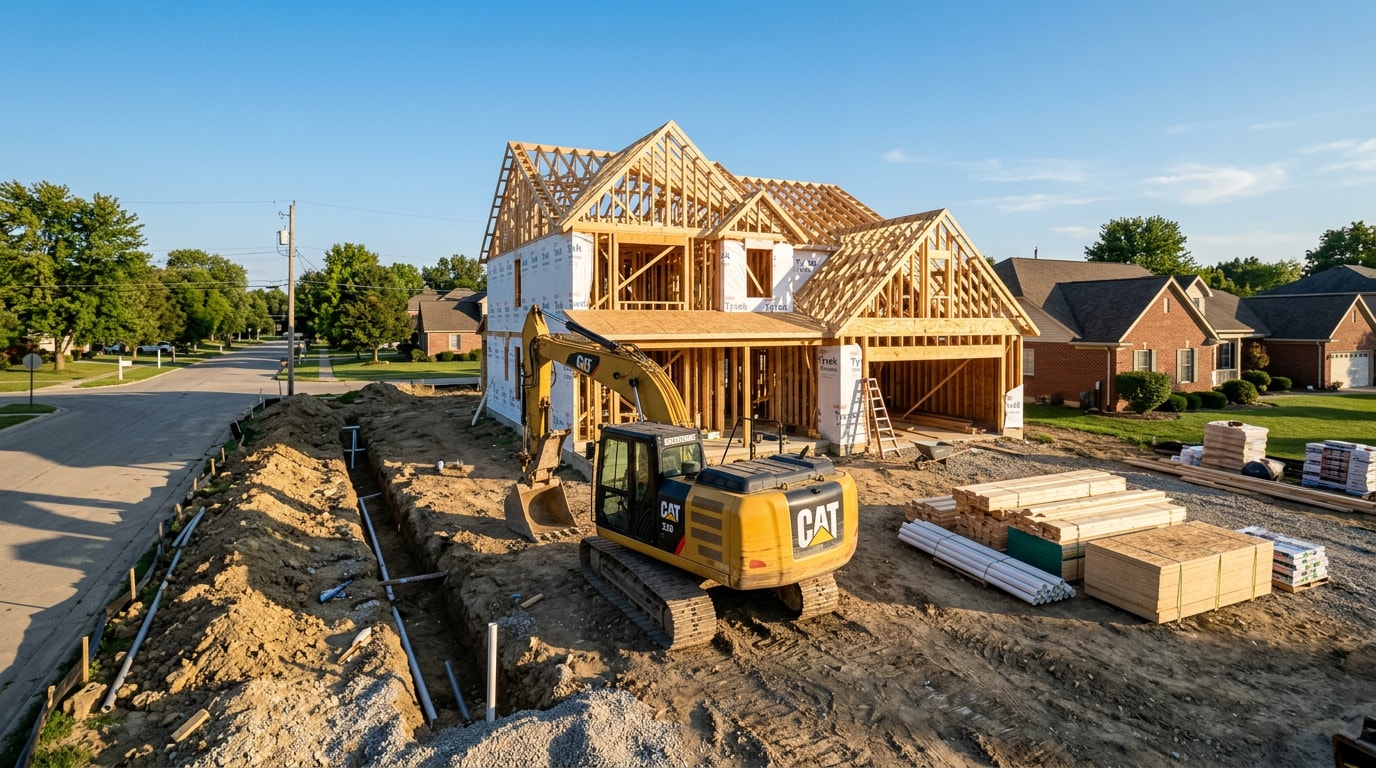
Most "top builders" lists rank the same handful of publicly traded companies by how many houses they closed last year. That tells you almost nothing if you're planning an addition in Mansfield, a custom build in Wooster, or vetting a contractor for a lot in Wayne County. This guide breaks down how those rankings are actually calculated, what they conveniently leave out, and how to judge any builder, national or local, before you sign a contract.
What "Top Builders" Rankings Actually Measure
"Top" changes meaning depending on who's publishing the list, and that detail rarely makes the headline.
Builder magazine's Builder 100 is one of the most cited lists in the industry. It's the annual list published by Builder magazine that ranks the nation's top home builders based strictly on annual home closings. That means a builder can top the list purely on sales volume, with no input on build quality, warranty response, or how well they coordinate subcontractors.
Revenue-based rankings tell a different story. D.R. Horton was the homebuilder with the highest gross revenue in the United States in 2024. A revenue ranking favors a mix of volume and price point, so a luxury builder with fewer closings can still rank high.
Permit-based tracking adds a third lens entirely. Lennar is the most active homebuilder in the US by permit volume, with 68,699 permits issued between 2021 and 2025 across 24 states.
D.R. Horton ranks second with 64,713 permits across 28 states, the widest geographic reach of any builder.
Trust-based studies measure something else again, surveying actual buyers instead of counting units. Taylor Morrison has been ranked the America's Most Trusted Home Builder nine years in a row. Yet Taylor Morrison doesn't crack the top of the closings or revenue lists most years, because trust and scale aren't the same metric.
There's also a segment split most general "top builders" content glosses over. The National Multifamily Housing Council ranks a completely separate category of builders, apartment and multifamily developers, by units started rather than single-family closings. Summit Contracting Group, Inc. ranked first on that 2026 list with 10,323 units started. If you're comparing that name to D.R. Horton or Lennar, you're comparing two different industries wearing the same label.
Top National Builders by Permit Volume (2021-2025)
Here's how permit activity actually breaks down among the largest national builders, based on five-year tracking data:
| Rank | Builder | Total Permits (2021-2025) |
|---|---|---|
| 1 | Lennar | 68,699 |
| 2 | D.R. Horton | 64,713 |
| 3 | PulteGroup | 35,216 |
| 4 | KB Home | 20,024 |
| 5 | Meritage Homes | 17,023 |
| 6 | Taylor Morrison | 16,078 |
The top 3 builders (Lennar, D.R. Horton, and PulteGroup) account for roughly half of all top-25 permit volume over five years. Concentration at the top of the market is structural, not cyclical.
The top 10 now represent approximately half of all new single-family home sales nationally, up from about a third two decades ago.
That consolidation matters if you're shopping a production-built subdivision home. It matters a lot less if you're hiring someone to build a custom home, finish a basement, or add a room onto an existing house in northeast Ohio.
Why a National Ranking Doesn't Tell You Who Should Build Your Project
Here's the part most "top builders" content skips entirely: these rankings describe companies that build thousands of nearly identical houses in planned subdivisions. They say nothing about licensing in your county, their subcontractor relationships, or whether they'll show up when a change order needs a signature.
They also say nothing about site work, and site work is where most budget and timeline surprises actually happen.
Site Work, the sum of building permit fees, impact fees, water and sewer fee inspections, architecture and engineering, and other costs, averaged $32,719 per home, or 7.6% of total construction cost, with water and sewer fees and inspections alone running $6,260. That's before a single wall goes up, and it's a line item almost no builder ranking or glossy marketing page breaks down for you.
We've walked plenty of framed-up additions and new builds across Wayne and Stark counties where the sewer lateral depth, water line location, or grading plan wasn't verified before the crew started pouring. The fix after the fact almost always costs more, takes longer, and creates friction between the homeowner and the builder than if it had been checked up front. A builder's national ranking tells you nothing about whether that step gets handled correctly on your lot.
How to Vet Any Builder, Big or Small
Skip the ranking obsession and work through a short checklist instead:
- Confirm licensing and insurance in your specific state and county before getting a bid.
- Ask who handles site work (excavation, grading, utility hookups) directly versus subcontracting it, and get that scope in writing.
- Request references from the last 12 months, not just show homes or staged testimonials.
- Read the warranty terms closely. Structural warranties, repair-only warranties, and policies on defects vary widely between companies.
- Check for ENERGY STAR certification if efficiency matters to you. Certified homes go through a defined partnership and verification process before they can carry the label.
- Get a realistic timeline in writing, including what happens if permitting or inspections run long.
For a deeper walkthrough of vetting questions, warning signs, and contract red flags, see our full guide: How to Choose a Builder in 2026.
The Site Work Most Builder Rankings Never Mention
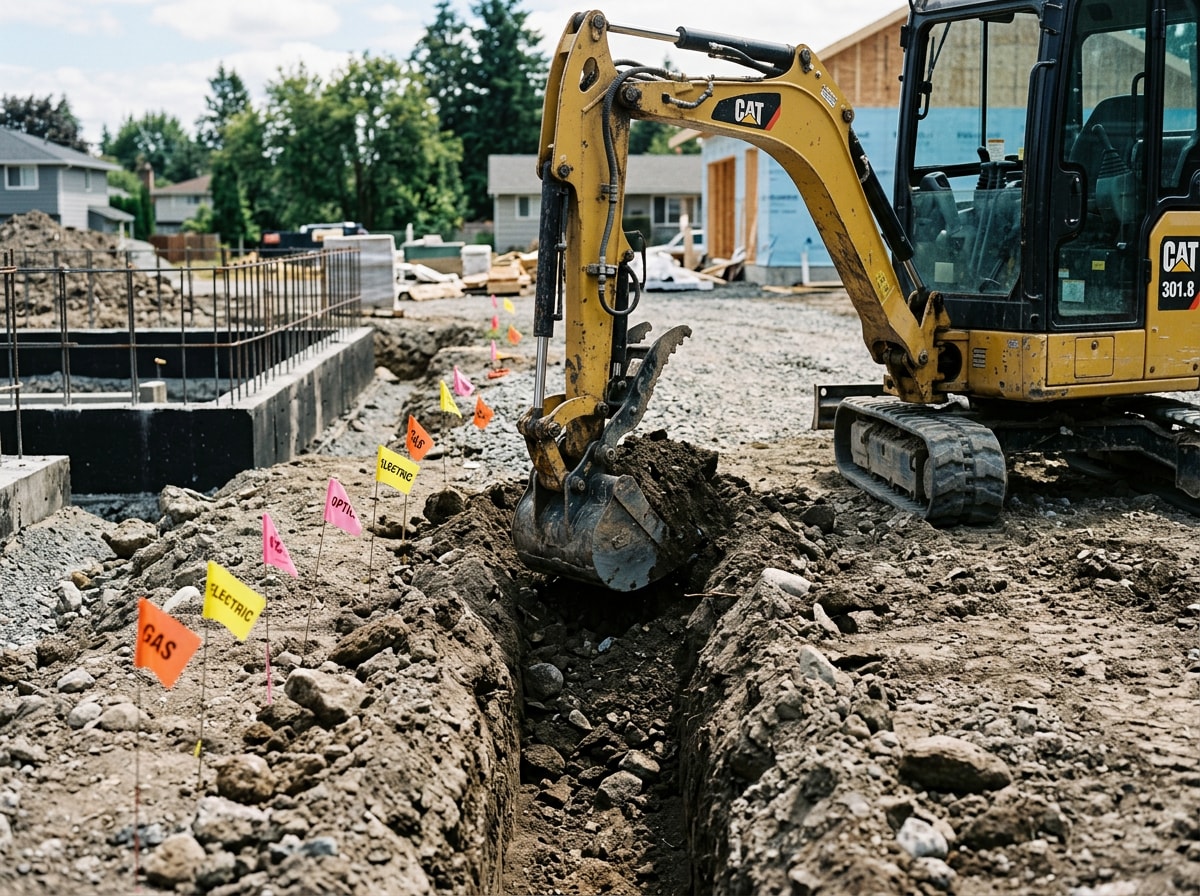
Before a builder, national or local, can frame a single wall, somebody has to handle the ground underneath it. That includes grading, trenching, locating existing utility lines, and tying into sewer and water service correctly the first time.
This is the part of the process we handle directly. Our crews work on drainage service projects, sewer line inspection, and trenchless pipe installation across new builds, additions, and remodels where the general contractor needs a specialist for exactly this scope.
On the water side, water line locating and inspection prevent the kind of mid-project surprise that stalls a schedule for weeks. And before any of that, excavation services, site preparation, and trench digging set the foundation for whether the rest of the build goes smoothly or turns into a change-order fight.
If you're already lining up a builder for a 2026 project, it's worth getting a second set of eyes on the site work scope before ground is broken. Get a free estimate on drainage, excavation, or utility work before your builder's crew shows up.
National vs. Local Builders in Northeast Ohio
A national builder wins on supply-chain pricing and brand recognition across dozens of markets. A local builder usually wins on permitting relationships, knowledge of regional soil conditions, and accountability, since you're often dealing with the same person from bid to final walkthrough.
For most homeowners planning an addition, remodel, or new build in Wooster, OH, Akron, OH, Massillon, OH, Ashland, OH, Mansfield, OH, Dover, OH, or New Philadelphia, OH, a national volume ranking isn't a useful filter at all. None of the Builder 100 names are bidding on a single-family addition in these markets. What matters locally is whether the builder knows the permitting office, has a real relationship with a utility locator, and has handled a lateral tie-in on your specific street before.
Cost Snapshot: What National Averages Tell You (and Don't)
The average single-family home sales price in the 2024 NAHB Construction Cost Survey is $665,298, the highest average sales price (not adjusted for inflation) in the survey's history.
The average construction cost of a typical single-family home in the 2024 survey is $428,215, or about $162 per square foot, the highest in the history of this series.
| Cost Component | Average | Share of Total |
|---|---|---|
| Finished Lot | $91,057 | 13.7% |
| Total Construction Cost | $428,215 | 64.4% |
| Site Work (permits, fees, water/sewer, engineering) | $32,719 | 7.6% |
| Financing Cost | $10,220 | 1.5% |
| Overhead & General Expenses | $38,248 | 5.7% |
Treat any single national figure as a reference point, not a quote. Lot condition, regional labor rates, and how much site work your specific property needs will move the number significantly in either direction.
Final Verdict
There's no single "top builder" that applies to every project. A national volume leader makes sense if you're buying into a production subdivision. A local, licensed contractor with a strong site-work track record is the better call for a custom build, addition, or remodel in northeast Ohio. Either way, vet the builder's scope for utility and drainage work specifically, since that's the piece most rankings and most sales pitches skip over. Visit {{SITE_URL}} to see how our crews support builders and homeowners with the excavation, drainage, and water line work that happens before the framing even starts, or browse recent work on our projects page.
FAQ
Who is the largest home builder in the U.S.?
It depends on the metric. D.R. Horton was the homebuilder with the highest gross revenue in the United States in 2024. By permit volume, Lennar is the most active homebuilder in the US, with 68,699 permits issued between 2021 and 2025 across 24 states. By annual closings, Builder magazine's Builder 100 has historically ranked D.R. Horton near the top as well. The "largest" answer changes depending on whether you're looking at revenue, permits, or closings.
How are "top builder" rankings actually determined?
Rankings use different yardsticks. Builder 100 ranks the nation's top home builders based strictly on annual home closings. Other lists rank by gross revenue, permit volume, or customer trust survey scores. Always check which metric a list is using before trusting its conclusion about build quality.
How much does it cost to build a house in 2026?
The most recent national survey puts average construction cost at $428,215, or about $162 per square foot , not including the lot. Total average sales price including land and financing runs closer to $665,298. Regional labor costs, lot condition, and site work needs can move this number significantly, so treat it as a starting reference, not a quote for your project.
Does a home builder handle sewer and water line work, or is that separate?
It's often subcontracted, which is exactly why it needs to be confirmed in writing before you sign. Many builders bring in a drainage or utility specialist for sewer line inspection, water line locating, and trench work rather than handling it in-house. Ask directly who is responsible for utility hookups and site drainage before the contract is finalized.
Should I hire a national builder or a local contractor for an addition or remodel?
For an addition, remodel, or custom build on an existing lot, a local, licensed contractor is almost always the better fit. National production builders are set up for new subdivisions, not one-off additions, and they typically won't bid on that kind of work in smaller Ohio markets at all.
What questions should I ask a builder before signing a contract?
Ask about current licensing status, who handles site work and utility connections, the warranty terms in writing, a realistic timeline including permitting, and references from projects completed in the last year. Request to see a recently finished project in person if possible, not just photos.