General home contractors are the single point of contact who plan, staff, and inspect your renovation or build from the first permit to the final walkthrough, so you're not juggling five trade schedules yourself. This guide breaks down what they actually do day to day, what they typically cost, and the exact questions and red flags that separate a solid hire from an expensive mistake.
What Is a General Contractor?
A general contractor is a professional who manages a construction or renovation project from start to finish. They coordinate subcontractors, permits, materials, and schedules on the homeowner's behalf.
Licensing requirements and the exact scope of the title vary by state. The core role, though, stays consistent almost everywhere: turning a homeowner's plan into a finished, code-compliant space without the homeowner managing a dozen separate vendors.
Some states use different titles, like "prime contractor," "builder," or "construction manager." The responsibilities overlap enough that homeowners can treat them as functionally the same role.
What Do General Home Contractors Do All Day?
Their job is less about swinging a hammer and more about keeping dozens of moving parts on schedule. Core responsibilities usually include:
- Hiring and supervising subcontractors for each trade
- Pulling permits and scheduling inspections
- Ordering and tracking materials
- Managing the budget and change orders
- Checking finished work against code and the agreed-upon plan
A typical day looks less like paperwork and more like triage. A GC might start with a morning site walk to check yesterday's framing. Then a call to the electrician confirms a rough-in inspection date. By early afternoon, they're at the permit office following up on an inspection request. By evening, they're adjusting tomorrow's schedule so the plumber isn't standing around waiting on drywall that hasn't arrived.
That constant loop of inspecting, coordinating, and adjusting is what the job actually looks like in practice. It's less glamorous than the title suggests, but it's the reason homeowners aren't the ones chasing five trade schedules themselves.
General Contractor vs. Subcontractor: What's the Difference?
A general contractor manages the overall project and hires the specialists. A subcontractor performs one specific trade, like electrical, plumbing, drywall, or tile, under the GC's supervision and schedule. Homeowners typically sign one contract with the GC rather than separate contracts with each trade.
This hierarchy exists for a practical reason. Coordinating a kitchen remodel means syncing a plumber, electrician, cabinet installer, and countertop fabricator so nobody's work undoes someone else's. The GC owns the whole outcome; the trade specialists own their individual piece of it. That's also why GCs charge for oversight in addition to labor: they're absorbing the risk of scheduling conflicts and rework so you don't have to.
Do You Need a General Contractor?
Not every home project needs one. A single-trade repair, like replacing a water heater or patching drywall, usually doesn't require a GC. Calling that trade directly is faster and cheaper.
Homeowners typically start looking for a general contractor once a project involves more than one trade working in sequence, such as:
- A full kitchen or bathroom remodel
- A home addition
- A basement finish involving framing, electrical, and plumbing together
- Any job requiring multiple permits or inspections
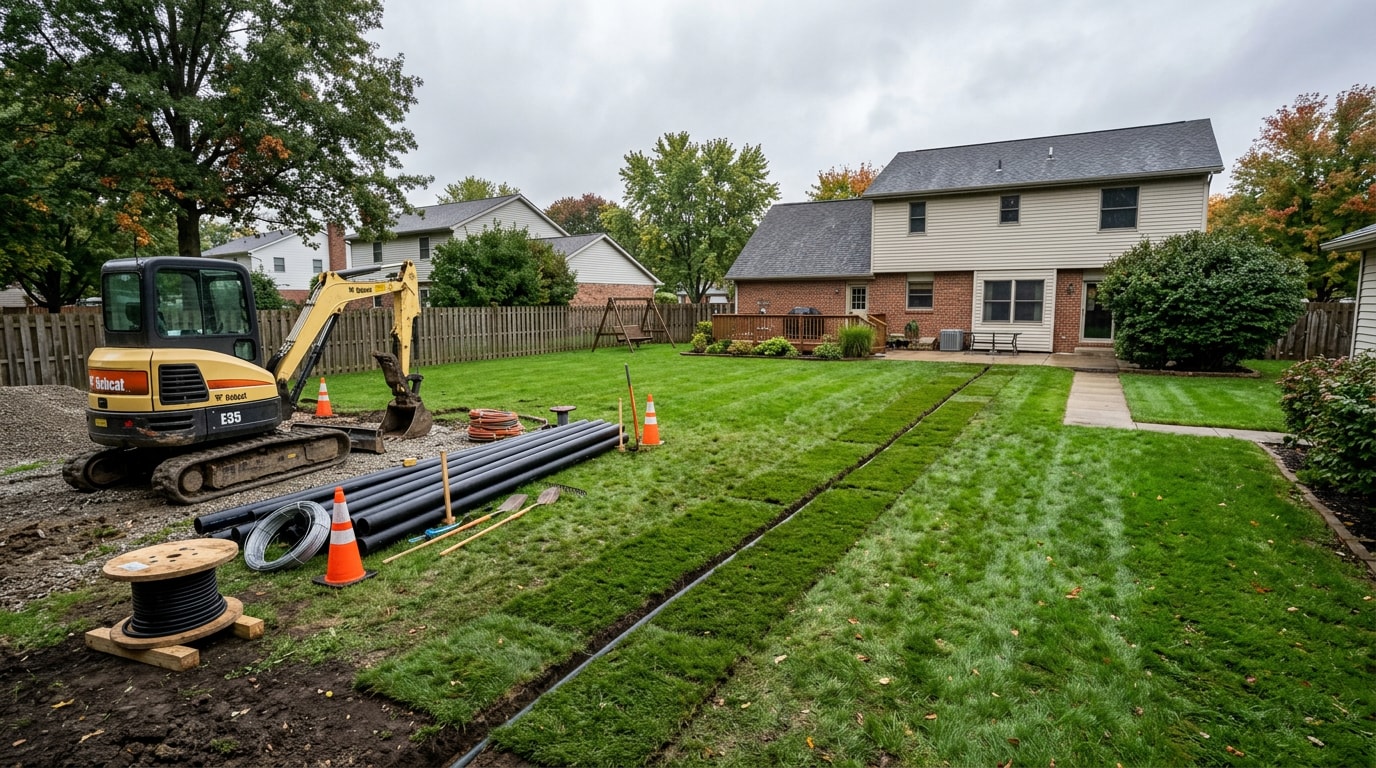
Additions and new construction almost always need site work too. That means excavation and grading and confirming buried water and sewer lines are marked through water line locating before anyone breaks ground. In our own work coordinating with general contractors on additions across Northeast Ohio, the projects that go smoothest are the ones where the GC loops in the utility and site crew before the trench line is marked, not after.
How Much Does a General Contractor Cost?
Most general contractors bill one of two ways: an hourly rate for smaller or open-ended jobs, or a markup of roughly 10 to 20 percent added to the total cost of materials and subcontractor labor on larger renovations. Actual rates vary by region and project complexity, so treat any number here as a starting point.
For context on what the role pays as a profession, the U.S. Bureau of Labor Statistics reports that the median annual wage for construction managers was $114,990 in May 2025 , a figure that reflects how much oversight, scheduling, and risk-management skill this job actually demands.
The contract type also changes how much financial risk falls on you:
| Contract Type | How It Works | Best For | Risk to Homeowner |
|---|---|---|---|
| Fixed-price | One set total price agreed upfront | Well-defined projects with a firm scope | Lower, overruns are the contractor's problem |
| Cost-plus | Actual costs plus a percentage markup | Projects with uncertain scope (older homes, structural unknowns) | Higher, costs can climb if surprises appear |
Neither model is inherently better. It depends on how well-defined the project scope is before work starts.
Questions to Ask Before You Hire
Ask these before signing anything, and pay attention to how directly the contractor answers:
- Are you licensed and insured for this type of work in this state?
- Can you provide three references from projects similar in scope to mine?
- Will you pull the permits and schedule the inspections yourself?
- What percentage of the work do you self-perform versus subcontract?
- What does your payment schedule look like, and is it tied to milestones?
- How do you handle change orders if scope shifts mid-project?
- Who is my day-to-day point of contact once work starts?
- What's a realistic timeline, including likely delays?
If you'd rather have a specialist scope the underground portion of your project first, an excavation or utility crew can walk the site with you before you finalize a GC's bid. Get a free estimate and we'll go over what that looks like for your property.
Licensing and Insurance: What to Verify
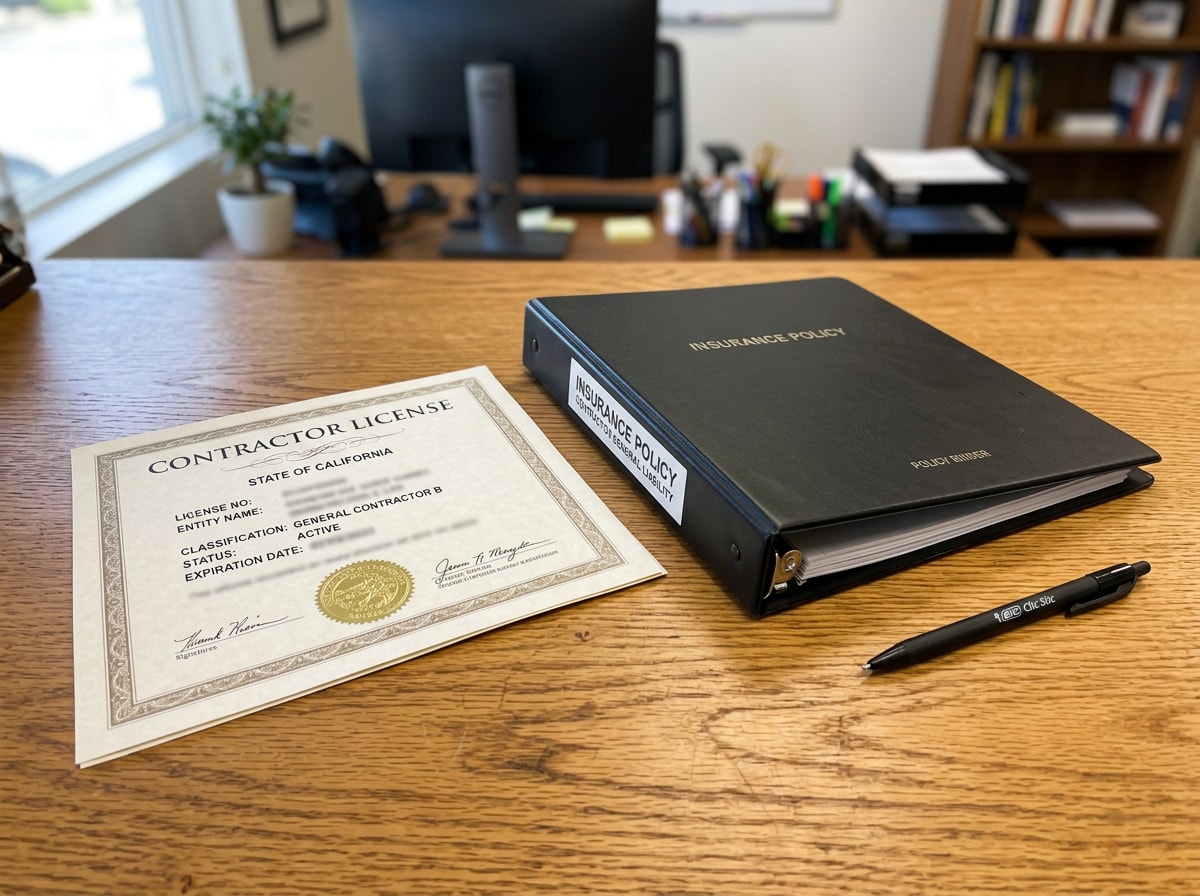
A valid contractor license confirms the person has met a state or local board's competency requirements. It doesn't guarantee good work, but its absence is a serious warning sign. Verify it before any contract is signed, not after.
Beyond the license, ask for proof of:
- General liability insurance, which covers property damage during the project
- Workers' compensation, which protects you if a worker is injured on-site
Licensing rules vary sharply by state and even by trade. In Ohio, for example, the state licenses electrical, HVAC, plumbing, hydronics, and refrigeration contractors through the Ohio Construction Industry Licensing Board, while general contractors themselves are typically registered at the city or county level instead. Checking the right board for your trade and location takes a few minutes and confirms a license is active, not just old paperwork.
Red Flags to Avoid When Hiring a General Contractor
Certain behaviors show up again and again in complaint records. Treat them as deal-breakers, not minor annoyances:
- Refusing to provide a written estimate
- High-pressure sales tactics pushing a same-day signature
- Demanding cash-only payment
- Failing to produce proof of insurance when asked
- Door-to-door solicitation right after a storm, especially with claims of "leftover materials" from a nearby job
The Federal Trade Commission's consumer guidance lists nearly identical warning signs, including that scammers pressure you for an immediate decision and ask you to pay for everything up front or only accept cash . Any one of these on its own isn't necessarily disqualifying, but two or more together usually points to a contractor cutting corners somewhere.
Trust Your Instincts
If something feels off during an early phone call or estimate visit, vague answers, dodged questions, rushed timelines, don't talk yourself out of that reaction. Take the extra day to check references and licensing before signing anything.
How to Find a General Contractor
Start with referrals from friends, neighbors, or a real estate agent who's recently overseen similar work. Cross-check candidates against online reviews and a national trade group like the National Association of the Remodeling Industry, whose members agree to a code of ethics.
A contractor's own portfolio matters too. Ask specifically to see work similar to what you're planning: a contractor who's done a dozen bathroom remodels but never touched a structural addition may not be the right fit, even with strong reviews.
For older homes, also ask whether your contractor is coordinating a sewer line inspection before major plumbing or foundation work begins. A cracked or root-clogged line can turn a routine remodel into an expensive change order fast.
If you're in Northeast Ohio, we regularly partner with general contractors on the site and utility side of additions and remodels around Akron, OH and the surrounding area. You can also browse our project gallery to see how we document scope and site restoration on jobs we've supported. For a deeper walkthrough of contractor types and interview questions, see our guide on how to choose a builder.
Writing a Contract for a General Contractor
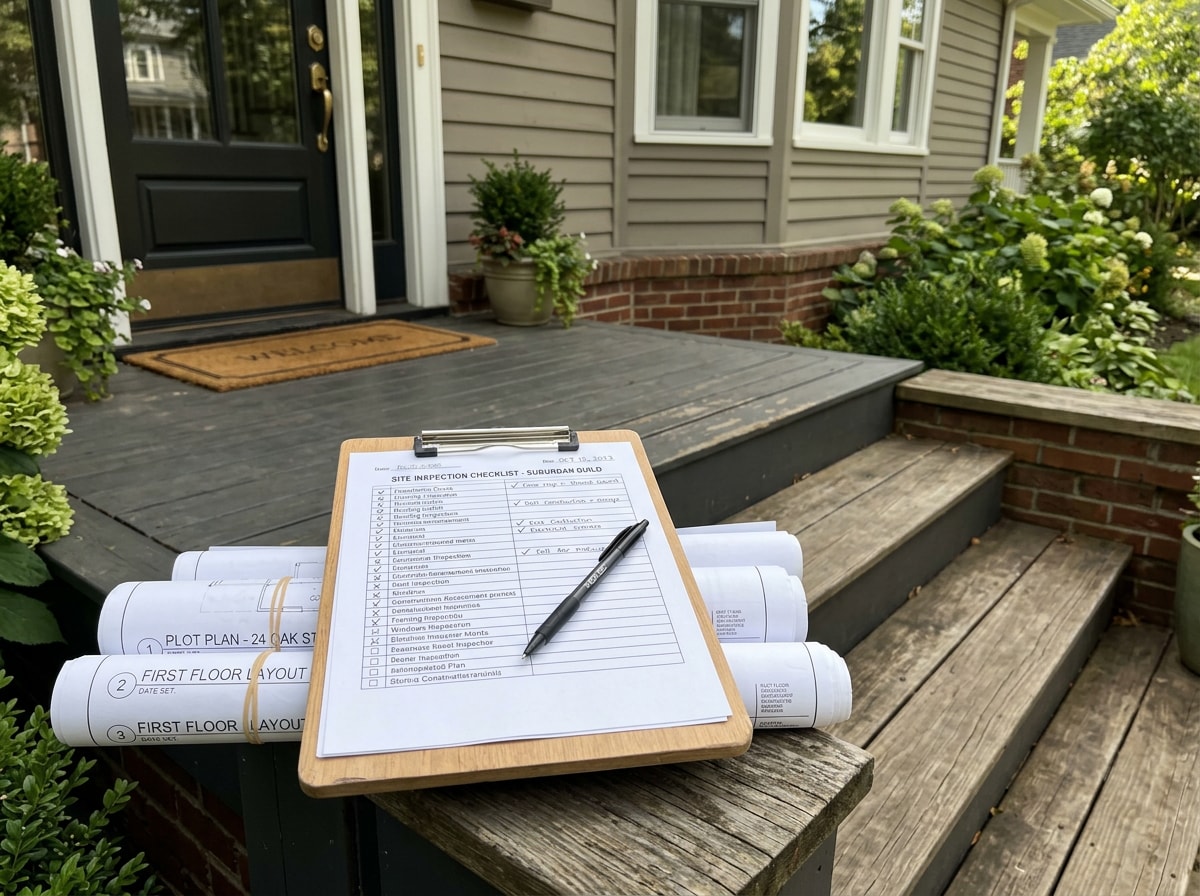
A verbal agreement, even with someone you trust, leaves both sides guessing later about what was actually promised. A written contract should lock in:
- The full scope of work
- A payment schedule tied to milestones, not large upfront lump sums
- A realistic start and completion timeline
- The contractor's license number for easy verification
- A change-order process for anything added mid-project
Don't pay the full amount upfront. Some states limit how large a down payment a contractor can legally request, so it's worth checking before you sign.
Whether you're coordinating a full remodel or just the underground work behind it, our homepage outlines every service area and specialty we cover in Northeast Ohio.
FAQ
What is the difference between a general contractor and a builder?
A builder is typically hands-on with the physical construction itself, while a general contractor manages the overall project, including permits, subcontractors, budget, and compliance. In many residential projects, the same person or company fills both roles, but the terms aren't strictly interchangeable everywhere.
What questions should I ask a general contractor before hiring?
Ask for proof of license and insurance, a realistic timeline, a detailed payment schedule, and at least two or three references from similar past jobs. Their answers, and how directly they give them, tell you almost as much as the answers themselves.
Do general contractors do the work themselves, or just hire subcontractors?
It varies. Some self-perform certain trades, like carpentry or painting, while subcontracting out electrical or plumbing. Others manage subcontractors exclusively without doing hands-on labor. Ask upfront which model your contractor uses so expectations match reality.
How do I verify a general contractor's license?
Look up the license number directly through your state or local licensing board's website rather than trusting a photocopy or business card. This confirms the license is current, matches the business name, and hasn't been suspended for prior violations.
Do general contractors require a down payment?
Most do, and a reasonable deposit is normal. But the full price should never be due upfront, and several states cap how large that initial payment can legally be. Check your state's rules before agreeing to a number.
Do I need a permit if I hire a general contractor?
Most structural, electrical, and plumbing changes require a permit, and a licensed GC will typically pull it and schedule inspections as part of the job. Skipping permits to save time or money can create problems later, including issues at resale.