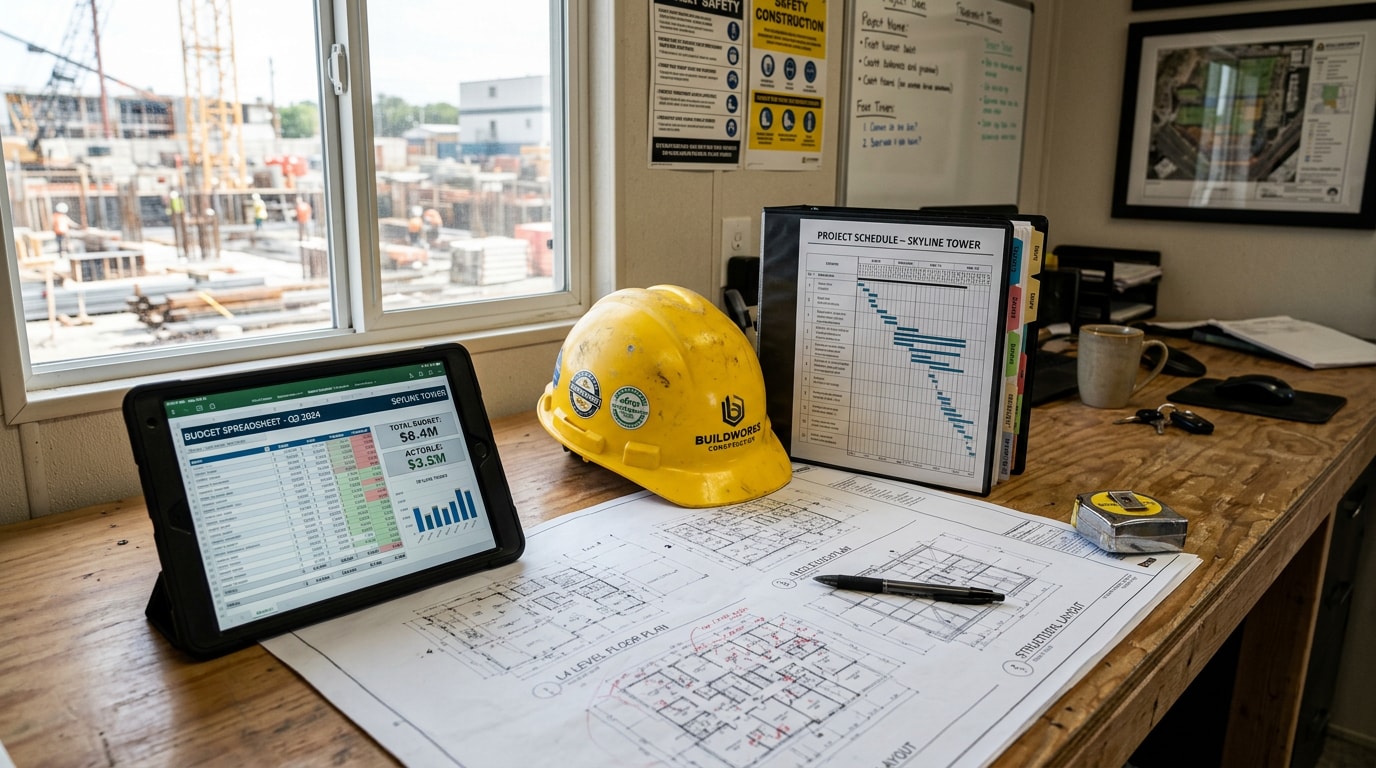
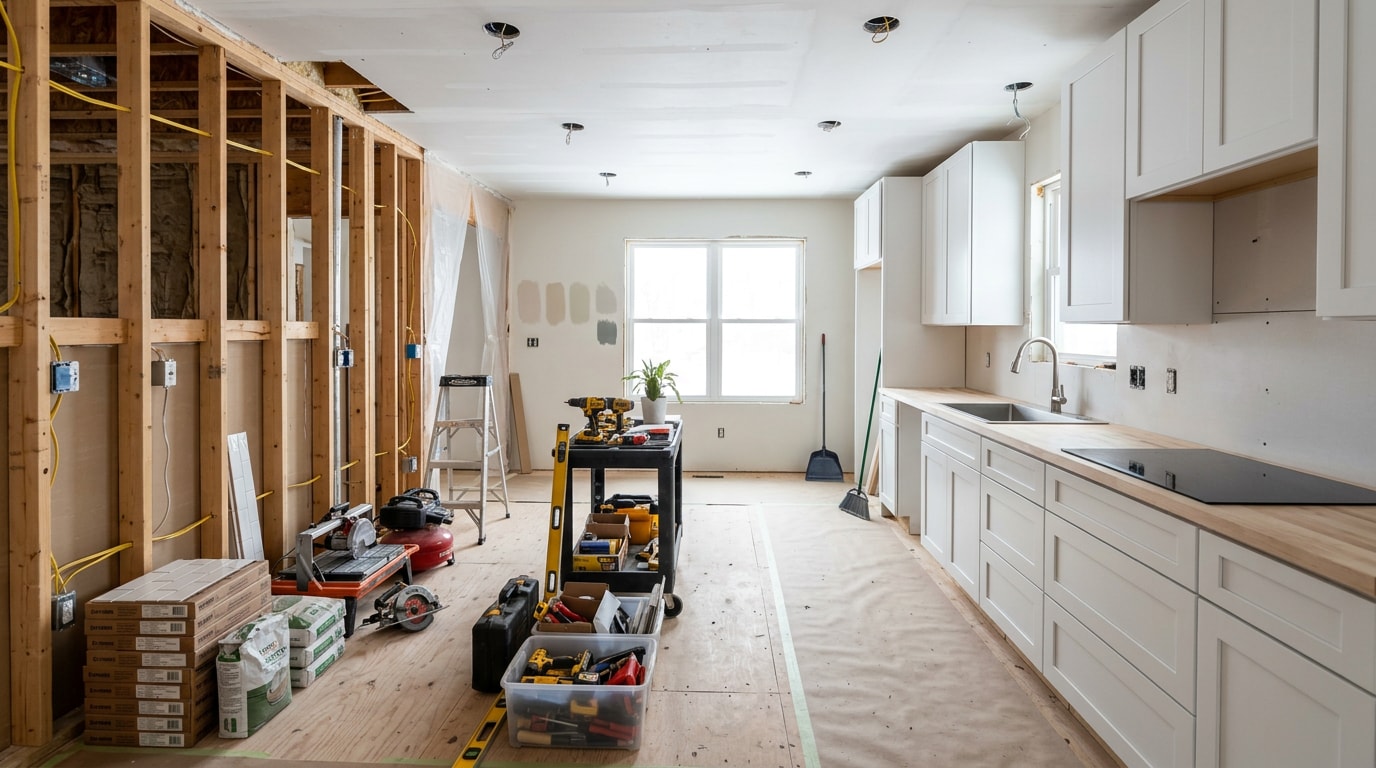
General remodeling contractors are the professionals who coordinate scheduling, permits, subcontractors, and budget so a renovation moves forward without you managing a dozen separate trades yourself. Hiring the right one is often the single biggest factor in whether a project finishes on time and on budget, or spirals into change orders and delays. This guide breaks down what the role actually covers, when you need one instead of a single-trade specialist, and the exact questions to ask before you sign anything.
What Is a General Remodeling Contractor?
A general remodeling contractor holds the prime contract with you, the homeowner, and manages the licensed subcontractors who perform the actual trade work. Think of the GC as the project's central point of accountability. They're the one you call when something needs to change.
This role spans a wide range of business sizes. A general contractor might be a sole proprietor running a small renovation company or part of a larger firm with dozens of employees and project managers. Either way, the job is the same: translate your renovation goals into a coordinated, licensed, and scheduled build. You can see how our own crews structure multi-trade projects on our homepage.
General Contractor vs. Specialty Contractor (Subcontractor)
A general contractor takes on most or all aspects of a remodeling project and signs a contract that spells out scope, schedule, and payment terms. A subcontractor works for the general contractor rather than directly for you, and typically isn't responsible for overall scheduling or managing other trades.
Specialty contractors are the right call when a project involves a single trade, like a plumbing fixture swap or an electrical panel upgrade. Once a job touches multiple trades, a general contractor becomes the person coordinating all of it. That coordination carries real legal weight: on shared jobsites, a general contractor typically functions as the controlling employer, meaning it has general supervisory authority over the site and is expected to exercise reasonable care to detect and prevent hazards, even those created by subcontractors , according to OSHA's multi-employer citation policy.
Here's a quick way to tell which one you actually need:
| Factor | General Contractor | Specialty Contractor (Subcontractor) |
|---|---|---|
| Scope of work | Multiple trades, full project | Single trade (plumbing, electrical, etc.) |
| Licensing class | General contractor license | Trade-specific certification |
| Who pulls permits | Usually the GC | Typically the GC, unless hired directly |
| Liability for whole job | GC carries overall responsibility | Only for their own portion of work |
Traditional General Contractor vs. Design-Build Firm
A traditional general contractor typically executes a plan you've already finalized with an architect or designer. A design-build contractor combines design and construction services under a single contract, managing both halves of the remodeling process in-house.
If you already have drawings and a clear vision, a traditional GC can usually move faster and may cost less, since there's no design markup built into the price. If you're starting from scratch, a design-build firm can streamline decision-making by keeping design and construction under one roof instead of juggling two separate contracts. If you're weighing this choice against other builder types, our guide on general home contractors walks through the cost and role differences in more detail.
Why & When You Should Hire a General Remodeling Contractor
Not every project needs a general contractor. A single-room paint job or a fixture replacement is usually fine with a specialty contractor hired directly. The calculation changes once a project grows in complexity.
Renovations involving structural changes, plumbing, electrical work, or any combination of trades benefit from a general contractor's oversight, since someone needs to sequence the work and keep crews from conflicting with each other. If your project spans more than one trade, you likely need a GC.
A GC is also useful when you don't have a finished design yet. A general contractor can help clarify what's realistically possible in your space, offer ballpark costs early, and recommend designers or architects if the scope calls for one. This matters most on multi-trade renovations, where decisions in one area affect the budget and timeline of another.
One thing homeowners rarely plan for: whole-home and major kitchen or bathroom remodels frequently expose aging underground lines once walls or slabs open up. We've seen remodels in the Wooster, OH and Akron, OH areas stall for weeks after a demo crew uncovered a collapsed clay sewer line or a corroded water service line that wasn't visible from inside the house. A good GC will loop in a camera sewer line inspection or water line inspection early, before that surprise turns into a change order mid-project.
Whoever you hire, confirm they're licensed. Licensing means they've met your state's training and background-check requirements, which is a meaningful baseline, not just a formality.
How to Find & Hire the Right General Contractor
Knowing how to find a general contractor comes down to a short checklist: verify their credentials, then compare how they communicate and price their work. Walking through both steps before you sign anything is the single best way to avoid problems mid-project.
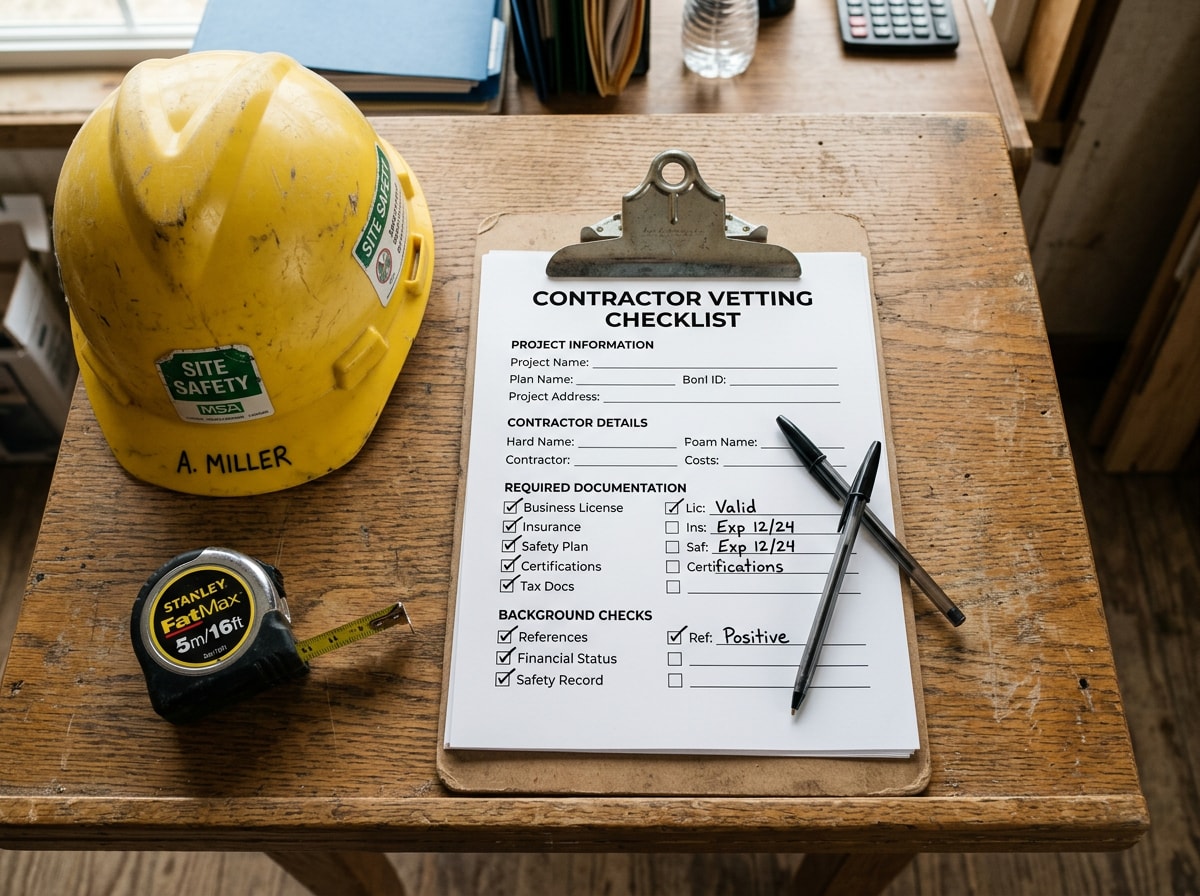
Start by reviewing candidates' past work on projects similar in scope and style to yours. You can browse examples of completed work, including underground utility and site restoration jobs, on our projects page.
Qualifications, Licensing & Insurance to Verify
Review a contractor's portfolio and community reputation, looking specifically for jobs similar in scope to yours. A contractor who's remodeled a dozen small bathrooms isn't necessarily the right fit for a whole-home structural renovation.
Next, confirm the general contractor is licensed and insured, and separately, bonded. These three protections aren't interchangeable:
| Protection | What It Actually Covers |
|---|---|
| License | Proves the contractor met your state's training, exam, and experience requirements |
| Bond | Reimburses you financially if the contractor fails to complete work or breaches contract terms |
| Insurance (liability + workers' comp) | Covers property damage, accidents, and workers' compensation for injured crew on your property |
A valid license tells you the contractor meets state standards. Bonding and insurance protect your finances if something goes wrong, which licensing alone doesn't guarantee. NASCLA's consumer resources on hiring a licensed contractor walk through license verification, work monitoring, and payment best practices before you sign anything.
Confirm all three before signing, not after work has started, when your leverage to fix a problem is much weaker.
Getting Estimates & Questions to Ask Before Hiring
Be cautious of any written estimate that's vague or delivered only verbally. A detailed, itemized estimate breaks down labor, materials, permits, and contingency costs, which helps you budget accurately and avoid surprise expenses later.
Plan to compare bids from at least three candidates, and look past the bottom-line number to the scope and materials each one assumes. Two bids with the same price can represent very different levels of quality.
While interviewing candidates, ask:
- How familiar are you with local building codes for this type of project?
- Who will actually be on-site day to day?
- How do you handle unexpected delays or change orders?
- What does your communication schedule look like during the project?
- Can you provide references from at least two recent, similar jobs?
Ready to compare pricing on your own project? Get a Free Estimate and get a written breakdown from our team.
Cost & Protecting Your Investment
Remodeling costs vary widely by scope, region, and material choices, but a general range helps set realistic expectations before bids come in.

| Project Type | Typical 2026 Cost Range |
|---|---|
| Kitchen remodel | $25,000 – $75,000 |
| Bathroom remodel | $12,000 – $35,000 |
| Whole-home remodel | $100,000 – $250,000+ |
These are broad U.S. estimates. Actual pricing swings based on your market, finish level, and structural scope, and homeowners in the Massillon, OH area should expect bids to vary from these national ranges too. General contractors typically add a markup of roughly 10–20% over raw subcontractor costs, which covers project management, scheduling, and liability for the full job. Hiring specialty contractors directly can sometimes undercut that markup, but only works cleanly on single-trade projects.
Beyond price, verify adequate insurance coverage before work starts: general liability covers property damage and accidents, while workers' compensation covers crew injuries on your property. Confirm both policies are active directly with the insurer, not just by taking the contractor's word for it.
Also ask what warranties the contractor offers on workmanship and materials, and how they handle issues that surface after the project wraps up. The FTC's consumer guide to avoiding home improvement scams lists red flags like requests for payment entirely up front or pressure for an immediate decision, both worth checking before you pay a deposit.
If a remodel in your project area involves running new supply lines or fixing drainage issues uncovered during demo, our drainage service and water testing service teams work alongside general contractors on exactly this kind of mid-project discovery.
FAQ
What is the difference between a general contractor and a remodeling contractor?
"Remodeling contractor" is typically an informal label for a general contractor who focuses on renovation work rather than ground-up new construction. The licensing requirements are the same either way. The distinction is about specialization, not legal status.
Do I need a general contractor for my remodel?
It depends more on project complexity than price. If your renovation touches multiple trades, requires permits, or involves structural changes, a general contractor is worth the cost. Simple, single-trade jobs can often be handled by a specialty contractor alone.
How much does a general contractor cost or charge?
General contractors typically bill either a fixed project price or a percentage markup, often 10–20%, over subcontractor and material costs. The right model depends on project size and how much scope flexibility you need. See the cost table above for typical ranges by project type.
What should I look for when reviewing proposals from general contractors?
Favor contractors with a documented track record on projects similar to yours. A strong proposal includes a detailed scope of work and itemized pricing, not just a single bottom-line number, the same standard covered in the estimates section above.
Can a general contractor do the work themselves, or do they only manage subcontractors?
Many general contractors perform some of the work directly, especially carpentry or framing, while subcontracting licensed trades like plumbing and electrical. Ask upfront who is doing which parts of the job so you know exactly who's accountable for each trade.
How do I find general remodeling contractors near me?
Start with referrals, then verify licensing and insurance before requesting bids. If you're in our service footprint, check our area pages for Wooster, OH, Akron, OH, or Massillon, OH to see where our crews currently work alongside local general contractors.