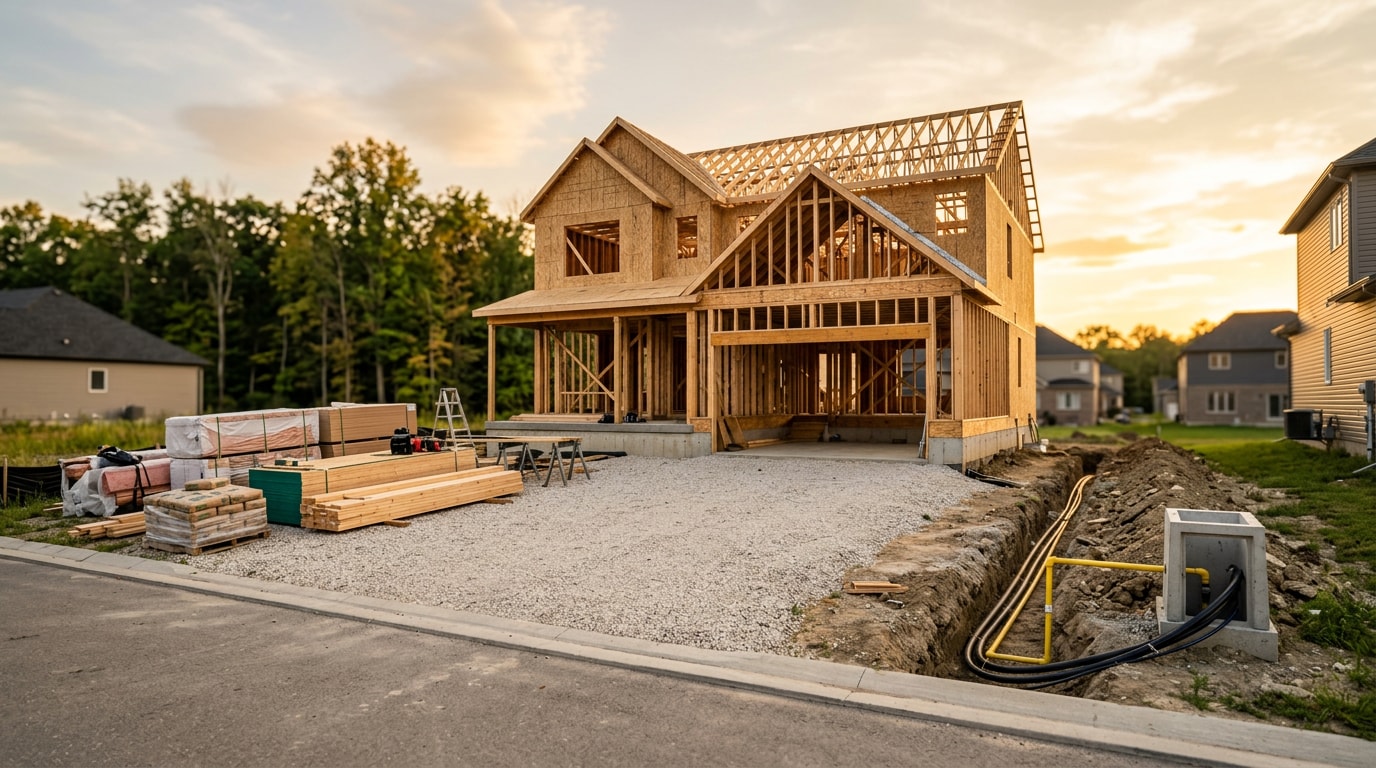
New construction electrical contractors wire an entire building from the ground up, a fundamentally different job than fixing a flickering switch or a dead outlet. They work alongside builders and architects from framing through final inspection, and the one you hire shapes your project's timeline, budget, and safety for decades. Here's what these contractors actually do, how to vet one, and what the work costs in 2026.
What Does a New Construction Electrician Do?
A new construction electrician is not the same as a repair or service electrician. Instead of troubleshooting an existing system, they design and install wiring in a structure that doesn't have any electrical infrastructure yet.
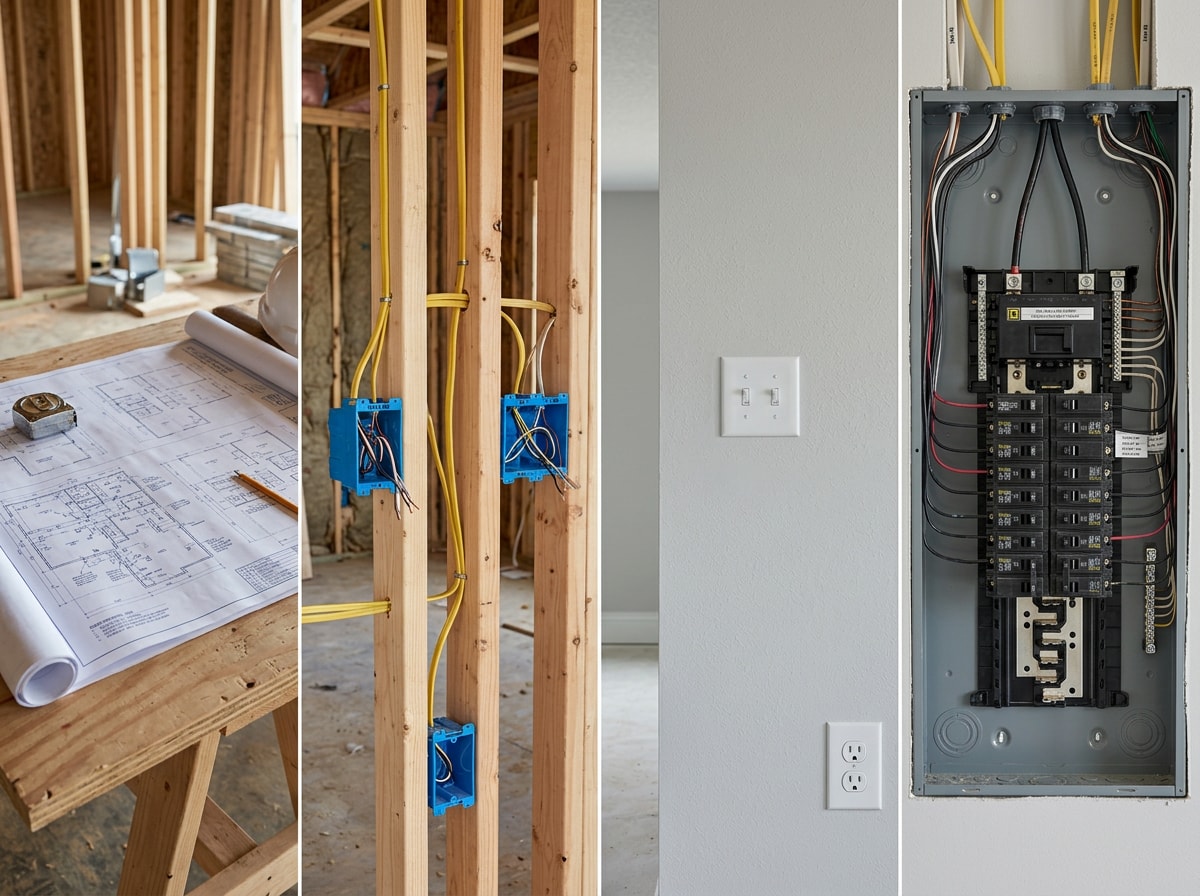
The work generally moves through four phases: planning, rough-in, trim-out, and inspection/testing.
Planning & Design
Before anyone picks up a wire, the planning and design phase determines where every outlet, light, and circuit will go. This includes blueprint review, load calculations to size the service correctly, and mapping circuit layouts against the floor plan.
Contractors typically collaborate closely with architects and general contractors here, so electrical plans match structural and HVAC layouts before framing locks anything in.
Rough-In Wiring Installation
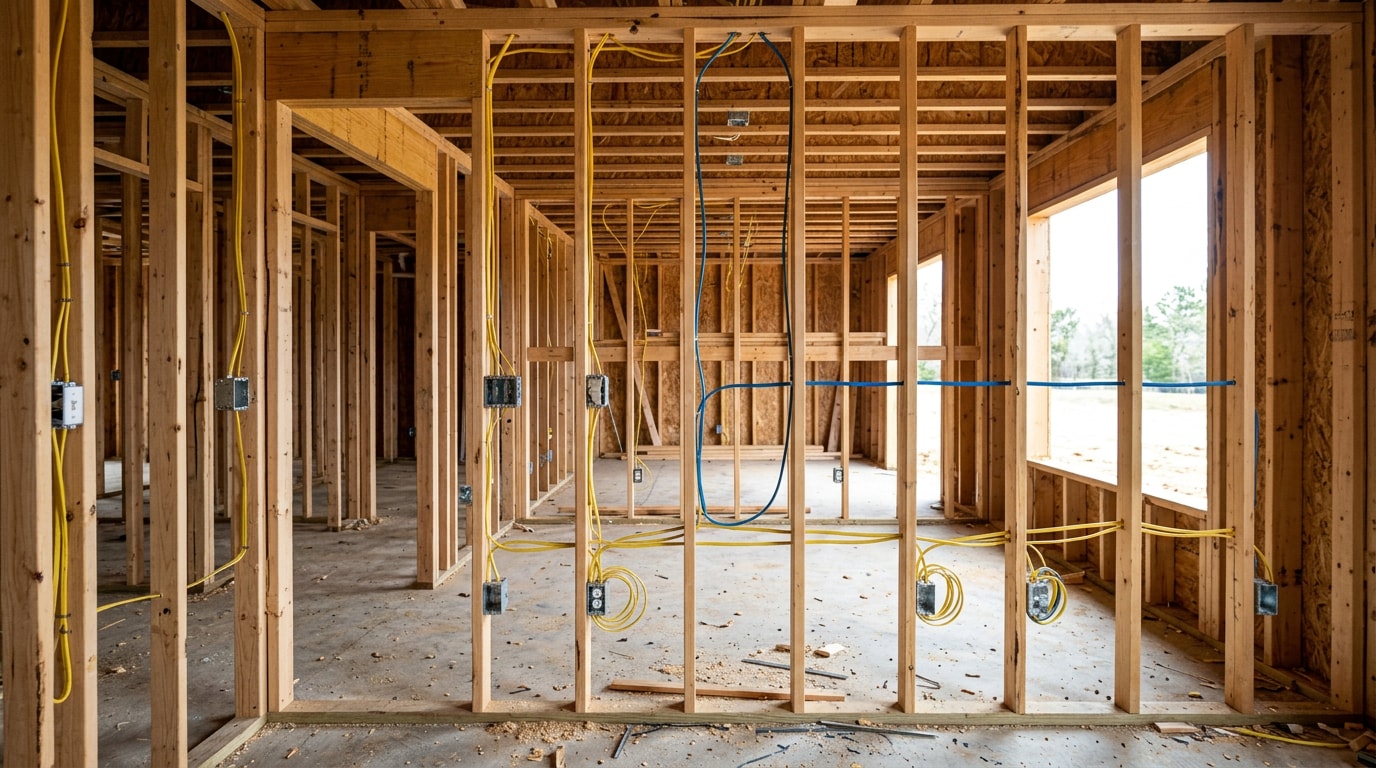
Once framing is up but before insulation and drywall go in, crews run wire and conduit through wall cavities and set electrical boxes at every planned outlet, switch, and fixture location. This rough-in stage is where most inspection problems originate.
Any error in wire routing or box placement is far cheaper to fix now than after walls are closed up.
Trim-Out & Final Fit-Outs
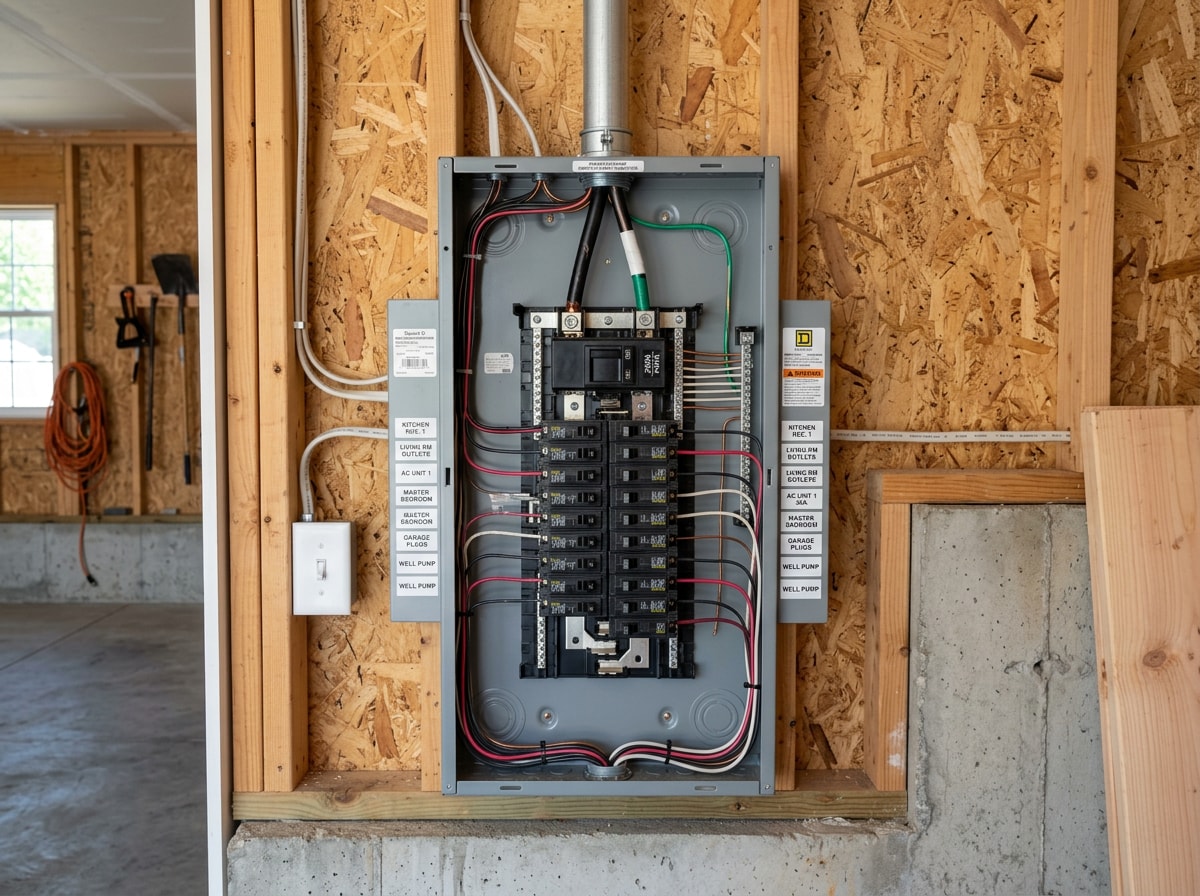
After drywall, paint, and flooring are finished, the electrician returns for trim-out: installing outlets, switches, light fixtures, breakers, and the panel cover, then labeling circuits for the homeowner. This is the last major hands-on phase before the home is livable.
Inspections & Testing
A rough-in inspection verifies wiring, box placement, and circuit sizing before walls close. A final inspection checks that installed devices, fixtures, and the panel meet code once trim-out is complete.
Electricians also test voltage and continuity throughout the system before anyone moves in. Nationally, NFPA 70, the National Electrical Code, is adopted in all 50 states and functions as the benchmark for safe electrical design, installation, and inspection. Many contractors also use this stage to pre-wire for future needs, like EV chargers or smart home systems, since adding capacity later is far more disruptive than building it in now.
Why Hire a Licensed, Insured Electrical Contractor
Hiring unlicensed labor to save money on a new build is one of the riskiest shortcuts you can take. A licensed electrician has passed state-mandated training and testing, which matters because new construction wiring must meet strict code requirements, including GFCI protection in wet locations and AFCI protection in bedrooms and living spaces.
An insured contractor also carries general liability and workers' compensation coverage, protecting you if someone is injured or property is damaged on site.
Skipping this vetting step has real consequences. Work that fails to meet code will fail inspection, and reworking wiring that's already behind drywall costs far more than doing it right the first time.
Electrical issues remain a leading contributor to home fire damage nationally. Electrical distribution or lighting equipment was the leading cause of home fire property damage, with an average of 31,650 such fires causing 430 deaths, 1,300 injuries, and $1.6 billion in direct property damage annually. Verifying license status and insurance before signing anything is a small step that prevents large problems later.
There's also a labor-market angle homeowners rarely consider: employment of electricians is projected to grow 9 percent from 2025 to 2035, much faster than the average for all occupations . That growth means qualified crews are booked out further in advance, so lining up your contractor early in the build schedule matters more than it used to.
How to Choose the Right New Construction Electrical Contractor
Look for a contractor with direct experience on projects similar in scope to yours. Wiring a custom home differs meaningfully from wiring a commercial building or a production-built subdivision home.
Ask for references from recent, comparable projects, review their reputation, and pay attention to how clearly they communicate during the bidding process. A contractor who explains timelines and answers questions plainly upfront tends to communicate the same way once work is underway.
Before signing a contract, run through a short checklist:
- Can they provide proof of current license and insurance?
- What's their estimated project timeline, and how does it fit your build schedule?
- Do they have a documented drug and alcohol policy for crew members on site?
- Are they familiar with local code requirements and permitting in your specific jurisdiction?
- How do they coordinate scheduling with other trades, like plumbers, framers, and site excavators?
These questions surface red flags early, before you're financially committed. A contractor who hesitates on licensing or insurance documentation is worth walking away from, no matter how competitive their bid looks. If you're also lining up other trades for the same build, our guide to hiring new construction plumbing contractors covers a nearly identical vetting process.
Coordinating Electrical Work With Site Utilities and Excavation
Electrical rough-in doesn't happen in isolation. Underground electrical service conduit, water service lines, and sewer laterals often need to run through the same yard, sometimes through the same trench corridor, before backfill and landscaping close everything up.
Across new-construction projects we've supported in Wooster, Akron, and Massillon, Ohio, we've seen builders save real time and money by having one excavation crew coordinate trench routes for electrical, water, and drainage lines together instead of digging three separate trenches on three separate schedules. That coordination also reduces the number of times a yard gets torn up and repaired.
If your build is in our Ohio service area, it's worth asking your general contractor whether site preparation, trench digging, excavation services, and water service line installation can be scheduled alongside the electrical rough-in rather than after it. We serve builders and homeowners in New Philadelphia, OH and the surrounding area for exactly this kind of coordinated site work.
Ready to line up the excavation and utility side of your build? Get a free estimate and we'll walk through how your site work timeline lines up with your electrical rough-in.
Cost of Hiring a New Construction Electrical Contractor in 2026
New construction electrical costs vary based on project complexity, total square footage, and local labor rates. The ranges below are common planning benchmarks used in the trade, not a quote for your specific project.
| Project Scope | Typical Cost Range | What's Usually Included |
|---|---|---|
| Standard rough-in and trim-out | $3–$6 per sq. ft. | Wiring, boxes, standard devices, basic fixtures |
| Full-service package | $6–$9+ per sq. ft. | Panel, service entrance, EV-ready circuits, upgraded devices |
| 200-amp panel upgrade (vs. legacy size) | A few hundred to $1,000+ | Panel, breakers, utility connection, permitting fees |
Panel sizing is a major cost driver. Most homes have 240 V service available, and Level 2 charging equipment, the type most EV owners install at home, can operate at 40 to 80 amperes. Add a heat pump and a home office running simultaneously, and it's easy to see why a 200-amp panel is increasingly treated as the practical minimum for new construction rather than an upgrade.
Because electrician employment is projected to grow much faster than the average for all occupations through 2035 , labor-heavy phases like rough-in tend to cost more in high-demand metro markets, and that gap is likely to widen rather than close. For an itemized estimate on the excavation, trenching, or backfill work that often runs alongside new-construction electrical, contact us for a free quote.
Benefits and Downsides of Hiring a Professional
| Professional, Licensed Electrician | Unlicensed Labor / DIY | |
|---|---|---|
| Code compliance | Meets NEC and local AHJ requirements | High risk of failed inspection |
| Insurance protection | Liability and workers' comp coverage | Homeowner assumes risk |
| Schedule coordination | Experienced with multi-trade timing | Often causes delays for other trades |
| Upfront cost | Higher | Lower |
| Long-term cost | Predictable | Rework, fines, and safety risk can cost far more |
A professional electrical contractor keeps your project on schedule because they've coordinated rough-in and trim-out timing with other trades many times before. That experience translates into fewer surprises and more accurate estimates upfront, which matters when a delay in one trade pushes back everyone else on the job site.
Contractors who've handled dozens of new builds also tend to flag potential issues early, rather than letting them surface at inspection. That reduces the risk of failed inspections and the rework that follows, often the single biggest source of new construction budget overruns.
The trade-off is cost. Skilled, licensed electrical labor costs more upfront than unlicensed labor or DIY wiring, and that difference is real. But weighed against failed inspections, code violations, and safety hazards once walls are closed, the higher upfront cost is usually the more predictable and ultimately cheaper path.
If you're evaluating your general contractor at the same time as your electrical trade, our builder hiring guide covers red flags that apply to any trade on a new build, not just electrical. You can also browse examples of coordinated site and utility work in our project gallery or learn more about our full service lineup on our homepage.
FAQ
What Is the Difference Between a New Construction Electrician and a Residential Electrician?
A new construction electrician wires an unfinished structure from the ground up, working directly from blueprints before walls or fixtures exist. A residential or service electrician handles repairs, upgrades, and troubleshooting in homes that are already built and occupied.
How Long Does New Construction Electrical Wiring Take?
For a typical single-family home, rough-in wiring generally takes several days to about two weeks depending on square footage. Service entrance and panel installation add a few more days, and trim-out at the end of the build usually takes another few days once walls and finishes are complete.
Do I Need a Permit for New Construction Electrical Work?
Yes. Virtually every U.S. jurisdiction requires a permit for new construction electrical work, and that permit triggers the rough-in and final inspections that confirm the system meets code before the home can be occupied. Requirements vary by local Authority Having Jurisdiction, so confirm specifics with your building department before work starts.
What Amperage Does a New Home Need in 2026?
Most new homes now use a minimum of 200 amps of electrical service. That baseline reflects rising demand from EV charging, heat pumps, and more electronics running simultaneously, and many builders recommend it as a starting point even for modest-sized homes.
Can I Do My Own Electrical Wiring in New Construction?
In most jurisdictions, only a licensed electrician (or, in a few states, the homeowner under an owner-permit exemption) can legally wire new construction. Even where DIY is technically allowed, the work still has to pass the same rough-in and final inspections as licensed work, and a failed inspection means opening up walls to fix it.