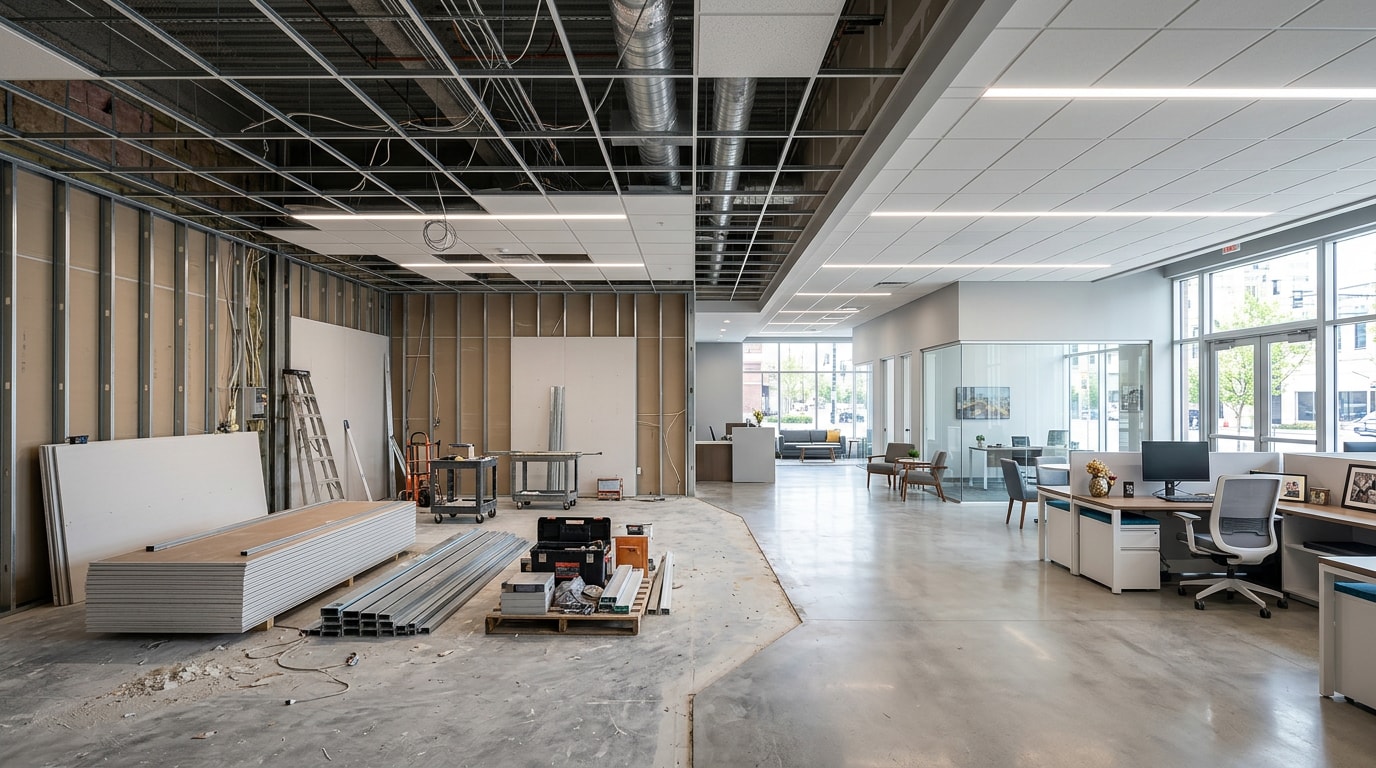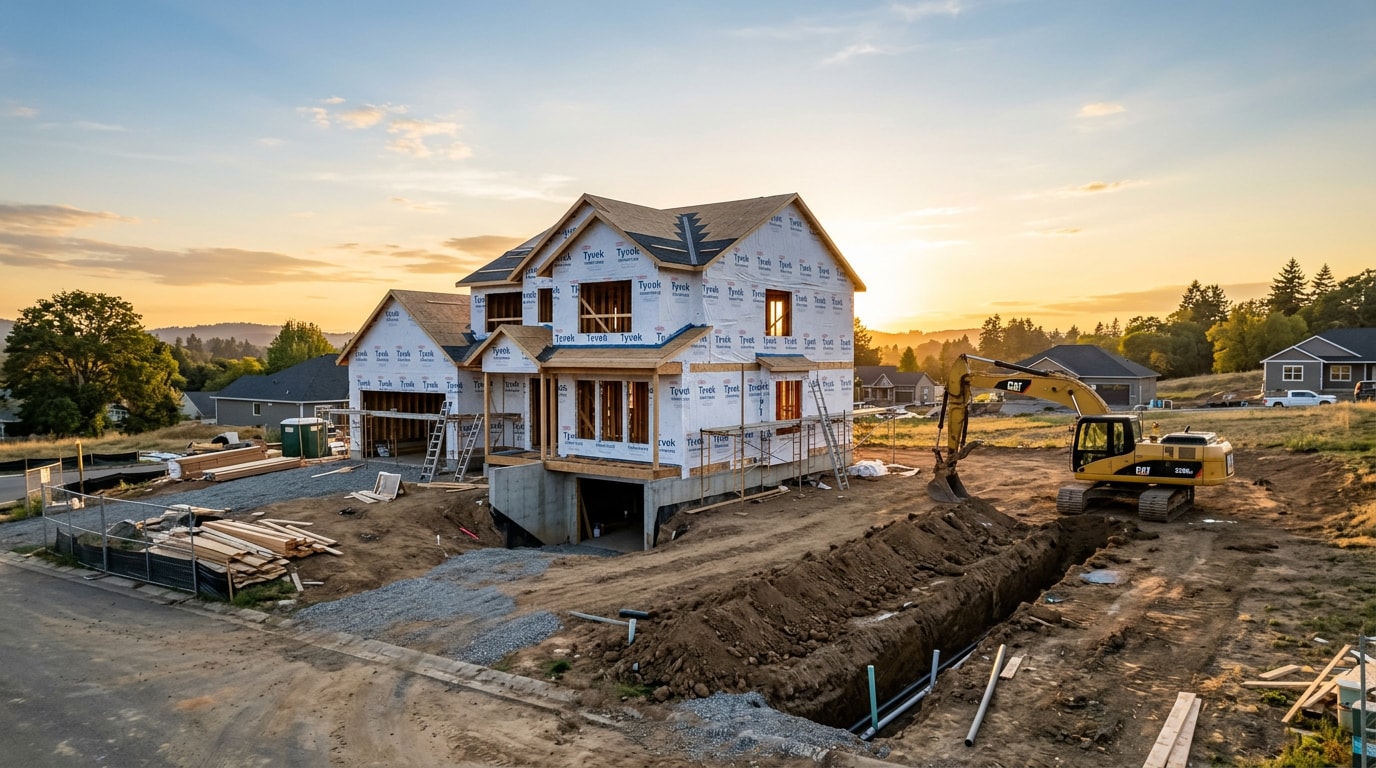
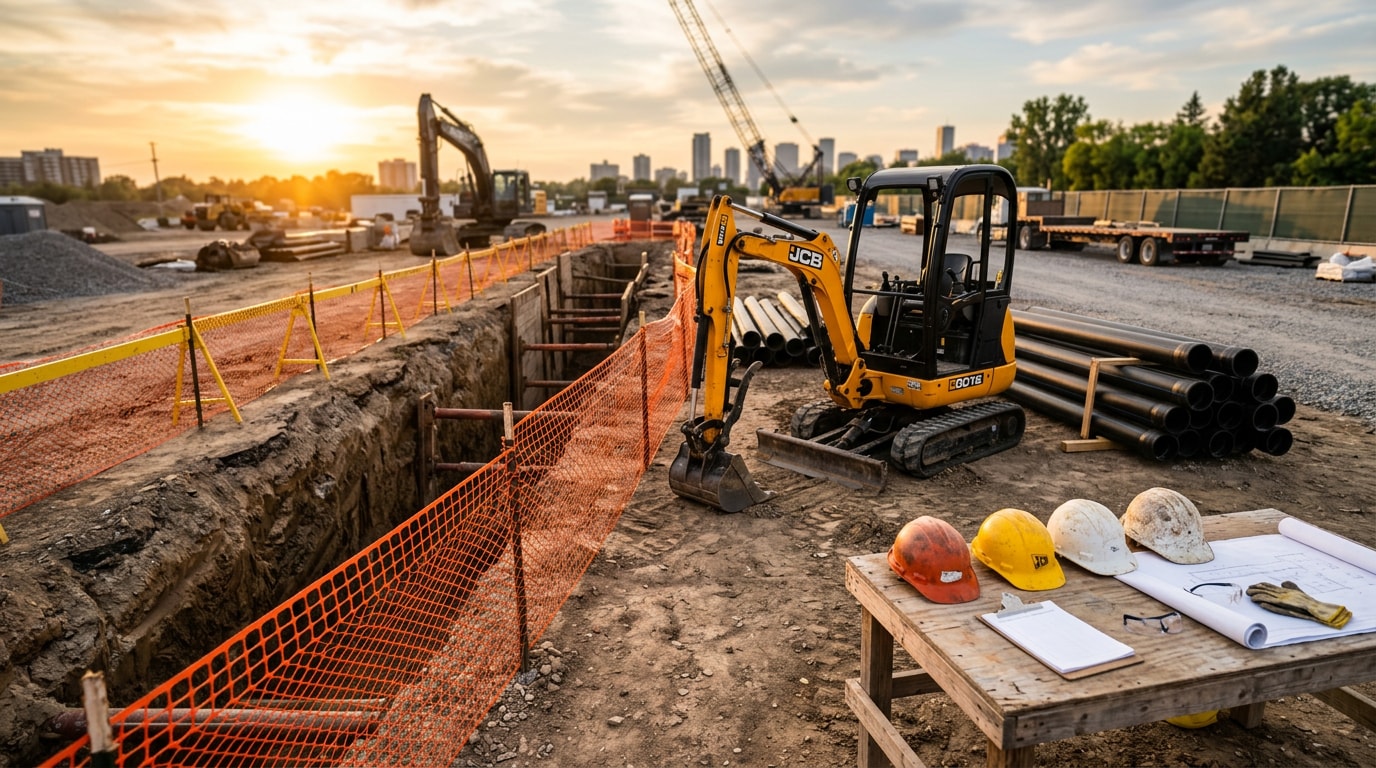
A construction agency — usually shorthand for a construction staffing agency — supplies contractors with vetted labor on demand instead of forcing every hire through a slow in-house recruiting process. Labor shortages are still squeezing job schedules across the trades in 2026, and this guide breaks down what these agencies actually do, what they cost, and when they're worth the call. We work alongside staffing partners on our own excavation and sewer repair crews, so the process details below come from firsthand scheduling, not a brochure.
What Is a Construction Agency?
A construction staffing agency is a third-party firm that supplies contractors with temporary, seasonal, or project-based workers instead of the contractor hiring each worker directly.
The agency typically employs the workers itself. It handles recruiting, background screening, payroll, and insurance, while the contractor directs the actual work onsite.
Worth noting: the term "construction agency" occasionally shows up in a different context, too. In some contracts, an agency construction manager provides advisory services to a project owner, such as scheduling and cost control, without responsibility for providing any actual construction services . That's a distinct arrangement from staffing. This guide focuses on the far more common use: labor staffing for contractors.
Types of Construction Staffing Agencies: Skilled Trades vs. General Labor
Most agencies fall into one of two camps.
| Agency Type | Focus | Example Roles | What Matters Most |
|---|---|---|---|
| Skilled trades staffing | Licensed or certified roles | Electricians, plumbers, framers, pipe crew operators | Verified credentials, experience |
| General labor staffing | Jobsite support | Demolition, cleanup, material handling | Speed, headcount, availability |
A contractor racing to finish a punch list might call a general labor agency for same-day crew support. A contractor bidding a job that requires a licensed electrician needs a skilled trades specialist that can verify certifications before dispatch.
How a Construction Staffing Agency Works
The hiring process generally follows the same sequence regardless of which agency a contractor uses.
- The contractor specifies job requirements: trade, headcount, duration, and site location.
- The agency sources and screens candidates from its existing worker pool or active recruiting pipeline.
- Once matched, workers are dispatched to the site, often within days.
- The agency manages payroll and workers' compensation for the length of the assignment, billing the contractor at an agreed bill rate.
When the job wraps up, so does the engagement. There's no ongoing payroll obligation for the contractor. Many agencies also offer a temp-to-hire path if a contractor wants to bring a strong performer on permanently.
How to Choose a Construction Staffing Partner
Not every agency operates the same way, and picking the wrong one costs more than a bad bill rate. Before signing on, ask:
- How do you vet candidates? Background checks, license verification, and drug testing should be standard, not optional add-ons.
- Do you specialize in my type of work? A trade-aware agency asks about scope and required certifications before sourcing. A generalist just asks how many bodies you need.
- What's your realistic fill time by role? Get a straight answer, not a vague "we'll try."
- Who handles jobsite safety training? This needs to be spelled out in writing before day one.
- What happens if a placement doesn't work out? A serious partner has a replacement policy, not a shrug.
If you're evaluating any outside contractor relationship, not just staffing, the vetting logic is similar to what we cover in our guide to choosing a commercial remodel contractor.
Benefits of Using a Construction Agency
Most contractors weigh a construction agency against three priorities: controlling cost, reducing compliance burden, and keeping a reliable labor supply.
Control Hiring and Budget
Pricing supplemental labor into a bid upfront makes staffing costs predictable in a way ad hoc recruiting rarely does. Instead of absorbing unpredictable recruiting costs — job ads, background checks, onboarding time — a contractor can build the agency's bill rate directly into project estimates. That matters most on tight-margin jobs where surprise hiring expenses eat into profit.
Offload Payroll and Workers' Comp
Because the agency carries workers as its own employees, payroll taxes, workers' compensation, and administrative overhead shift off the contractor's books.
That said, the split in responsibility isn't total. Temporary staffing agencies and host employers share control over the worker, and are therefore jointly responsible for temporary workers' safety and health.
Staffing agencies might provide general safety and health training, while host employers provide specific training tailored to the particular workplace equipment and hazards. Contractors should get this division of responsibility in writing before a worker sets foot on site. OSHA's own guidance on protecting temporary workers lays out how these duties typically split between staffing agencies and host employers.
Solving Labor Shortages with Local and National Reach
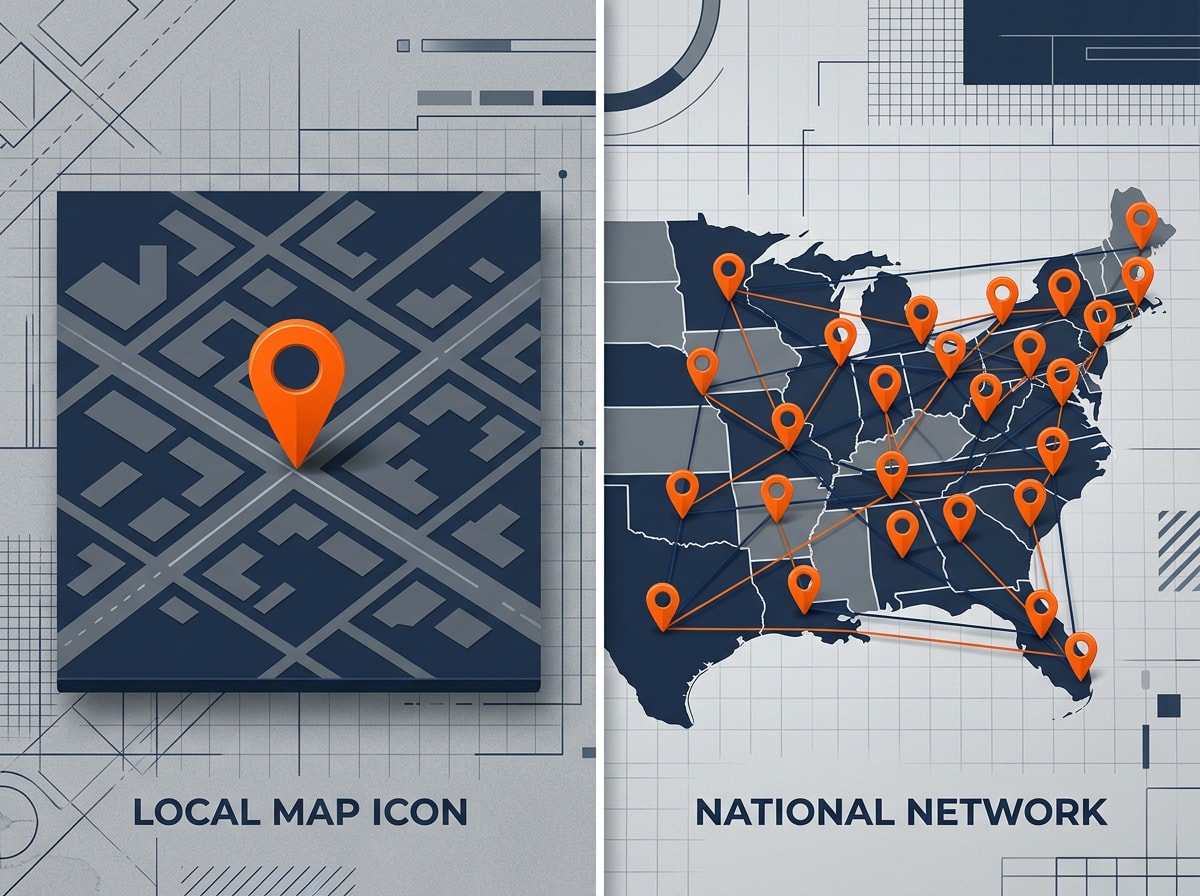
A good agency blends local market relationships with a broader worker network. That combination matters most during peak building season, when local labor pools tighten fast — whether a job site sits in Akron, OH or a smaller market like Wooster, OH, the agency's ability to pull from a wider bench is what keeps a schedule intact.
How Much Does a Construction Agency Cost?
Construction staffing cost is built around the bill rate: the hourly amount a contractor pays the agency, covering the worker's wage plus a markup for payroll taxes, insurance, recruiting, and overhead. Industry benchmarking commonly puts the most commonly cited range for temporary staffing at 30% to 75% , and it varies by region, trade, and assignment length.
To put that in perspective, general labor roles bill lower per hour than skilled trades. The median annual wage for construction and extraction occupations was $59,540 in May 2025, higher than the median annual wage for all occupations of $50,980 , and specialty trades like electricians pull ahead of that baseline, which explains most of the bill-rate spread contractors see quoted.
The hourly rate looks higher than a direct-hire wage on paper, but total cost often comes out lower once recruiting time, turnover, and compliance overhead are factored in.
When Does It Make Sense to Use a Construction Agency?
A construction agency tends to make the most sense for short-term or seasonal peaks, urgent skill needs, and jobs with uncertain schedules — situations where hiring a full-time employee doesn't pencil out.
The ongoing labor shortage adds urgency here. The construction industry needs to attract an estimated 349,000 net new workers in 2026 to meet demand for construction services , according to Associated Builders and Contractors, and that gap isn't closing quickly.
That said, direct hiring can still be more cost-effective for stable, long-term internal teams where turnover is low and the work is predictable year-round. Staffing agencies work best as a flexible supplement, not a full replacement for a core crew. Specialized trenchless and sewer work — like pipe bursting or sewer camera inspection — is a good example: these jobs usually run through a core in-house crew, with agency labor filling gaps only during volume spikes. You can browse examples of that kind of specialized work on our projects page.
Contractors weighing both options for an upcoming job can get a free estimate to compare staffing options against project needs, or visit the homepage to see the full range of trenchless, sewer, and water line services we handle in-house.
FAQ
Is Construction Labor Staffing More Expensive Than Direct Hiring?
Hourly bill rates are usually higher than direct-hire wages, but total cost can end up lower once recruiting time, turnover, and compliance overhead are factored in. The right comparison depends on assignment length and how often the role needs to be refilled.
How Fast Can Workers Be Placed on a Job Site?
Most agencies can place workers within a few days of a request. For urgent needs, some agencies can deploy general labor within 24 to 48 hours, depending on trade and location.
Can Staffing Workers Be Hired Permanently Later?
Yes. Many agencies offer temp-to-hire arrangements that let a contractor convert a worker to a permanent employee after a trial period, giving contractors a low-risk way to evaluate fit first.
What Is the Difference Between a Construction Agency and a General Contractor?
A general contractor manages and builds the project itself. A construction agency doesn't build anything — it supplies the labor that contractors direct on their own job sites.
How Do Construction Staffing Agencies Vet Workers?
Reputable agencies run background checks, verify licenses and certifications, and often screen for drug use before dispatch. Ask any prospective agency to walk through their exact vetting steps, not just confirm that vetting happens.