


Hydro Jetting vs Snaking: Which Works?
- thetrenchlessguys
- 2 days ago
- 6 min read
A slow drain is annoying. A backed-up sewer line that shuts down a bathroom, disrupts tenants, or puts a restaurant kitchen at risk is a different problem entirely. When people ask about hydro jetting vs snaking, they usually want one clear answer: which option will solve the blockage without wasting time or money?
The honest answer is that each method has a place. The right choice depends on what is inside the pipe, how severe the blockage is, and whether the goal is a quick reopening or a more complete cleaning. For homeowners and property managers in North Central Ohio, that difference matters because the wrong approach can leave residue behind, allow repeat clogs, or mask a bigger sewer issue.
Hydro jetting vs snaking: the core difference
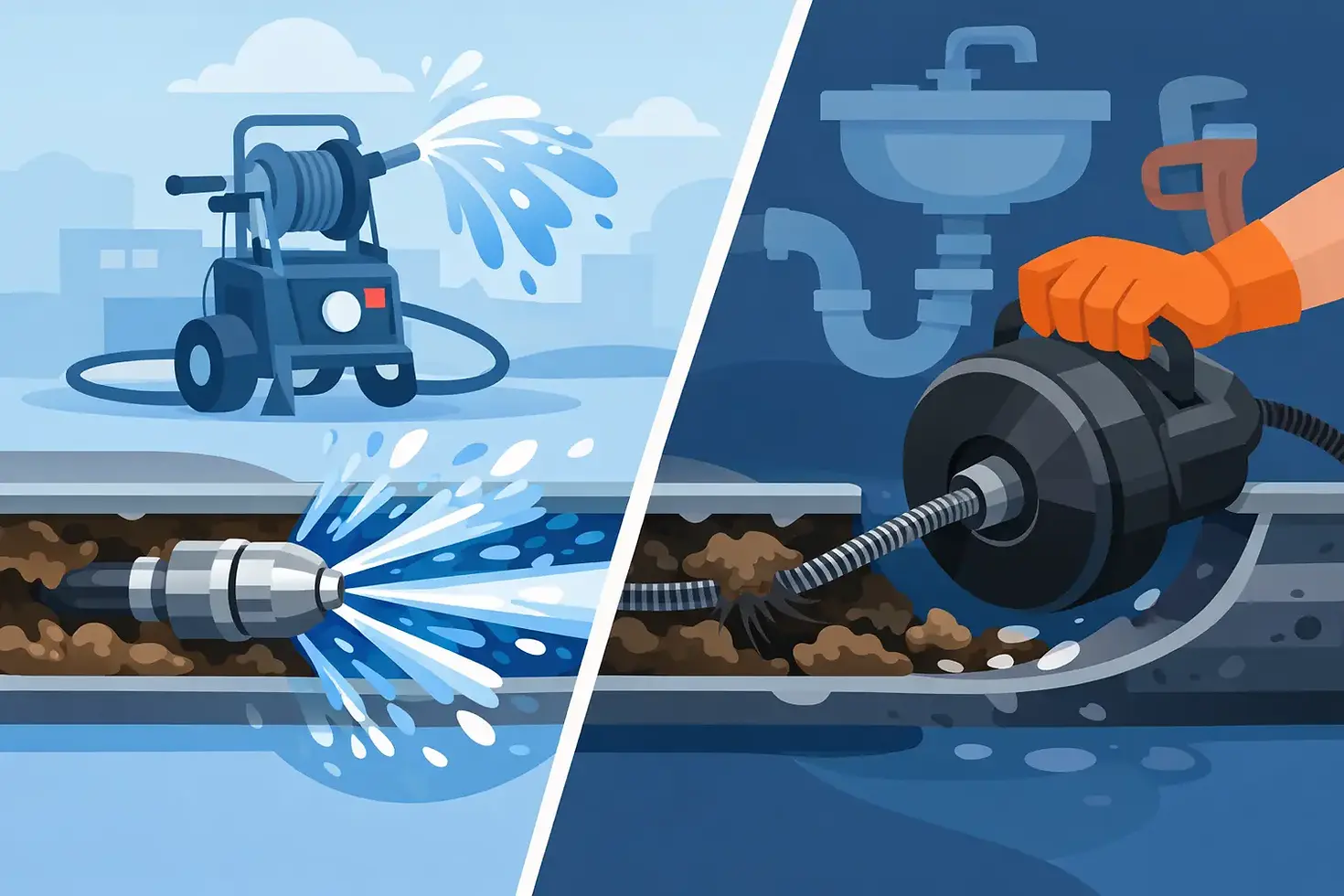
Snaking is a mechanical method. A cable with a cutting head or auger is fed into the drain or sewer line to break through an obstruction. It is designed to restore flow by punching a path through the clog.
Hydro jetting uses highly pressurized water to scour the inner pipe walls. Instead of simply drilling through the blockage, it flushes grease, sludge, debris, and in many cases root intrusion out of the line. That makes it more of a cleaning process than a basic opening process.
If you picture a pipe lined with grease or soft buildup, a snake may poke a hole through the center while leaving the material attached to the walls. Hydro jetting is more likely to remove the buildup across the pipe diameter. That distinction often determines whether the fix lasts a few days or much longer.
When snaking is the better fit
Snaking is often the fastest and most practical option for a localized clog. If a bathroom sink, shower, toilet, or branch line has one concentrated blockage, a professional snake can usually break through it quickly and get the fixture working again.
This method also makes sense when a pipe may not be a good candidate for high-pressure cleaning until it has been inspected. Older lines, damaged sections, offset joints, or fragile materials sometimes require a more cautious first step. In those situations, reopening flow with a snake and following with camera inspection can be the safer sequence.
For many residential calls, snaking is effective because the issue is limited in scope. Hair, paper buildup, and minor obstructions near the access point often respond well. It can also be a reasonable lower-cost starting point when the problem appears isolated rather than systemic.
That said, snaking has limits. It does not always remove the full mass of grease, scale, or sludge. If roots are established deeper in the line, the cable may cut a narrow opening without fully clearing the intrusion. The pipe works again, but only temporarily.
What snaking does well
Snaking is best viewed as a targeted obstruction-removal tool. It is useful for restoring basic flow, handling common fixture clogs, and making a blocked line usable again without overcomplicating the job.
For a homeowner dealing with one stubborn toilet or one slow tub drain, that may be all that is needed. For a commercial property with recurring buildup, it may only be the first step.
When hydro jetting is the better fit
Hydro jetting is typically the stronger solution when the pipe has heavy buildup along the walls, repeated backups, grease accumulation, or widespread debris. It is especially effective in commercial environments where drains see frequent use and organic material, soap residue, food waste, and grease continuously coat the inside of the line.
Restaurants, multifamily properties, schools, and industrial facilities often benefit from hydro jetting because the problem is not just one clog. The problem is that the pipe diameter has been reduced over time. Water pressure can strip away that buildup and restore carrying capacity more completely than a cable machine alone.
Hydro jetting is also commonly used when roots are part of the issue. While roots may still require cutting or follow-up repair, jetting can clear loose material and wash the line thoroughly after the initial obstruction is addressed. In maintenance programs, it can help prevent another major blockage from forming as quickly.
For larger sewer lines, hydro jetting often provides a better long-term result because it cleans the system rather than simply reopening it. That is a meaningful difference for facilities trying to reduce downtime and emergency calls.
Why hydro jetting often lasts longer
The main advantage is coverage. Water under pressure reaches more of the interior pipe surface than a cable tip does. That matters in lines affected by grease, soft scale, sludge, and sediment because those materials cling to the walls.
A snake creates access through the blockage. Hydro jetting removes much more of the blockage itself. When the pipe is cleaner, wastewater moves more freely and future debris has less material to catch on.
It depends on the pipe condition
The best contractors do not treat hydro jetting as automatic, and they do not treat snaking as outdated. They match the method to the line condition.
Before hydro jetting, pipe condition matters. If the line is cracked, collapsed, badly deteriorated, or separated at the joints, adding high-pressure water without understanding the condition can create risk. That is why CCTV sewer inspection is such an important part of the decision. A camera inspection shows whether the line can be safely cleaned, whether roots are entering through defects, or whether the real answer is repair rather than repeated cleaning.
This is where experience matters. A technician should be able to tell the difference between a pipe that needs cleaning and a pipe that needs rehabilitation. If the line has structural failure, no drain cleaning method will solve the underlying problem for long.
Cost versus value
People often compare hydro jetting and snaking based on price alone. Snaking is usually less expensive upfront, which makes sense for simple clogs. If the blockage is minor and isolated, paying for hydro jetting may be unnecessary.
But the lower invoice is not always the lower cost over time. If a line keeps backing up because grease or sludge remains in place, repeated snaking appointments can add up quickly. In commercial settings, the cost of disruption may be greater than the cleaning charge itself. A tenant complaint, restroom outage, or interrupted kitchen operation can turn a basic drain issue into an operations problem.
Hydro jetting generally carries a higher initial cost because it is more intensive and often paired with inspection. In return, it can deliver a more complete cleaning and longer interval between service calls. For many properties, especially those with recurring issues, that is where the real value shows up.
Hydro jetting vs snaking for roots, grease, and repeat backups
For grease, hydro jetting is usually the stronger choice. Grease coats pipe walls and traps more debris over time. A snake may open a path through it, but pressurized water is more effective at stripping that residue away.
For roots, it depends. A snake or root-cutting machine may be needed to break through heavy intrusion first. Hydro jetting can then help wash out loosened material and clean the line. If roots keep returning, the line may need trenchless repair instead of repeated cleaning.
For repeat backups, hydro jetting often provides the better answer because recurring problems usually point to buildup along the pipe walls or a broader line condition issue. Repetition is a clue. If a drain has been snaked several times and still backs up, the pipe likely needs a more complete cleaning or a closer inspection.
The right process is not guesswork
A professional drain cleaning decision should not start with a machine. It should start with diagnosis. What line is affected? How often does it happen? Is the issue limited to one fixture or the whole building? Is there evidence of roots, grease, scale, or structural damage?
For that reason, the strongest service approach often combines methods rather than treating them as competitors. A sewer line may be opened with a cable, inspected with CCTV, then fully cleaned with hydro jetting if the pipe condition allows. If the camera finds cracks, offsets, or failing sections, the next step may be trenchless rehabilitation instead of another cleaning appointment.
That kind of process protects the property and reduces wasted work. It also gives homeowners and facility managers a clearer picture of whether they are dealing with a maintenance issue or a repair issue.
At The Trenchless Guys Akron, that is the standard that matters most: solving the actual pipe problem with the least disruption possible. Sometimes that means snaking. Sometimes it means hydro jetting. Sometimes it means identifying that the line needs more than either one.
If your drains are slow once, snaking may be enough. If your sewer line keeps reminding you it has a problem, a more complete cleaning and inspection usually makes better sense than another temporary opening. The right answer is the one that restores flow, protects the pipe, and keeps the problem from coming right back.


Comments