


What Is Trenchless Pipe Lining?
- thetrenchlessguys
- 13 hours ago
- 6 min read
A sewer line problem usually gets real the moment someone mentions digging up the yard, driveway, or parking lot. That is exactly why so many property owners ask, what is trenchless pipe lining, and is it actually a reliable fix? In many cases, it is. Trenchless pipe lining is a minimally invasive method of repairing a damaged pipe from the inside, often without the full excavation required in traditional replacement.
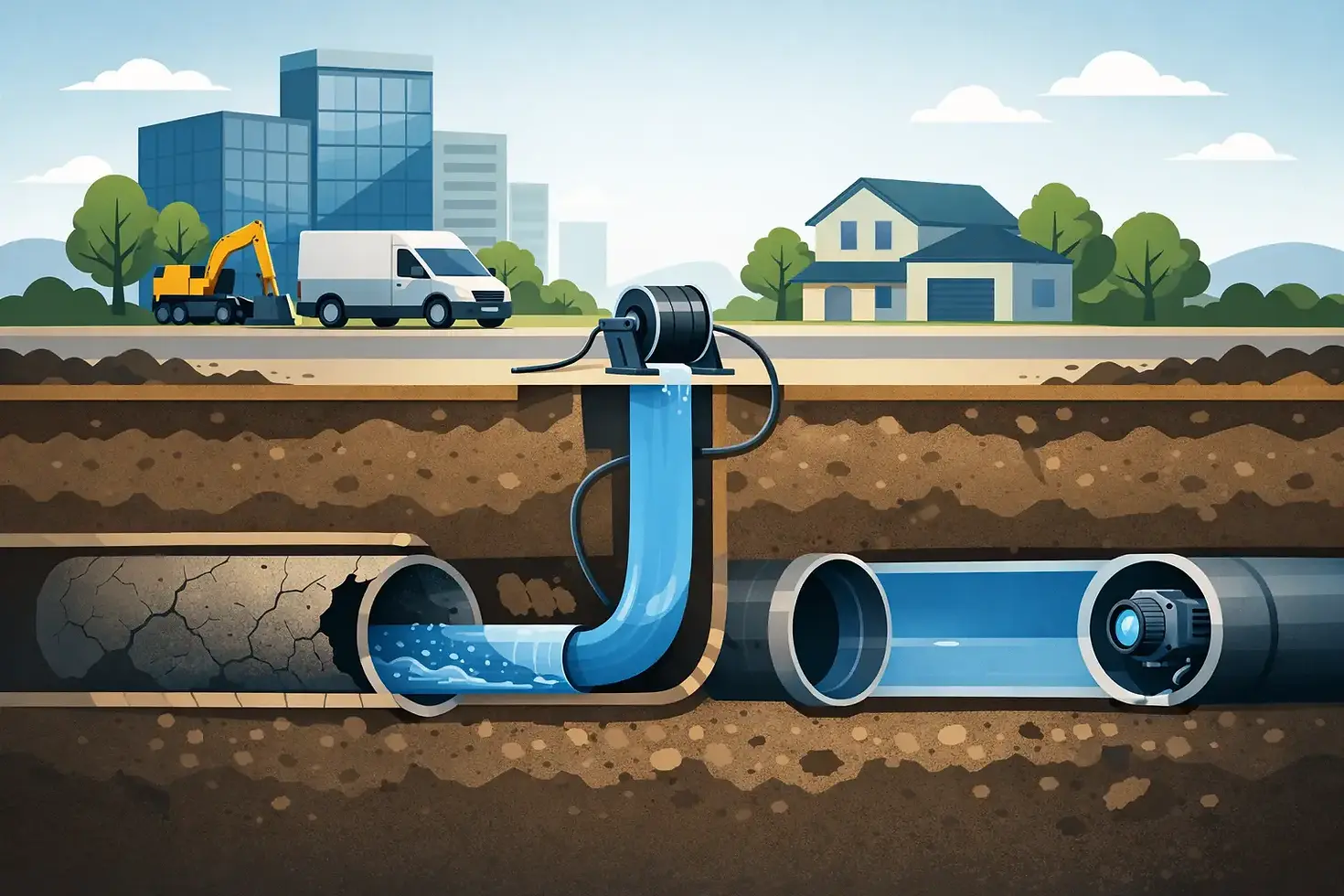
Instead of removing the old pipe and installing a new one through open trenching, a contractor rehabilitates the existing line by creating a new pipe within the old one. The most common method is cure-in-place pipe lining, often called CIPP lining. This process restores flow, seals cracks, and extends the service life of the pipe while avoiding much of the disruption that comes with digging.
What is trenchless pipe lining and how does it work?
At its core, trenchless pipe lining is a pipe rehabilitation method. A flexible liner, typically saturated with resin, is inserted into the damaged sewer or drain line. Once it is positioned correctly, the liner is inflated so it presses tightly against the interior wall of the existing pipe. The resin then cures and hardens, forming a jointless, durable new lining inside the host pipe.
That new interior surface acts as the functional pipe. It seals many common defects, including cracks, small offset joints, root intrusion points, and corrosion-related wear. Because the original pipe stays in place, the work often requires only one or two access points rather than a continuous trench across the property.
For homeowners, that can mean preserving landscaping, hardscaping, patios, and sidewalks. For commercial sites and municipalities, it can mean less interruption to traffic, operations, tenants, and daily use of the property.
Why property owners choose trenchless lining
The biggest advantage is simple: less disruption. Traditional excavation can turn a repair into a major site restoration project. Pipe lining often reduces the need to tear through lawns, slab areas, roads, or finished surfaces just to reach the damaged section.
There is also a strong cost-control benefit, but this is where expectations need to stay realistic. Trenchless pipe lining is not always the cheapest option on the estimate if you only compare repair methods line by line. It often becomes cost-effective because it can reduce restoration expenses, shorten downtime, and avoid collateral damage to the property.
That matters for a residential yard, but it matters even more for commercial buildings, apartment complexes, healthcare facilities, schools, and municipal infrastructure. If digging means shutting down access, disrupting tenants, or rebuilding pavement, the total project cost can climb fast.
Another benefit is long-term performance. A properly installed liner creates a smooth interior that can improve flow and resist corrosion. Many lined systems are designed to deliver decades of service life under the right conditions.
When trenchless pipe lining is a good fit
Pipe lining works best when the existing pipe still has enough structural integrity to serve as a host for the new liner. In other words, the pipe can be damaged, cracked, leaking, or root-intruded, but it usually cannot be completely collapsed beyond recovery.
This method is commonly used for sewer laterals, building drains, storm lines, and certain commercial piping systems. It can be a strong option when a line runs under a driveway, landscaped area, parking lot, foundation-adjacent zone, or any place where excavation would be expensive or disruptive.
It is also useful when a property owner wants to address recurring backups tied to aging pipe walls, joint failures, or infiltration. In many of those cases, lining restores the pipe without needing full replacement.
Still, every line needs to be evaluated first. A CCTV sewer inspection is what tells the real story. Camera work shows the condition of the pipe, the length and location of damage, whether there are offsets or bellies, and whether the line can be cleaned and prepared for lining.
What happens before the liner goes in
Preparation is a major part of a successful trenchless repair. The pipe must be inspected, mapped, and cleaned thoroughly. Debris, grease buildup, roots, or scale can interfere with bonding and installation, so sewer jetting or mechanical cleaning is often required before the lining process begins.
Once the line is clean, the contractor confirms measurements, identifies service connections, and determines the best installation method. Some projects require careful reinstatement of branch lines after the liner cures. Others may involve sectional repairs if the problem is isolated to a specific area.
This is one reason experience matters. Good trenchless work is not just about having the equipment. It depends on accurate diagnosis, proper cleaning, correct resin handling, precise installation, and post-installation verification.
What trenchless pipe lining does not fix
Pipe lining is effective, but it is not universal. If a pipe has fully collapsed, has severe deformation, or has a major section missing, lining may not be possible. In those situations, trenchless pipe bursting or conventional excavation may be the better solution.
There are also grade-related problems lining will not solve. If the pipe has a serious belly or improper slope, the liner will follow the existing path. It can improve the pipe wall, but it does not redesign the line. The same applies to certain major alignment issues.
That is why a trustworthy contractor should not push lining as the answer to every underground problem. Sometimes the right recommendation is a different trenchless method. Sometimes excavation is still the correct call. The goal is not to force a technology into the wrong situation. The goal is to choose the repair that will actually hold up.
What is trenchless pipe lining compared with pipe bursting?
This is a common point of confusion. Trenchless pipe lining rehabilitates the existing pipe from the inside. Pipe bursting replaces the old pipe by breaking it apart while pulling a new pipe into place.
If the host pipe is a good candidate for rehabilitation, lining can be an excellent option because it is efficient and minimally invasive. If the pipe is too badly damaged to line, bursting may make more sense because it creates a full replacement without a continuous trench.
The right choice depends on pipe condition, material, diameter, depth, access, surrounding structures, and project goals. A residential sewer lateral under a mature landscape may call for one strategy. A commercial site with capacity concerns may call for another.
How long does trenchless pipe lining last?
When installed correctly in the right application, trenchless pipe lining is considered a long-term repair. Many systems are engineered for decades of service. The actual lifespan depends on the liner material, installation quality, pipe conditions, use patterns, and whether the system is maintained properly.
For most property owners, the better question is not just how long the liner lasts, but whether it solves the underlying issue. If backups are caused by cracks, root intrusion, corrosion, and leaking joints, lining can be a very durable answer. If the real issue is poor slope, heavy grease misuse, or structural collapse, a different solution may be needed.
Is trenchless pipe lining worth it?
Often, yes, especially when excavation would damage valuable surfaces or disrupt operations. Homeowners tend to appreciate the reduced mess and faster site recovery. Commercial and municipal clients often value the lower operational impact just as much as the repair itself.
That said, worth depends on the pipe. A short, easily accessible section in open ground may not justify lining if conventional repair is straightforward and restoration costs are low. On the other hand, a sewer line under a building approach, decorative landscape, or active parking area can be an ideal candidate.
This is where a project-specific assessment matters more than broad claims. The best contractors start with inspection data, explain the trade-offs clearly, and recommend the method that fits the condition of the line and the realities of the site.
For property owners in North Central Ohio, that practical approach matters. Soil conditions, weather, aging infrastructure, and mixed-use properties all create real repair challenges. A specialist like The Trenchless Guys Akron can evaluate whether trenchless lining is the right fit or whether another repair method will deliver better long-term results.
If you are dealing with recurring sewer issues, the smartest next step is not guessing at the fix. It is getting a clear inspection, a straight answer, and a repair plan that protects both the pipe and the property above it.



Comments