


What Sewer Lateral Launch Inspection Shows
- thetrenchlessguys
- 15 hours ago
- 6 min read
A mainline camera can tell you a lot, but it does not always tell you what is happening inside every lateral connection. That is where sewer lateral launch inspection becomes valuable. If a property has recurring backups, isolated branch line issues, or signs of infiltration that do not fully show up in a standard CCTV pass, a launch inspection gives a closer look at the connections that often cause the real problem.
For homeowners, that can mean finding the source of repeat clogs without tearing up a yard or driveway. For commercial properties, municipalities, and facility managers, it can mean pinpointing defects before they turn into emergency repairs, tenant disruption, or avoidable maintenance costs. The goal is simple - get accurate information from inside the pipe system so repair decisions are based on evidence, not guesswork.
What Is a Sewer Lateral Launch Inspection?
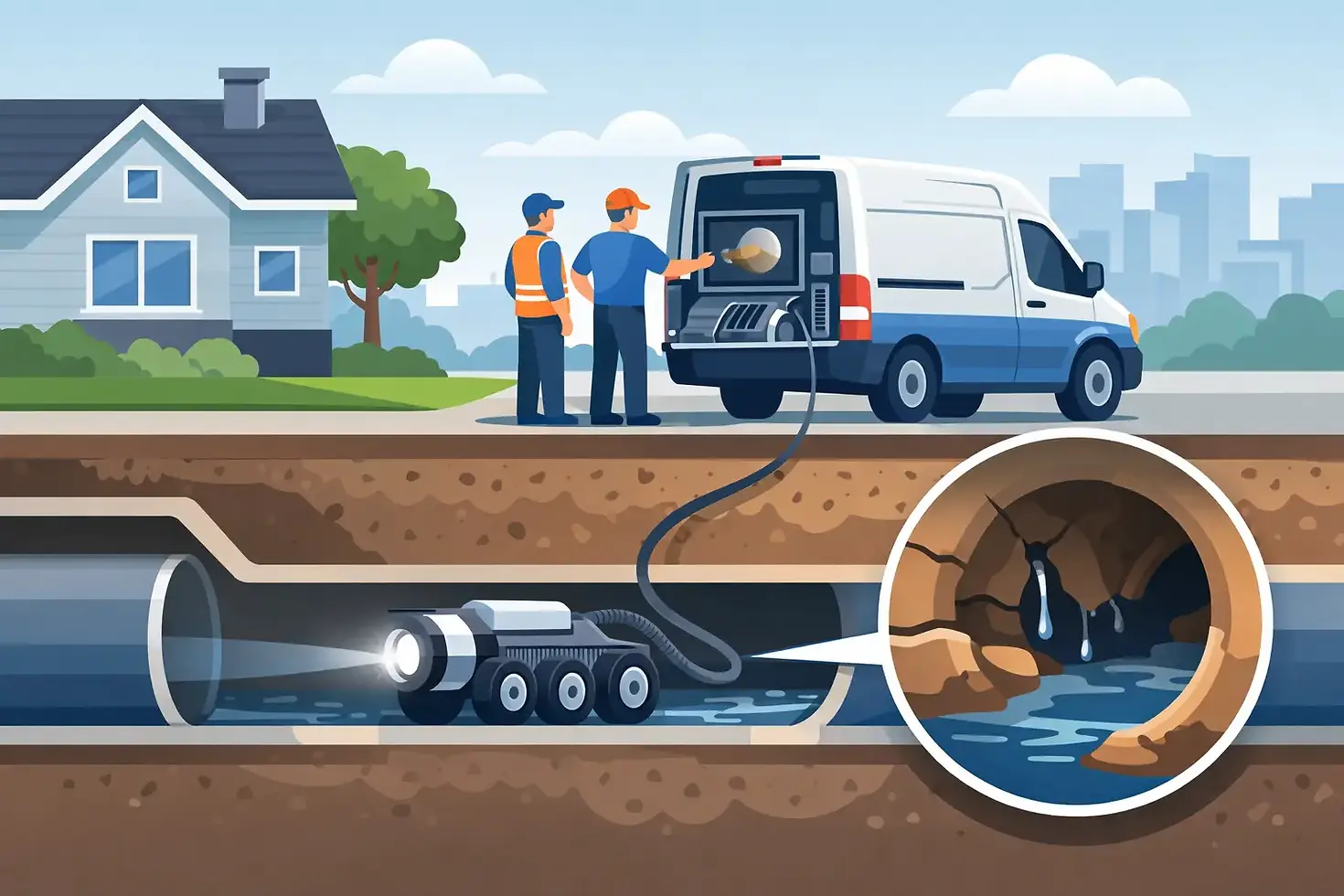
A sewer lateral launch inspection uses a specialized camera system that travels through a main sewer line and then launches into a connecting lateral. Instead of accessing each branch by separate excavation or multiple interior entry points, technicians can inspect the lateral from within the system itself.
This matters because many sewer defects develop at connection points or in lateral lines that a standard straight-through camera view may not fully capture. A launch system lets the operator inspect those side connections with much more detail. In practical terms, that means identifying cracks, offset joints, root intrusion, grease buildup, broken connections, corrosion, and other conditions that may be affecting performance.
It is a precise tool, but it is not used just for the sake of technology. It is used when a regular inspection leaves unanswered questions, when a property has a history of repeated issues, or when a trenchless repair plan depends on understanding each connection point correctly.
When Sewer Lateral Launch Inspection Makes Sense
Not every sewer problem needs a launch inspection. If a blockage is simple and clearly located, a standard inspection may be enough. But some systems need a more targeted approach.
One common scenario is a building with repeat backups even after cleaning. The main line may appear open, yet a lateral branch still has a hidden defect. Another is an older commercial site where multiple connections feed into the same system and no one wants to start digging based on assumptions. Launch inspection is also useful before lining or rehabilitation work, especially when the condition of individual laterals will affect how the repair is planned.
In North Central Ohio, age, root pressure, shifting soils, and freeze-thaw cycles can all contribute to underground pipe movement. A pipe may still be functioning, but not well. Small separations, partial collapses, and infiltration points often start as maintenance problems and become structural problems later. Catching those conditions early usually leads to a more controlled, cost-effective repair path.
What Technicians Look For During the Inspection
The value of a launch inspection is not just getting a camera into the pipe. It is knowing what the footage means and how it affects the next step.
A trained technician is looking for signs of structural failure, such as fractures, open joints, deformation, or connection damage. They are also evaluating operational issues like debris buildup, recurring root intrusion, grease accumulation, and restricted flow. In some systems, infiltration is a major concern. Groundwater entering through defects can overload a line, contribute to treatment costs, and accelerate deterioration over time.
The connection between the main and the lateral is especially important. If that area is offset, cracked, or deteriorated, it may explain why a pipe repeatedly catches debris or why backups occur under heavier use. On commercial and municipal systems, these details matter even more because small problems can affect larger sections of infrastructure.
Why Launch Inspection Is Different From Standard CCTV
Standard CCTV inspection is still one of the most useful diagnostic tools in sewer work. It provides a reliable view of the main line and can reveal many common problems. But sewer systems are not always straightforward. A forward-facing camera in the main does not automatically give a complete picture of side connections.
That is the gap a launch system fills. It allows the inspection to move into lateral branches from the mainline, creating access that would otherwise require more invasive methods. This can reduce the need for exploratory digging and limit disruption to finished surfaces, landscaping, parking areas, and interior spaces.
It also improves repair planning. If a contractor is considering trenchless lining, coating, sectional repair, or spot rehabilitation, the condition of the lateral and its connection point can change the scope of work. Better inspection data leads to better repair decisions.
The Real Advantage - Better Decisions Before Repair
Property owners often focus on the repair itself, which makes sense. But the inspection stage has a direct impact on cost, timeline, and long-term results.
A sewer lateral launch inspection helps answer questions that matter before work begins. Is the issue isolated or system-wide? Is the lateral structurally sound enough for rehabilitation, or is replacement the better route? Is there one defective connection or several? Can the problem be addressed with a minimally invasive repair, or has the damage progressed too far?
Without those answers, repair plans can become broader than necessary or too limited to solve the problem fully. That is where good inspection work protects the customer. It reduces surprises, supports accurate estimating, and helps avoid partial fixes that do not hold up.
Who Benefits Most From Sewer Lateral Launch Inspection
This type of inspection has clear value for residential properties, especially homes with older sewer systems, repeated drain problems, or suspected root intrusion. When a homeowner wants to know what is happening without unnecessary digging, launch inspection can provide the detail needed to move forward confidently.
For commercial properties, the value often shows up in reduced disruption. Shopping centers, apartment communities, industrial sites, office buildings, and institutional facilities usually have more complex underground layouts. Multiple laterals may connect to a shared system, and one hidden defect can affect operations across several units or spaces. A targeted inspection helps isolate the issue before repair crews mobilize.
Municipal and public-sector applications are also a strong fit. When agencies need to assess collection systems, verify pipe conditions, or support rehabilitation planning, lateral launch technology can improve visibility across connections that are otherwise difficult to evaluate efficiently.
What Happens After the Inspection
The next step depends on what the camera finds. In some cases, the issue is maintenance-related and can be addressed with cleaning, jetting, or scheduled monitoring. In other cases, the footage may show structural defects that call for trenchless rehabilitation or replacement.
That is why experience matters. Inspection technology is only as useful as the interpretation behind it. An expert team can distinguish between a pipe that looks rough but remains serviceable and one that is actively failing. They can also explain the trade-offs. A spot repair may handle an isolated break, while CIPP lining may make more sense for a longer run with multiple defects. If a line is badly collapsed or misaligned, excavation may still be the right answer. Trenchless methods solve a lot, but not every condition fits the same solution.
For property owners, that kind of honesty is important. The goal is not to force a preferred method. It is to match the repair strategy to the actual condition of the pipe.
Why Minimal Disruption Matters
A major reason customers choose launch inspection is that it supports a minimally invasive process from the start. The more accurately a system is inspected, the less likely a project is to involve unnecessary excavation, repeat visits, or disruption to occupied spaces.
That matters differently depending on the property. A homeowner may want to protect a landscaped yard, patio, or finished basement. A facility manager may need to avoid interrupting operations. A contractor may need reliable underground information before coordinating additional work. In each case, accurate inspection helps protect time, surfaces, and budgets.
At The Trenchless Guys Akron, that practical advantage is the point. Advanced inspection tools are not there to impress anyone. They are there to locate the problem correctly, support the right repair method, and keep the project moving with as little disruption as possible.
Choosing the Right Team for Launch Inspection
Not every plumbing company offers sewer lateral launch inspection, and not every crew that has the equipment uses it with the same level of precision. This is a specialized service. It works best when the operator understands pipe systems, rehabilitation methods, and how inspection findings affect repair choices.
That means customers should look beyond whether a camera is available. The better question is whether the team can use inspection data to produce a clear diagnosis and a practical next step. Good footage matters. Good judgment matters more.
If a sewer problem keeps returning, if a branch line issue is hard to isolate, or if a trenchless repair plan needs better information, launch inspection can be the difference between chasing symptoms and solving the actual problem. A careful look inside the lateral often saves far more disruption than it creates, and that is a smart place to start.


Comments