


Pipe Bursting Sewer Replacement Explained
- thetrenchlessguys
- 2 days ago
- 6 min read
A sewer line fails at the worst possible time - after backups start, after the lawn is saturated, or right when a business cannot afford downtime. In many of those cases, pipe bursting sewer replacement is the smartest way to install a new sewer line without tearing up the entire property.
This method is built for one clear goal: replace a damaged underground pipe while keeping excavation to a minimum. For homeowners, that can mean protecting driveways, patios, landscaping, and mature trees. For commercial properties and facilities, it can mean avoiding long disruptions, reducing restoration costs, and getting infrastructure back in service faster.
What pipe bursting sewer replacement actually is
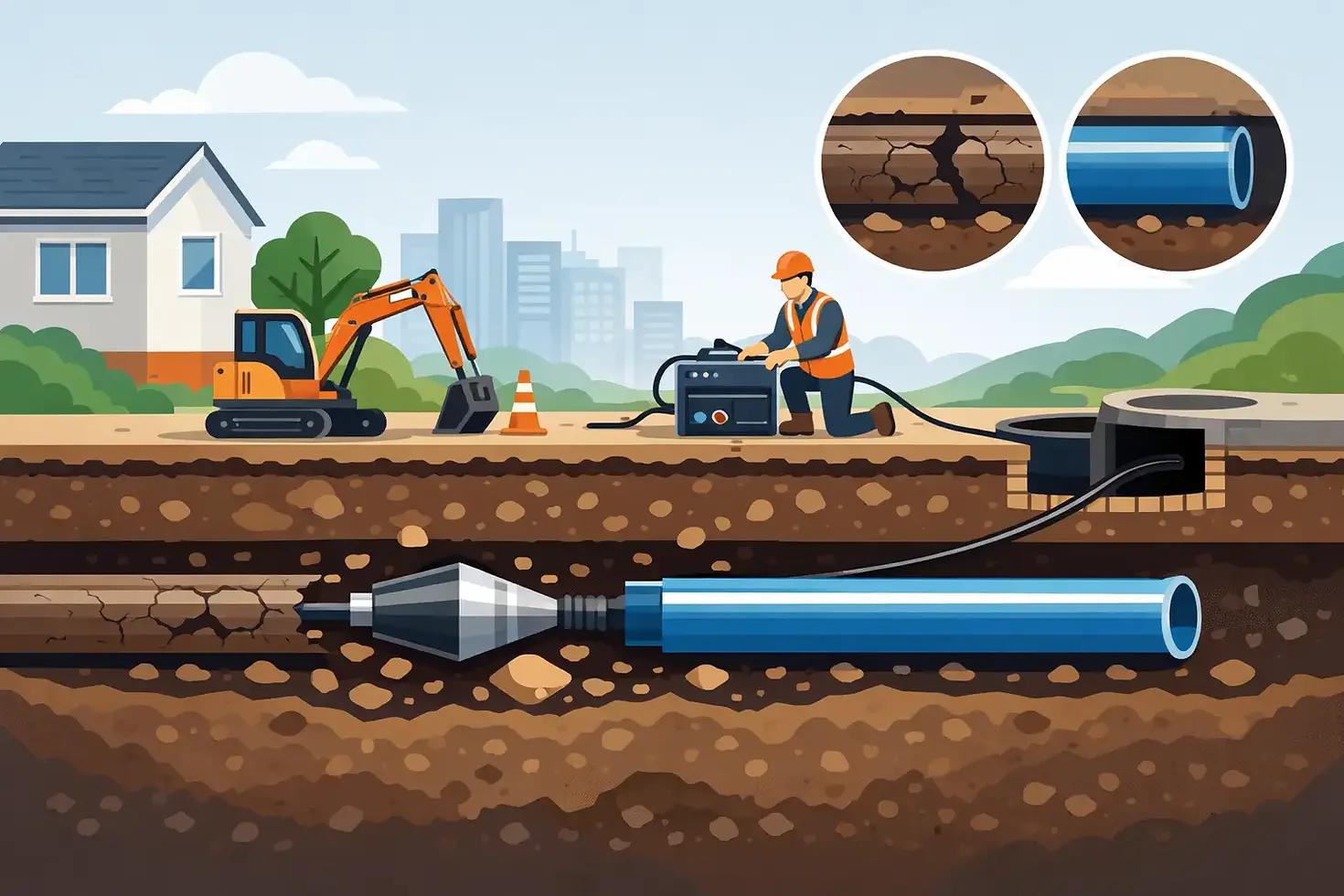
Pipe bursting is a trenchless replacement method used when a sewer pipe is too damaged for spot repair or lining alone. Instead of digging a full trench from one end of the pipe to the other, technicians access the line through entry and exit points. A bursting head is pulled through the old pipe, breaking it outward while drawing a new high-density polyethylene pipe into place behind it.
The old pipe is not repaired in the traditional sense. It is fractured and displaced into the surrounding soil while the new pipe takes over as the functioning sewer line. That distinction matters because this is a true replacement, not a patch.
In the right conditions, pipe bursting works on clay, cast iron, Orangeburg, and other aging sewer materials that have reached the end of their service life. It is especially useful when the line has multiple breaks, severe cracking, offset joints, root intrusion, or long sections of deterioration.
When pipe bursting makes sense
Not every sewer problem needs full replacement, and not every replacement should be done with pipe bursting. The right method depends on pipe condition, depth, alignment, access, surrounding utilities, and the goals of the property owner.
Pipe bursting usually makes the most sense when the existing line is structurally compromised over a significant length, but the route of the pipe still works. If the line follows a reasonable path and there is enough room for the equipment and access pits, trenchless replacement can often deliver the best balance of durability and low disruption.
This is also a strong option when surface restoration would be expensive. A traditional dig may involve removing concrete, cutting through landscaping, disturbing parking lots, or shutting down active areas around a building. When those restoration costs are added in, trenchless replacement often becomes more attractive.
For commercial sites, multifamily properties, and municipalities, the operational side matters just as much as the pipe itself. Less digging can mean fewer traffic impacts, less interference with tenants or staff, and better control over project timelines.
How the process works
Every successful project starts with inspection. A CCTV sewer camera inspection confirms the line condition, identifies the pipe material, checks for collapses or offsets, and verifies whether the line is a good candidate for bursting. This is where experience matters. A pipe may be badly damaged but still suitable for trenchless replacement. Another line may look similar on the surface but have alignment issues or utility conflicts that call for a different approach.
Once the line is evaluated, crews create access points, usually at each end of the replacement section. The existing sewer line is cleaned as needed so the bursting equipment can move through it. Then a cable or pulling rod is run through the old pipe.
The bursting head is attached along with the new replacement pipe. As the equipment pulls the head through the old line, the existing pipe breaks apart and is pushed into the surrounding soil. The new pipe follows directly behind. After installation, the crew reconnects the service, tests the line, and restores the access areas.
The result is a continuous new pipe with far fewer joints than older sewer systems. That matters because joints are often where root intrusion and separation begin.
Why property owners choose trenchless replacement
The first reason is obvious: less excavation. That alone can protect yards, sidewalks, decorative hardscapes, parking surfaces, and daily operations.
The second reason is long-term performance. Pipe bursting replaces the failed line instead of trying to manage around an aging pipe that may continue to deteriorate. For many owners, that makes it a better fit than repeated repairs.
The third reason is cost control, although this deserves some nuance. Pipe bursting is not always the cheapest line item on paper. If someone only compares the replacement work itself, traditional digging can sometimes look competitive. But that comparison often leaves out restoration. Replacing a sewer line under a driveway, retaining wall, landscaped area, or active commercial surface can quickly raise total project cost. In those cases, a minimally invasive method may offer better overall value.
There is also a speed advantage on many jobs. Fewer open trenches usually means a cleaner jobsite, less hauling, and a faster path to completion.
Pipe bursting sewer replacement vs. pipe lining
These two trenchless methods are often discussed together, but they solve different problems.
Pipe lining creates a new interior surface inside the existing pipe. It is an excellent rehabilitation method when the host pipe still has enough structural shape to support the liner. It can stop leaks, seal joints, and improve flow without full replacement.
Pipe bursting sewer replacement is used when the existing pipe is too far gone, undersized, or unsuitable for lining. Because it installs an entirely new pipe, it can also allow for upsizing in some situations, which can help properties with recurring capacity issues.
If a property owner wants the least invasive option possible, lining may sound better at first. But if the line is badly collapsed, heavily deformed, or simply beyond rehabilitation, a true replacement is the better answer. The key is not choosing a favorite method. It is choosing the method that fits the condition underground.
Limits and trade-offs to know
A good contractor should be clear about where pipe bursting works well and where it does not.
It depends on access. Crews still need entry and exit pits, and the jobsite must accommodate equipment. It also depends on nearby utilities. If gas, water, or other lines are too close to the sewer, the replacement plan may need adjustment.
The existing line path matters too. Pipe bursting generally follows the original alignment. If the current sewer route is poorly designed or needs major rerouting, open excavation or another trenchless strategy may be the better fit.
There are also cases where a pipe is too collapsed to allow the equipment through without additional work. That does not always rule out trenchless service, but it can change the process.
This is why up-front diagnostics matter so much. Camera inspection, locating, depth verification, and a realistic site review prevent surprises and help set the right expectations before work begins.
What to expect from a qualified contractor
Property owners should expect more than a basic estimate. A qualified trenchless specialist should explain whether the sewer line can be lined, burst, spot repaired, or replaced by excavation. They should also be able to discuss access points, probable restoration scope, tie-in details, and any project constraints around utilities or structures.
For larger properties and facilities, planning matters just as much as technical ability. The contractor should be prepared to work around traffic flow, tenant access, operating hours, and safety requirements. Sewer replacement is not just about pipe installation. It is about keeping the property functional while the work gets done.
That is where a specialist approach pays off. Companies focused on trenchless systems understand the equipment, the inspection process, and the conditions that affect outcomes. In North Central Ohio, where aging infrastructure, seasonal ground conditions, and mixed pipe materials are common, that experience can make a major difference.
The Trenchless Guys Akron approaches this work with that mindset - diagnose accurately, choose the right trenchless method, and solve the problem with as little disruption as possible.
Is pipe bursting the right answer for your property?
If your sewer line has widespread damage, frequent backups, root intrusion, or visible signs of long-term failure, pipe bursting may be the most practical path to a full replacement without a full trench. It is especially worth considering when the line runs beneath features you do not want to demolish and rebuild.
The only reliable way to know is to inspect the line and evaluate the site as a whole. Sewer replacement decisions should not be based on guesswork or a one-size-fits-all sales pitch. A good recommendation accounts for the pipe condition, the property layout, and the total impact of the repair.
When the conditions are right, pipe bursting gives property owners something they actually need - a brand-new sewer line, less surface disruption, and a repair plan that respects both the infrastructure below ground and everything built above it.
If you are dealing with a failing sewer line, the best next step is not to wait for a bigger backup. It is to get a clear inspection, a straight answer, and a replacement plan that solves the full problem instead of just buying time.


Comments